Indrani (also known as Aindri, Shachi, or Paulomi) is honored in Vedic and Puranic literature as the consort of Lord Indra and as a radiant manifestation of Ma Shakti Devi. Recognized among the Sapthamathas (Saptamatrikas), she embodies sovereign strength, protective compassion, and the life-affirming energy of the Divine Feminine in Hinduism’s sacred tradition.
Vedic testimony affirms her antiquity and authority. The Rig Veda (10.86) preserves a distinctive hymn in which Indrani’s voice and presence are evoked, underscoring themes of conjugal sovereignty, dignity, and the guardianship of ṛta (cosmic order). This textual witness situates Indrani not only as the Queen of the Devas but also as a figure whose agency and reverence reach back to the earliest layers of Vedic spirituality.
Puranic and Shakta traditions deepen this profile. As Aindri within the Saptamatrika lineage, Indrani is described as the Shakti of Indra, often depicted with the vajra (thunderbolt), a radiant or red-hued form, and a vahana associated with the elephant or lion—iconographic cues that signify fearless leadership, protective might, and beneficent sovereignty. Classical narratives identify her as Paulomi, daughter of the sage Puloma, whose marriage to Indra marks her transition into the cosmic role of guardian-queen. In Shakta literature, her presence among the Saptamatrikas emphasizes the doctrine that the energies of the devas ultimately arise and converge in the unitary power of Shakti.
Theologically, Indrani symbolizes righteous power (kshatra) aligned with dharma. In many lived traditions, devotees associate her blessings with courage in adversity, clarity in decision-making, and the protection of family and community. Such experiences are often described as a felt sense of assurance—an inner steadiness that transforms uncertainty into purposeful action—mirroring the Vedic ideal of harmonizing strength with moral responsibility.
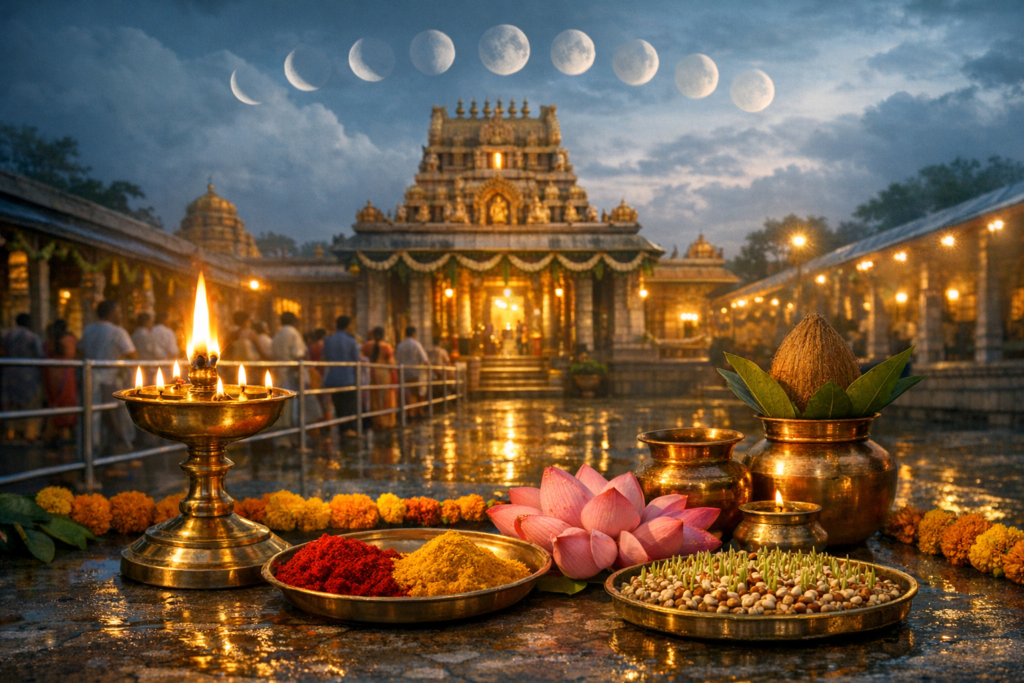
Worship practices vary across regions and lineages, yet several themes recur. Devotees may honor Indrani Mata through recitation or contemplation of Rig Veda 10.86 where available, through Shakti mantras, or during Navaratri when the Saptamatrikas are invoked. Offerings of red flowers, lighting of lamps, and mindful acts of service are commonly suggested, each framed as a means to internalize her virtues of protective compassion, principled leadership, and steadfast devotion.
The reverence accorded to Indrani also illuminates shared values across the wider family of Dharmic traditions. While theological expressions differ among Hinduism, Buddhism, Jainism, and Sikhism, the ethical commitments of courage, compassion, truthfulness, and community welfare form a unifying thread. Read in this light, Indrani’s mahatmyam fosters a spirit of mutual respect and intertradition harmony, encouraging seekers to recognize convergences in moral vision while honoring diverse paths.
For students of Vedic literature and for spiritual practitioners alike, Indrani’s legacy offers a compelling lens on feminine sovereignty in sacred history—linking Vedic hymns, Shakta symbolism, and living ritual. Studying her presence in the Rig Veda and later Puranic narratives provides historical depth; contemplating her qualities in daily practice nurtures resilience, ethical clarity, and devotion. In this synthesis of text, tradition, and experience, the significance of Ma Indrani remains both timeless and immediately relevant.
Inspired by this post on Hindu Pad.