The conflict between Dronacharya and Dhrishtadyumna stands as one of the most morally charged episodes in the Mahabharata, culminating in the story of Dronacharya’s beheading by Dhrishtadyumna. Beyond its dramatic intensity, the narrative illuminates the interplay of destiny, ethical duty, and the limits of warfare in a Dharma-Yuddha.
The roots of this confrontation trace back to the youthful bond between Drona and Drupada at the gurukula. Years later, after facing hardship, Drona sought assistance from Drupada, who, as a powerful king, rebuffed and humiliated him. The slight shaped Drona’s resolve: upon becoming the preceptor of the Kauravas and the Pandavas under Bhishma’s patronage, he demanded gurudakshina from his studentsDrupada’s capture.
Arjuna fulfilled that vow, subduing Drupada and bringing him before Drona. In a symbolic act, Drona restored half the kingdom, asserting that friendship could exist only between equals. The episode left Drupada both indebted and determined, sowing the seeds for a future reckoning.
King Drupada performed a yajna to beget a child destined to end Drona’s life. From the sacrificial fire arose Dhrishtadyumna, born with the prophecy that he would slay Dronacharya, and Draupadi, whose own destiny would bind her to the Pandavas. This sacred origin framed Dhrishtadyumna’s life as both an instrument of fate and a participant in human agency.
In an ethical turn that enriches the narrative, Dronacharya did not shun the prophesied slayer; he trained Dhrishtadyumna in warfare. The gesture underscores the integrity of the guru–shishya parampara and reveals the complex tension between personal grievance, social duty, and pedagogical impartiality in ancient Indian thought.
When the Kurukshetra War erupted, Dronacharya assumed command after Bhishma’s fall and proved virtually invincible. His mastery of astras and battlefield strategy inflicted severe losses on the Pandava forces, intensifying the urgency for a decisive strategy.
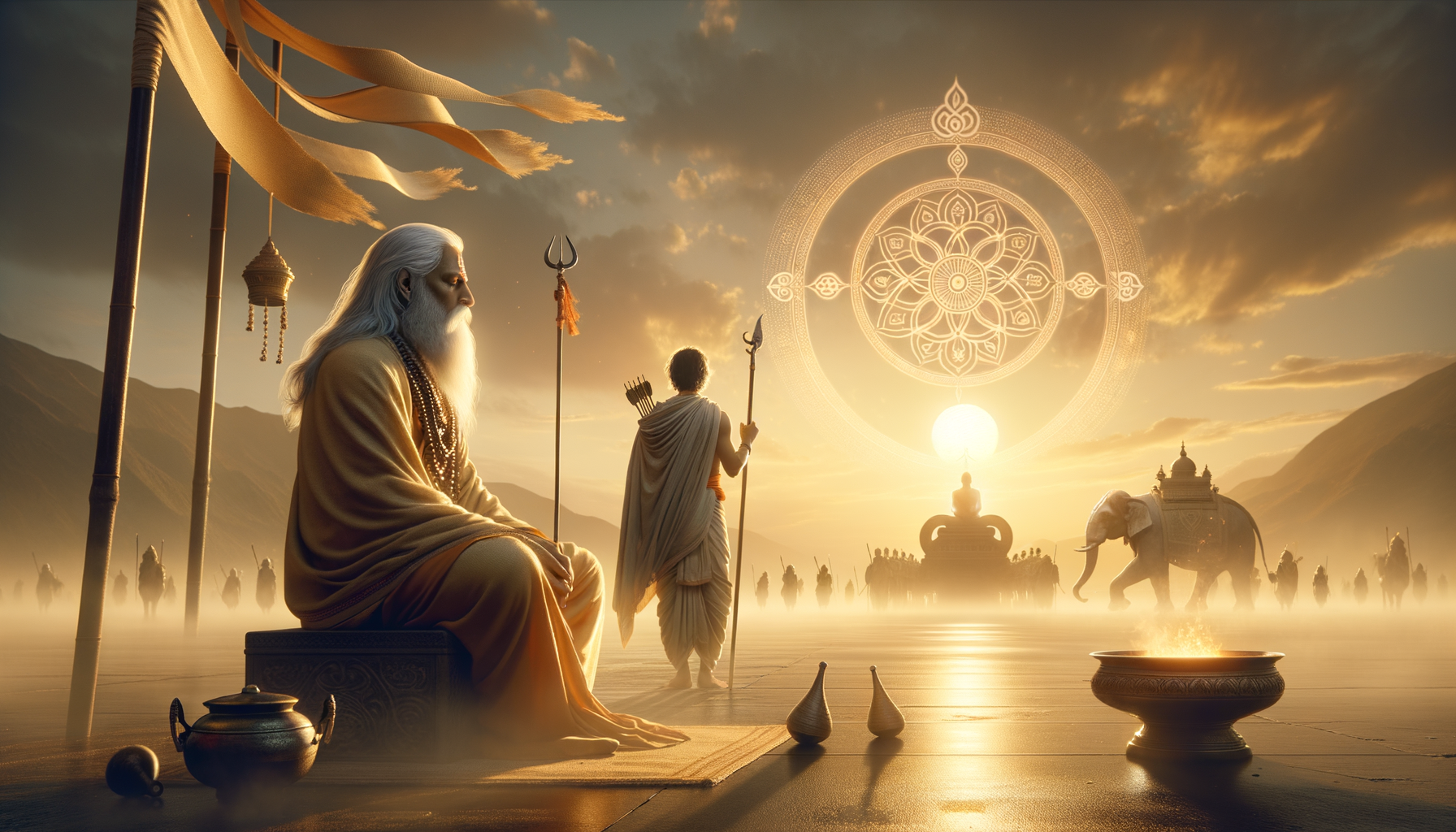
Guided by Krishna, the Pandavas adopted a stratagem centered on Drona’s son: Bhima slew an elephant named Ashwatthama, after which Yudhishtira reluctantly declared, “Ashwatthama is dead,” adding softly, “the elephant.” Trusting Yudhishtira’s unimpeachable truthfulness, Drona abandoned his weapons and sat in meditation. In that moment, Dhrishtadyumna advanced and beheaded him. Traditional sources vary in emphasissome highlight battlefield necessity; others stress the unsettling breach of battlefield decorumyet all agree on the deed’s gravity.
The episode invites sustained reflection on dharma and adharma. Was the ruse an unacceptable deviation from Kshatra-Dharma, or a tragic but necessary act to restore balance in a just war? Many readers experience a dual responseadmiration for strategic resolve and discomfort at the ethical costprecisely the blend that gives the Mahabharata its enduring philosophical depth.
Read through the broader lens of the dharmic traditions, the scene resonates across Hinduism, Buddhism, Jainism, and Sikhism. Hindu expositions on Dharma-Yuddha weigh truth, duty, and intention; Buddhist and Jain ethics remind readers of ahimsa, compassion, and the karmic burden of violence; Sikh reflections on dharam yudh balance righteous courage with moral restraint. Together, these perspectives nurture a shared civilizational conversation: valor must be tempered by conscience, and victory must be accountable to truth.
For contemporary readers, the encounter between Dronacharya and Dhrishtadyumna offers lasting insights. It clarifies how humiliation can distort power, how a teacher’s impartiality can transcend personal fate, how speech can alter the course of history, and how destiny and choice intertwine. Above all, it encourages unity among dharmic paths by foregrounding the common pursuit of ethical clarity in moments of conflict.
Inspired by this post on Hindu Pad.