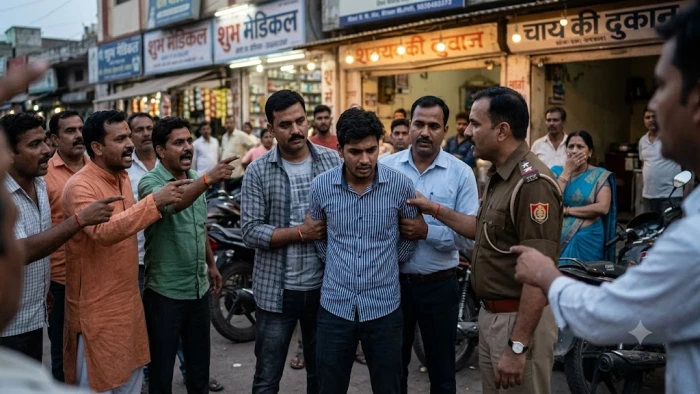
Across India’s campuses, the debate over the UGC Equity Regulations 2026 has stirred deep emotions and urgent questions: how can higher education protect vulnerable students from discrimination while upholding due process, institutional autonomy, and social harmony? The public outcry and demonstrations outside the UGC headquarters reflected a shared desire for safety, dignity, and fairnessvalues central to a dharmic ethos that honors every individual across Hindu, Buddhist, Jain, and Sikh traditions.
The policy journey began with the tragic student deaths of Rohith Vemula (2016) and Payal Tadvi (2019), followed by a 2019 public interest litigation in the Supreme Court. In response, the University Grants Commission moved to amend existing rules. A draft released in February 2025 sought a balance: it affirmed protections for SC/ST students, preserved institutional autonomy and due process for all, and included penalties to deter false or malicious complaints.
Following further submissions by petitioners in the PIL, final regulations were notified on January 13, 2026. These regulations emphasized protections for SC, ST, and OBC students and introduced new structures such as Equity Committees and Equity Squads/Ambassadors, anti-retaliation provisions, stronger debarment powers, and mandatory proactive measures. Critics, however, noted the removal of explicit safeguards against malicious complaints and raised concerns about asymmetry in protections and the potential for overbroad monitoring that could chill academic life.
The core policy challenge is not binary. Two realities can coexist: instances of caste-based discrimination (sometimes repeated by serial offenders) and the possibility of misuse of protective provisions. Neither expanding surveillance-like mechanisms nor loosening definitions of discrimination provides a durable solution. Overly intricate compliance frameworks tend to produce false positives, while under-defined standards fail to identify patterns of real harmboth outcomes erode trust and campus cohesion.
A constructive lesson for lawmakers is to center policy on pattern recognition and due process rather than on sweeping powers. Discrimination often manifests in repeated, lower-intensity acts that, taken individually, fall below formal legal thresholds but collectively reveal a concerning pattern. Rather than lowering legal standards, a measured approach can document these accretive acts and trigger proportionate, fair investigation when credible evidence accumulates.
One workable model is a privacy-preserving, anonymous (or confidential) reporting system that aggregates signals over time. When multiple, independently verified reports point to a recurring patternand when the cumulative impact crosses a clear thresholdan inquiry is initiated. This approach protects potential victims, reduces underreporting, and limits false positives by requiring converging evidence. It can also be adapted to sexual harassment and gender-bias matters, where patterns are similarly important to detect.
Implementation can be practical and rights-respecting: a secure digital platform; confidential identity verification with cryptographic safeguards; role-based access controls; independent, trained review panels; transparent timelines; and calibrated remedies. Symmetrical protectionsanti-retaliation for complainants and penalties for malicious or bad-faith reportingpreserve fairness. Restorative options and educational interventions can supplement disciplinary measures where appropriate, strengthening a culture of respect rather than fear.
Governance design matters as much as intent. Equity Committees should have precise mandates, publish anonymized annual statistics, undergo periodic independent audits, and operate with clear appeal pathways. Sunset clauses and scheduled regulatory reviews can ensure continuous improvement. Institutional autonomy and academic freedom should be expressly protected alongside robust anti-discrimination objectives, so that vigilance does not become overreach.
At heart, the aim is social harmony grounded in shared dharmic values: ahimsa (non-harm), justice, and dignity for all. Protecting SC, ST, and OBC students from discrimination is essential and fully compatible with ensuring procedural fairness for every community, including the General category. Policies that encourage solidarity across Hindu, Buddhist, Jain, and Sikh traditions reinforce a campus culture where compassion and accountability coexistand where difference becomes a source of learning rather than discord.
By co-creating rules with students, faculty, and administrators, conducting impact assessments, and committing to transparent data and regular reviews, lawmakers can deliver a framework that protects every student and educator. The UGC Equity Regulations 2026 can evolve into a model that prevents discrimination, deters misuse, and nurtures trust. Balanced, evidence-led, and humane, such a system advances both student safety and due processstrengthening India’s higher education ecosystem and the unity of its dharmic civilizational values.
Inspired by this post on RightViews.