-
Manusmriti in Modern India: Separating Myth from Method for a Dharmic, Inclusive Future

This evidence-based exploration separates myth from method to answer whether Manusmriti is relevant today. It explains what the text is within Dharmashastra, how it actually functioned through custom and commentary, and why colonial codification distorted public perception. It clarifies hotly debated verses on women and caste with historical context while affirming modern constitutional equality. It…
-
Beyond Caste: A Powerful Call for Dharmic Unity at Navi Sangvi’s Virat Hindu Sammelan

The Virat Hindu Sammelan in Navi Sangvi spotlighted a disciplined call by Shri. Sunil Ghanwat to transcend caste-based divisions and build community cohesion rooted in dharmic ethics. Framed inclusively across Hinduism, Buddhism, Jainism, and Sikhism, the message emphasized unity in diversity as both a moral imperative and a practical necessity. The analysis outlines actionable steps—mixed-team…
-
Supreme Court declines ‘Brahmophobia’ plea: legal clarity on hate speech, caste, and fraternity

The Supreme Court of India declined to entertain a petition seeking formal recognition of “Brahmophobia” as a distinct, punishable form of caste-based hate speech, allowing withdrawal and emphasizing fraternity. This outcome aligns with established jurisprudence: existing penal provisions already address hateful incitement without creating community-specific offences, and any new speech category would be a legislative…
-
Not So Salient: Exposing Caste Stereotypes and Defending Hindu American Civil Rights

Harvard’s “The Brahminist Veto” casts Hindu Americans as a theocratic fringe, but the evidence points elsewhere: routine civic advocacy, due process in high-profile investigations, and a consistent demand for equal respect in academic settings. The record shows that caricatures of Hindu theology—through misreadings of texts like Manusmriti and the Purusha Sukta—ignore scholarly consensus and historical…
-
UGC Equity Regulations 2026: Protecting Students, Preventing Misuse, Preserving Due Process

The UGC Equity Regulations 2026 arose from urgent calls to prevent discrimination while preserving due process and academic freedom. This analysis traces the policy timeline, clarifies what changed in the final rules, and explains why overbroad monitoring can undermine trust. It outlines a constructive alternative: privacy-preserving, pattern-based reporting that aggregates credible signals before triggering inquiries.…
-
How Colonial Rule Solidified ‘Caste’: Decoding History, Names, and Dharmic Unity

This article re-examines the widespread belief that “caste” is an ancient, rigid pillar of Hinduism by tracing how British colonial administration centralized and hardened fluid social identities. It contrasts England’s parish-register surname standardization—an administrative tool that rarely fixed social rank—with the subcontinent’s census-driven reclassification that tethered names to hierarchy. It clarifies the distinct roles of…
-
US Caste Laws Risk Colonial Repeat and Bias—Protecting Dharmic Unity Now

US efforts to legislate caste as a protected category aim to curb discrimination but risk reviving colonial-era methods of identity control. Historical lessons from British rule and postcolonial India show how enumeration hardens fluid identities and creates verification problems, particularly in diaspora contexts. Early institutional responses, such as caste-focused DEI trainings, may inadvertently heighten bias…
-
Ramdev Pir of Rajasthan: The Compassionate King Who Defied Caste and Uplifted Communities

Ramdev Pir—also known as Baba Ramdev, Ramdevji, Ramdeo Pir, and Ramsha Pir—is remembered as a medieval Rajasthani ruler and village deity whose legacy blends social reform with inclusive devotion. Historical memory credits him with elevating standards of living and challenging caste-based discrimination, aligning moral authority with practical governance. His living worship traditions highlight seva, communal…
-
Inside the Carnegie Indian American Survey: What the Data Misses on Dharmic Lives

The Carnegie Endowment’s 2024 Indian American Attitudes Survey offers a useful snapshot of the diaspora, but several findings require careful interpretation. Treating “Indian American” as synonymous with “Hindu American” can obscure the distinct experiences of dharmic communities, including Hindus, Buddhists, Jains, and Sikhs. Reported caste discrimination (7%) is lower than discrimination based on skin color,…
-
Discover the Essential Questions Carnegie Missed on Caste Bias—and Proven Ways Forward

I revisited Carnegie’s latest Indian American Attitudes Survey and compared it with the 2021 findings to see what changed—and what didn’t—around discrimination. Skin color remains the leading basis, while caste reports rose slightly from 5% to 7%. I explain why this small increase should prompt better survey design, not alarmist claims. I outline three essential…
-
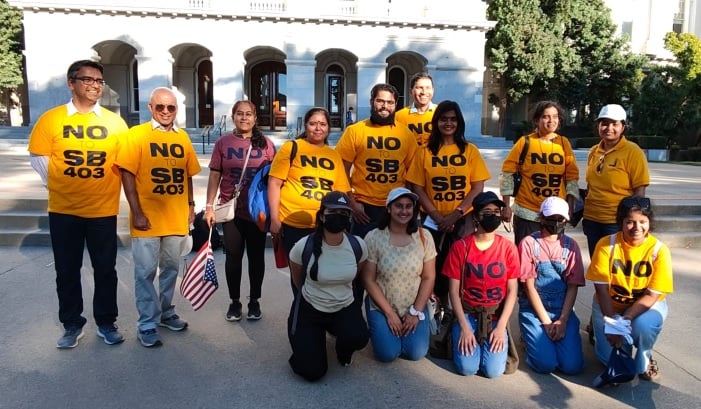
CoHNA Welcomes the Veto of SB403 as a Victory for Justice and Equality before Law

Discover the recent victory for justice and equality as the Coalition of Hindus of North America (CoHNA) celebrates California Governor Gavin Newsom’s veto of SB403. Governor Newsom’s decision to label the bill “unnecessary” aligns with CoHNA’s stance that existing laws effectively address discrimination in all forms. The bill, which stirred controversy, was seen by the…