Bengaluru, 19 Oct 2025: The Karnataka government’s decision to restrict an RSS march and to disallow shakha activities in public places and government institutions has intensified political debate across the state. The Bharatiya Janata Party (BJP) condemned the move as “Sanghphobia,” while civil society voices called for calm, dialogue, and adherence to constitutional processes. The development has drawn attention to the balance between public order, institutional neutrality, and the constitutional guarantees of assembly and religious freedom.
The restriction, described as applying to marches in public spaces and shakhas within government premises, highlights a frequent policy tension: how the state manages civic mobilization in shared spaces without privileging or stigmatizing any community or organization. Government institutions are often expected to remain neutral venues, yet public parks and thoroughfares function as common civic spaces for cultural, social, and spiritual gatherings. Clarifying the scope, duration, and specific rationale of such orders is essential for transparency and trust.
Political responses have been swift. The BJP criticized the decision as discriminatory, framing it as evidence of “Sanghphobia.” In contrast, defenders of the restriction emphasize institutional neutrality and public order. Across this spectrum, a widely shared concern remains paramount: preserving democratic norms that allow peaceful assembly, processions, and cultural expression, while ensuring that administrative measures are proportionate, time-bound, and non-discriminatory.
India’s constitutional framework provides a clear lens for evaluating such actions. Article 19(1)(b) guarantees the right to peaceful assembly, subject to reasonable restrictions under Article 19(3) for public order. Article 25 safeguards freedom of conscience and the right to freely profess and practice religion, again subject to public order, morality, and health. Sound governance in such contexts typically requires narrowly tailored restrictions, consistency in their application across groups, and robust avenues for appeal or review.
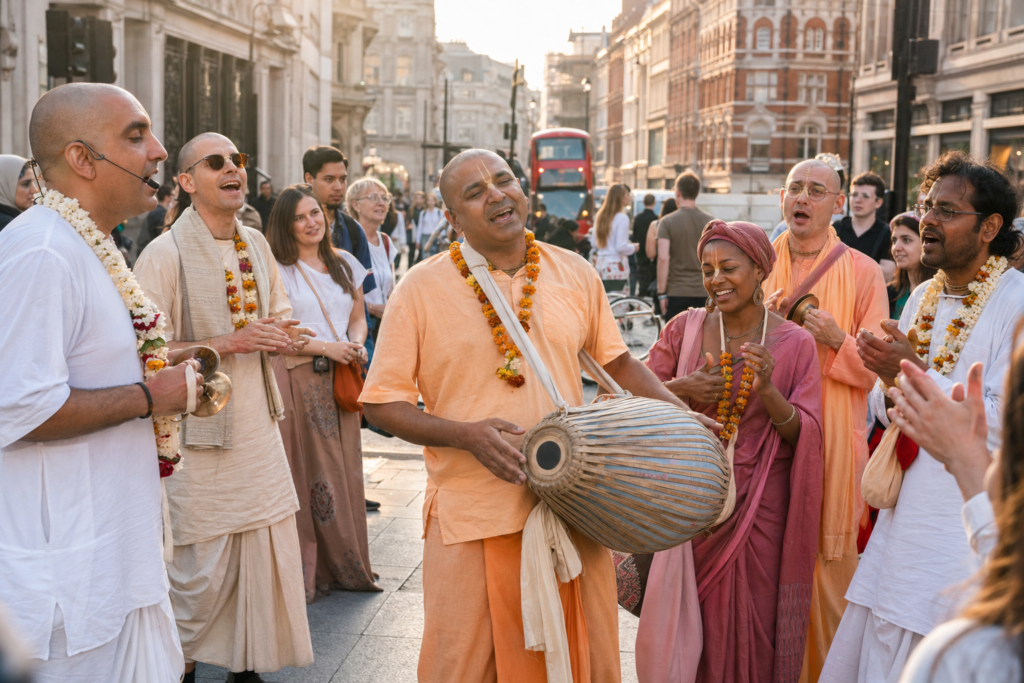
Socially, the episode resonates beyond one organization. For many residents, early-morning gatherings in parksbe they shakhas, yoga sessions, study circles, or prayer meetingsare part of everyday life. Ensuring equitable access to public spaces, clear scheduling, and non-intrusive codes of conduct helps communities coexist without friction. When rules are communicated early and applied fairly, trust grows and tensions ease.
In a dharmic society that values harmony among Hinduism, Buddhism, Jainism, and Sikhism, decisions affecting public religious or cultural activities should be framed to strengthen unity rather than deepen divides. Principles such as ahiṁsā, mutual respect, and satya provide a shared ethical basis for dialogue. A policy approach that protects everyone’s right to peaceful expression while maintaining public order serves this broader dharmic aspiration of social balance and compassion.
Constructive pathways are available and proven in practice. These include transparent permission protocols with time-bound decisions; uniform codes of conduct for all marches and gatherings; equal-access policies for public venues; designated routes and time windows to minimize disruption; community liaison committees representing diverse dharmic traditions; and independent review mechanisms to address grievances swiftly. These measures transform potential flashpoints into opportunities for civic cooperation.
Looking ahead, Karnataka’s institutions can reinforce confidence by publishing clear criteria for permissions, documenting reasons for any restrictions, and engaging community leaders early. By aligning policy with constitutional rights and India’s plural ethos, the state can reduce polarization and model how public order and religious freedom coexist. In that spirit, the present moment invites all stakeholders to prioritize dialogue, fairness, and the unity of India’s dharmic traditions.
Inspired by this post on Struggle for Hindu Existence.