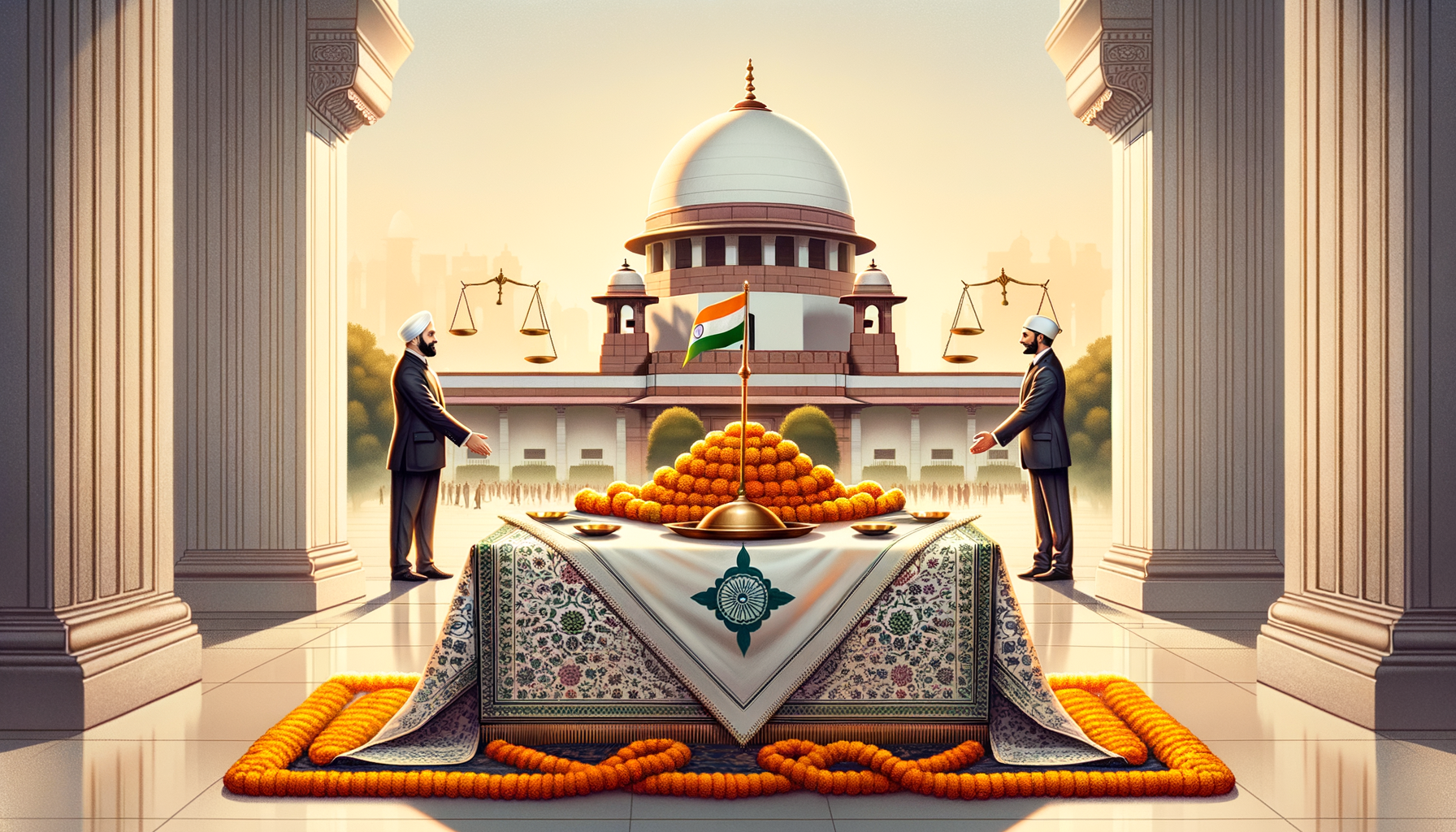
Hindu Sena has filed a court petition seeking to restrain the ceremonial chaddar offering by the Prime Minister to the Ajmer Sharif dargah. Alongside this plea, the group reportedly appealed to authorities to change the name of Delhi’s Babar Road. The development has sparked public discussion at the intersection of law, tradition, and the ethos of interfaith harmony in India.
The chaddar offering at Ajmer Sharif dargahrevered as the resting place of Khwaja Moinuddin Chishtihas long been viewed by many as a gesture of respect for Sufi heritage and a symbol of India’s pluralism. Successive leaders have regarded such observances as part of a broader tradition of acknowledging the diverse spiritual landscape of the country.
The petition underscores contested interpretations of religious symbolism in public life. While one side emphasizes state neutrality and questions official participation in faith-linked ceremonies, another stresses the value of cultural outreach and the fostering of goodwill between communities. Within India’s constitutional framework, courts routinely balance these considerationsfundamental rights, equality before law, and the secular character of the statewhen evaluating such claims.
Public response reflects a spectrum of views. Some citizens express concern about the precedent set by state representatives in religious spaces; others highlight that respectful engagement with sacred siteswhether Hindu, Buddhist, Jain, Sikh, or Islamiccan strengthen social trust. Many observers, mindful of the nation’s shared civilizational heritage, see this moment as an opportunity to deepen interfaith dialogue rather than escalate division.
The call to rename Delhi’s Babar Road also fits within a broader national conversation about place names, memory, and identity. A measured approach, grounded in transparent criteria and inclusive consultation, can help ensure that such decisions honor historical understanding while promoting social cohesion. In a country enriched by multiple traditions, policies that acknowledge diverse narratives while avoiding polarizing rhetoric are more likely to sustain long-term harmony.
At the heart of the debate is a shared commitment to constitutional values: freedom of conscience, equal respect for all faiths, and the rule of law. A dharmic perspectiverooted in dignity, non-harm, and mutual respectencourages dialogue that upholds unity among Hinduism, Buddhism, Jainism, and Sikhism, while also recognizing the lived reality of India’s interreligious fabric. Constructive engagement, fact-based discussion, and legal due process offer the surest path to resolving disagreements without eroding the pluralism that defines the nation.
As legal proceedings unfold, maintaining an academic and civically responsible discourse serves the public interest. Keeping focus on interfaith harmony, constitutional safeguards, and India’s longstanding ethos of “unity in diversity” can help transform a contentious moment into a catalyst for greater understanding across communities.
Inspired by this post on Struggle for Hindu Existence.