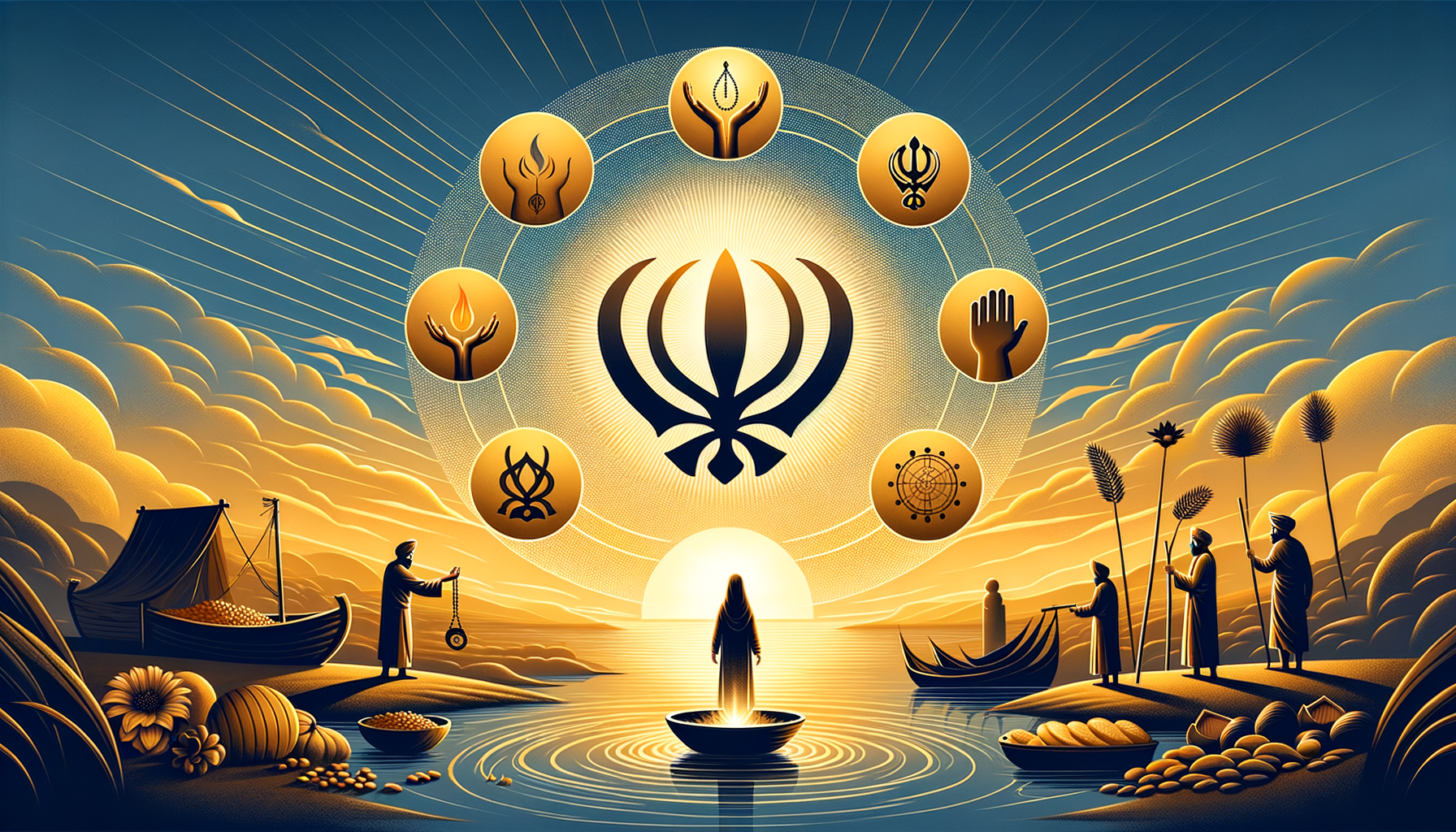
Guru Nanak’s wisdom speaks with striking clarity to contemporary life, offering a framework that uplifts personal conduct and social harmony. Rooted in Sikhism yet resonant across Hindu, Buddhist, and Jain traditions, these teachings foreground dharma, ahimsa, and shared human dignity. The principles belowarticulated as seven thematic insightsencourage ethical action, inner steadiness, and unity in diversity, helping communities navigate polarization and rebuild trust through compassionate, truthful living.
Naam Japna (remembrance of the Divine) centers awareness on the sacred presence that underlies experience. Many find that a few quiet moments of remembrance before the day begins steady the mind amid digital noise and constant urgency. This contemplative focus parallels japa in Hindu traditions, samayik in Jain practice, and mindful recollection in Buddhist paths, demonstrating a shared dharmic commitment to interior clarity as the basis for wise action.
Kirat Karo (honest livelihood) affirms dignity in work performed with integrity. In workplaces and homes alike, ethical effort restores trust and reduces the hidden costs of corner-cutting. The teaching echoes samyag ājīva (right livelihood) in Buddhism and the broad dharma-mandate for responsibility and fairness found in Hindu and Jain ethics. Practically, it encourages transparent dealings, fair compensation, and a conscientious approach to emerging technologies and markets.
Vand Chhako (share what one has) transforms prosperity into community well-being. Sharing time, skills, and resourceswhether through mentoring, neighborhood cooperation, or food security initiativesturns private success into public resilience. This spirit aligns with dāna traditions in Hinduism, Buddhism, and Jainism, where generosity is both a personal virtue and a structural good that strengthens social fabric.
Sarbat da Bhala (welfare of all) extends compassion beyond personal circles to the whole community. It encourages policies and daily choices that reduce harm, reflecting ahimsa, maitrī, and karuṇā across dharmic traditions. In practice, this ethic supports interfaith dialogue, environmental stewardship, and justice efforts that safeguard the vulnerableshowing how spiritual insight can guide collective problem-solving with sobriety and hope.
Equality and oneness of humanity stand at the heart of Guru Nanak’s message, rejecting social hierarchies and affirming equal dignity across gender, caste, and creed. This vision mirrors the dharmic insight that the same inner light animates all beings. In contemporary terms, it invites institutions and communities to design inclusive practicesmeasurable, transparent, and compassionateso that unity in diversity becomes a lived reality rather than an aspiration.
Seva (selfless service) operationalizes compassion through concrete action. From neighborhood clean-ups to community kitchens (langar), service builds shared confidence in times of uncertainty. Seva aligns with karma yoga in Hindu thought, compassionate action in Buddhism, and the Jain emphasis on disciplined kindness, revealing a consistent thread across dharmic pathways: service refines character while reducing suffering.
Truthful living (Sat) and humility cultivate moral courage without harshness. Speaking truth with care strengthens relationships and sets ethical norms that others can trust. This approach tempers conviction with listeningcrucial in polarized spacesand invites chardi kala (resilient optimism) when outcomes are slow. Across traditions, truthful speech and modesty are markers of maturity, aligning intention with impact.
Together, these seven teachings form a coherent map: contemplative grounding, ethical work, generous sharing, universal welfare, equality, service, and truthful humility. The sequence is practicalquiet the mind, act with integrity, share what one can, widen care to all, remove barriers to dignity, serve selflessly, and speak truth with grace. Each step supports the next, creating momentum for personal transformation and social coherence.
Read through a dharmic lens, Guru Nanak’s wisdom becomes a shared inheritance of Hinduism, Buddhism, Jainism, and Sikhismfour streams flowing toward the same ocean of compassion and insight. In daily life, these teachings help households reduce stress, workplaces build trust, and communities nurture harmony of faiths. The result is a resilient culture rooted in Spiritual Wisdom and guided by the conviction that inner clarity and outer responsibility rise together.
Inspired by this post on SikhNet – News.