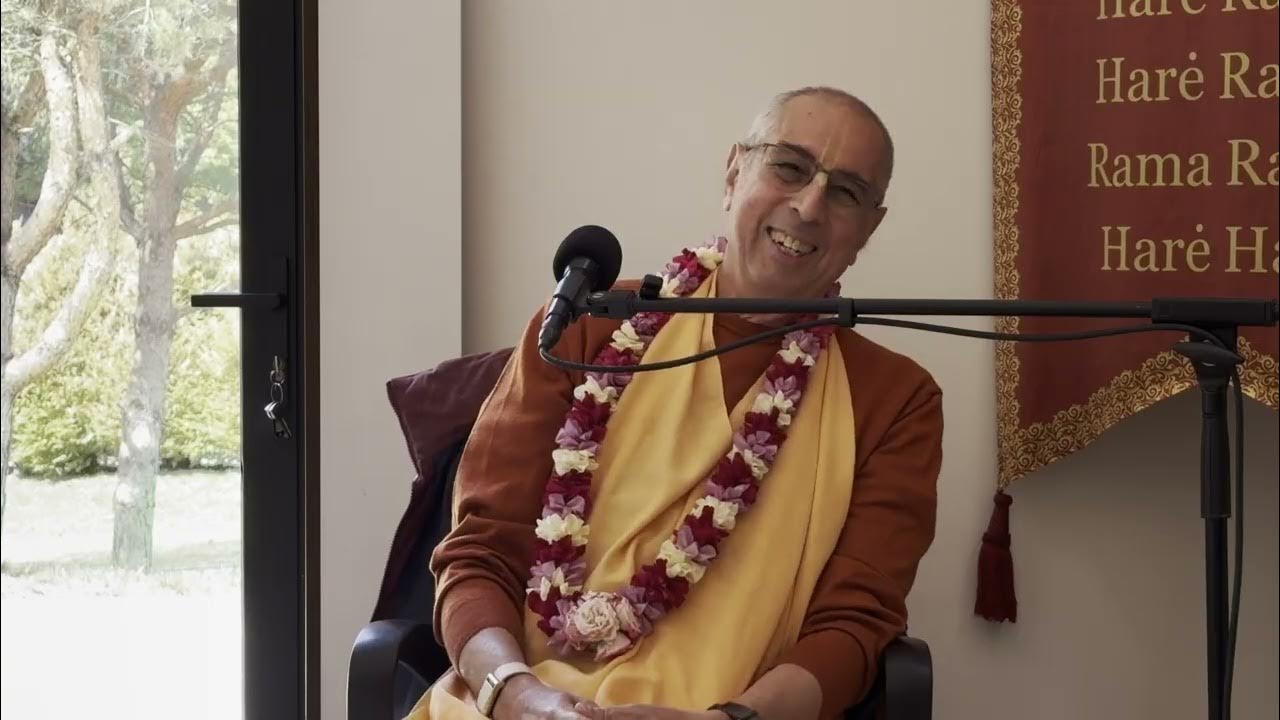
On April 19, 2026, in Lithuania, a senior Gaudiya Vaishnava sannyasi (often addressed as Maharaja) presented a rigorous exploration of why devotional vows in Krishna consciousness matter, honoring candidates preparing for initiation (diksha) and framing vows as instruments for inner transformation rather than mere compliance. The talk set a contemplative tone by affirming that regulated practice aligns thought, speech, and action with bhakti’s telos: steadfast remembrance of Sri Krishna.
The lecture first recognized those who had qualified for initiation by consistently chanting 16 rounds of the Hare Krishna maha-mantra and by following the four regulative principles. While acknowledging the discipline such standards require, it emphasized that these commitments serve a deeper purpose: stabilizing attention, purifying intention, and cultivating the dispositions (bhavas) that allow devotion to become spontaneous and joyful rather than forced.
Technically, chanting 16 rounds corresponds to 16 cycles of 108 names each1,728 recitations of the maha-mantra dailyusually occupying 90 to 120 minutes when performed attentively. Practiced as japa meditation, this repetition entrains breath, posture, and attention into a coherent rhythm, gently reducing cognitive noise and reinforcing a devotional orientation of the mind. Experienced practitioners attest that maintaining a fixed daily count functions as a behavioral “anchor,” safeguarding practice even when motivation fluctuates.
The four regulative principlesabstaining from meat-eating, intoxication, illicit sexual activity, and gamblingwere presented not as prohibitions for their own sake but as ethical guardrails that conserve clarity, compassion, and steadiness. In positive terms, they strengthen ahimsa (non-violence and care for sentient life), satya (truthfulness), śauca and brahmacarya (purity and responsible conduct), and tapas/simple living. These commitments harmonize with the yamas and niyamas of Yoga, situating Gaudiya Vaishnava practice within the wider Vedic ethic that prioritizes self-mastery and service.
Philosophically, the lecture situated vows within the framework of sādhana-bhakti as articulated by Śrī Rūpa Gosvāmī: “anyābhilāṣitā-śūnyam jñāna-karmādy-anāvṛtam ānukūlyena kṛṣṇānu-śīlanaṁ bhaktir uttamā.” In this light, regulated practice is a method for removing extraneous desires and for orienting will and habit toward favorable service to Krishna. Vows are thus pedagogicaltraining the senses and mindrather than juridical; they aim at maturation from external discipline to internal relish (ruci) and affectionate attachment (āsakti).
The guru–śiṣya covenant was presented as reciprocal responsibility rather than unilateral demand. Initiation formalizes guidance and accountability: the guru imparts mantra and method; the disciple undertakes steady practice and offers transparent self-assessment. In Gaudiya communities this often unfolds in two stagesharināma-dīkṣā followed, where appropriate, by mantra or brāhmaṇīcal initiationeach accompanied by clear expectations regarding japa, study, seva (service), and community conduct.
Historically, the talk recalled that in the movement’s earlier decades many candidates lived fully immersed in temple life. Constant kirtan, deity service, communal study, and ceaseless engagement created an intensive ecology of practice, so readiness for initiation often matured quickly. Contemporary circumstances differ: many aspirants balance employment, study, and family life. The standard remains intact, yet communities now emphasize personalized mentoring and sustainable rhythms, privileging depth and integrity over speed.
A vivid motiflikened to “strawberry halva that finished material life”was used to illustrate how prasādam operates as both delight and medicine. Honor to sanctified food integrates the senses into devotion; taste is redirected rather than suppressed. In Gaudiya aesthetics, transformation often begins in rasathe felt quality of experienceso that what is pleasing becomes purifying and what is purifying becomes pleasing. For many, a single encounter with prasādam marks the first, unforgettable reorientation of desire.
From the standpoint of contemplative science, mantra repetition functions as attentional training, supporting emotional regulation and resilience. Regular japa can help reduce reactivity, strengthen metacognitive awareness, and consolidate wholesome habit loops through consistent cue–routine–reward cycles. Devotees frequently report that a protected morning slot, gentle pacing, and clear bead-tracking practices prevent drift and preserve depth, while periodic kirtan and śāstra study reinforce motivation throughout the day.
The lecture mapped progress using a classical Gaudiya trajectory: śraddhā (faith) to sādhu-saṅga (noble association), to bhajana-kriyā (established practice), through anartha-nivṛtti (clearing of impediments), to niṣṭhā (steadiness), ruci (taste), āsakti (attachment), bhāva (incipient love), and prema (mature love). Vows chiefly serve the anartha-nivṛtti-to-niṣṭhā corridor, where consistency matters more than intensity. When discipline becomes dependable, taste awakens; when taste awakens, discipline becomes a joy rather than a burden.
Importantly, the talk underscored kinship across the dharmic family. Ethical vows in Buddhism (pañca-śīla), Jainism (aṇuvratas), and Sikh dharma (Rehat Maryada disciplines) similarly cultivate non-harming, truthfulness, restraint, and sobrietyvirtues that make contemplative life stable and service-oriented. Unity in spiritual diversity was celebrated as a civilizational strength: different lineages tailor methods to temperament while affirming shared values of compassion, integrity, and devotion.
Practical counsel followed: articulate a clear saṅkalpa (why the vow matters), schedule japa during the day’s quietest window, minimize digital interruptions, nourish the body with wholesome prasādam, and seek steady satsaṅga and mentoring. Measurable practicessuch as fixed daily rounds and periodic check-inscreate gentle accountability without harshness. When setbacks occur, the instruction was to recalibrate with humility and resume, trusting the cumulative power of small, faithful steps.
In closing, vows in Krishna consciousness were portrayed as bridges from rule to realization. They protect attention, channel affection, and prepare the heart for the grace that matures practice into love. Whether in a bustling temple or in a Lithuanian living room, the same principle holds: disciplined devotion, nourished by community and sanctified aesthetics, transforms. Such transformation resonates across Hindu Dharma and the wider dharmic traditions, affirming a shared path toward awakening, service, and peace.
Inspired by this post on Dandavats.