Ramanujacharya stands among medieval India’s most influential acharyas; understanding the auspicious context of his birth illuminates a legacy that shaped Hindu Dharma and Vedic traditions while resonating with broader dharmic values of devotion, learning, and service.
In the year 1017 A.D., Sripad Ramanujacarya is recorded to have appeared on the ‘sasthi’, the sixth lunar mansion of the light fortnight in the month of Chaitra (April–May). The birth took place in South India, Tundiradesha, at Sriperumbudur, about half way between Kancipuram and Madras.
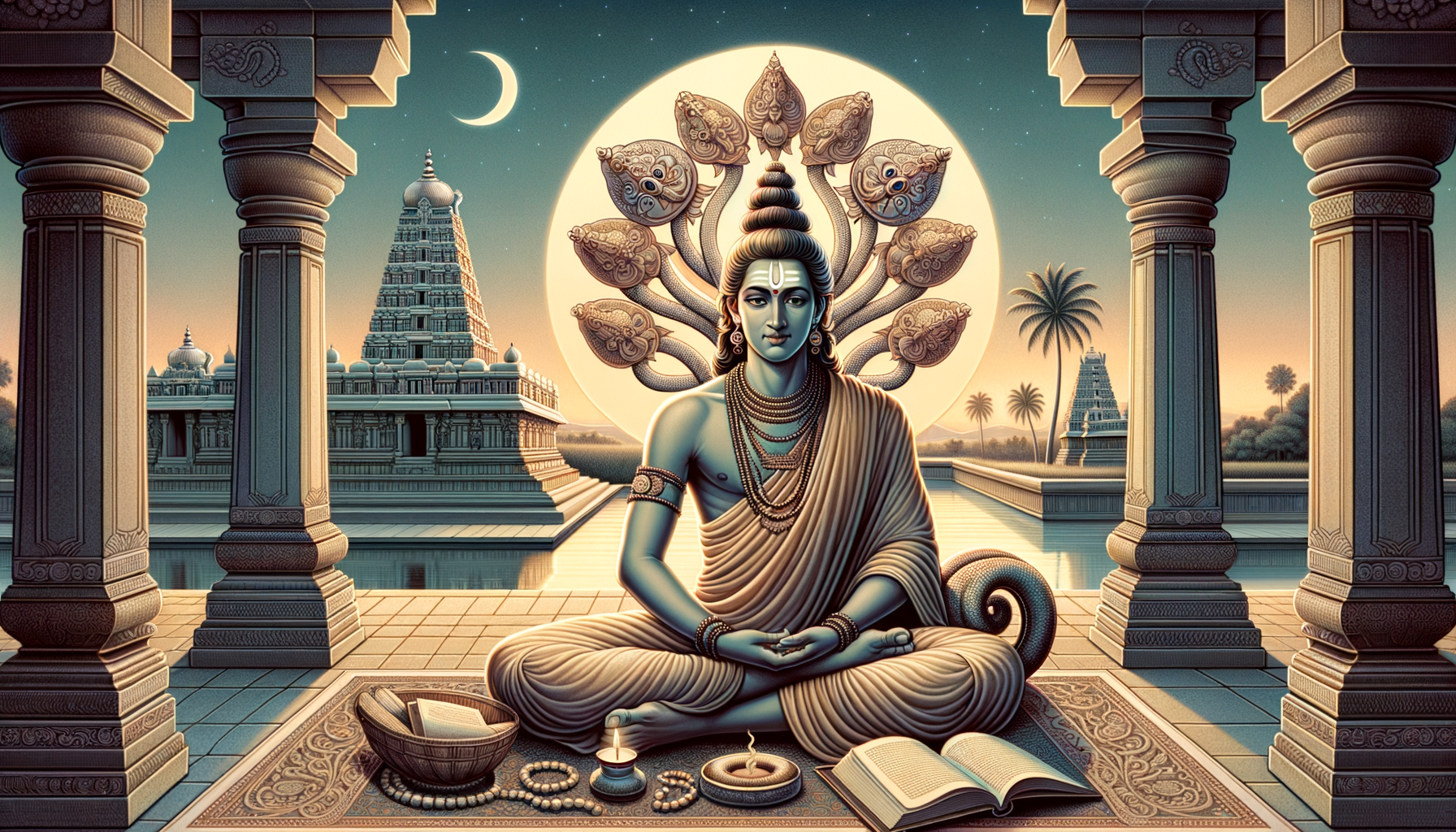
Traditional accounts venerate him as a partial incarnation of Lord Ananta Shesha and Laxman. Such descriptions, common in Vaishnava hagiography, emphasize the sacred aura surrounding his life and mission while grounding his later influence within a continuum of devotional authority.
His father, Asuri Keshava Somayajialso known as Sarvakratu Diksitaris believed to have been either an advaitin or a smarta, reflecting the rich philosophical diversity of the period. His mother, Kantimati, was the granddaughter of the great Vaisnavacarya Yamunacarya, placing Ramanujacharya within an illustrious spiritual lineage.
These biographical particulars situate Ramanujacharya within South India’s vibrant scholastic networks and devotional communities. They also foreshadow the breadth of his subsequent contributions to Sri Vaishnavism and Vishishtadvaita Vedanta, contributions that shaped discourse across Hindu philosophy and informed practices of bhakti centered on compassion and inclusive community life.
For contemporary readers across Hinduism, Buddhism, Jainism, and Sikhism, the alignment of sacred time (Chaitra, ‘sasthi’) with an enduring lineage offers a relatable frame: shared dharmic virtuesdevotion, study, humility, and serviceremain essential for individual growth and social harmony. The narrative evokes a sense of continuity, inviting reflection on how classical wisdom informs ethical living today.
The geographic settingSriperumbudur situated between Kancipuram and Madrasanchors the story within South India’s living sacred landscape. This context enriches understanding of pilgrim geographies in medieval India and highlights the cultural interconnections that sustained learning, dialogue, and spiritual refinement across regions.
Together, these detailstime, place, lineage, and traditional recognitionoffer a concise, historically grounded portrait of Ramanujacharya’s beginnings. Remembering this auspicious origin reinforces a unifying message: diverse paths within the dharmic family can converge around shared commitments to truth-seeking, compassion, and collective uplift.
Inspired by this post on Dandavats.