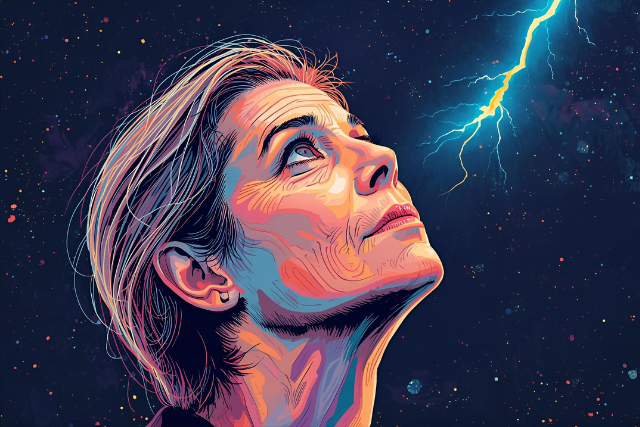
“There is no way to be whole without first embracing our brokenness. Wounds transform us, if we let them.” ~Sue Monk Kidd
Menopause surfaced all that was unresolved, unmet, and unchallenged, inviting a response marked by grace rather than resistance.
The transition did not occur overnight. It unfolded as a decade-long processintense and disorienting at first, then gradually steadier. Early on, it felt like a “strap yourself in, no brakes, no seatbelt” rollercoaster; later, it settled into something more like a contemplative driftless “aaaaggggghhhhh” and more “oh.”
With time, the comparison shifted from Nemesis Inferno to It’s a Small World. From that vantage point, deep compassion emerged for the younger self at the start of perimenopausethe person who searched frantically through a vortex of symptoms, uncertain if the cause was a brain tumor, an underactive thyroid, or something yet unnamed.
The first signals appeared around age thirty-five. After moving from Cheshire to Brighton to study songwriting at BIMM, energy and optimism were abundant. The first year was vibrant, yet soon the ground began to fracture.
Symptoms gathered force. On stage, the mind would suddenly go blank. The keyboard blurred into a jelly-like haze. Nocturnal heart pounding arrived without explanation. Weight accumulated around the middle. Panic attacks struck in townat times against a bank wallwhile strangers looked on with concern.
Libido spiked unexpectedly. Rage felt volcanic, and even the quietest breath from a partner could trigger a tirade. The paradox was not lost: heightened desire alongside heightened irritability.
Neither online searches nor medical consultations yielded clarity. The picture was complex, and answers were scarce.
The unraveling intensified during a band tour at age forty-two. Ten days yielded just one proper night of sleep. Returning home brought no relief. Insomnia took holdlearned, rehearsed, and then repeated by a mind stuck in a loop.
A functional medicine practitioner eventually ordered lab tests. The results showed “low everything,” and for the first time the term perimenopause appeared. Denial initially prevailed, but the term embedded itself quietly.
At the same time, new professional directions emerged through speaker events in Brighton and exploration of therapeutic modalities. Musiconce exhilaratingbecame frightening. Hypnosis-based RTT offered a deep reset of subconscious patterns and opened a new pathway.
A pivotal insight followed: many midlife narratives involved more than symptomsthey revealed deep relational wounds. This led to a question: could the severity of menopausal symptoms be linked to adverse childhood experiences (ACEs)?
Academic literature supported this hypothesis. A 2021 study in Maturitas reported that women with higher ACE scores were up to 9.6 times more likely to experience severe menopausal symptoms, even after adjusting for anxiety, depression, and hormone therapy. A 2023 study from Emory University found that perimenopausal women with trauma histories demonstrated significantly higher levels of PTSD and depression compared to women in other hormonal phases. A 2017 paper in the Journal of Clinical Psychiatry showed that women with two or more ACEs were over 2.5 times more likely to experience their first major depressive episode during menopause, even without prior depression. A 2024 review further framed early trauma as a key driver of hormonal sensitivity during transitions such as perimenopause.
Biological mechanisms clarified the picture. A peer-reviewed paper in Frontiers in Medicine indicated that trauma exposure can alter GABA-A receptor function in ways that reduce the nervous system’s capacity to calm itself. These receptors depend on allopregnanolone, a metabolite of progesterone. Trauma may disrupt both the conversion of progesterone to allopregnanolone and the cell’s ability to receive allopregnanolone’s effects. In practice, this means that even when progesterone is present, its soothing benefits may be blunted. The result is heightened sensitivity to hormonal fluctuations and diminished access to progesterone’s calming, anxiolytic influence.
As this research converged, personal history demanded attention. What had long been described as a happy childhood included dynamics that were harder to see: enmeshment trauma. Often mistaken for “closeness,” enmeshment hides in plain sight. As an only child without buffers, emotional boundaries blurred. Parents confided in the child about each other, drawing on a level of emotional maturity that was not developmentally appropriate. Praised for perceptiveness, the child learned to carry heavy emotional loads.
Parentification impaired safe individuation. Autonomy came at the cost of emotional withdrawal from a once-close father, a loss that echoed through the years. The nervous system adapted through hyper-responsibility, anxiety, and guilttraits that collide with the menopause transition’s deeper requirement for slowness, ease, and softness.
Attachment patterns followed familiar energy. Older men, teachers, or unavailable figures felt compelling; emotionally available partners could seem unremarkable. This dynamic added voltage to a pot of CPTSD that remained largely hidden beneath a confident exterior.
Financial individuation also lagged. Reliance on parental support continued into mid-forties, bringing shame and frustration. A major rupture ensued: the decision to leave a long-term relationship. When reconciliation did not occur, the aftermath was painful but clarifying. Grit, learned earlier in life, fueled recovery.
From there, core competencies emergedfinancial independence, commitment to one relationship at a time, respectful partnership, clear boundaries, and a new devotion to conserving energy. Menopause itself demanded those shifts.
In this light, menopause can be understood not merely as a hormonal event but as a whole-life transitioninner and outershaped by the nervous system, resilience, and emotional flexibility. Hormone therapy has value, but for sensitive systems it is only part of the solution and can occasionally aggravate symptoms if not tailored carefully.
Trauma-informed support beyond the medical model can be profound. Slowing down creates space for the body’s diligent recalibration. Gentle, nourishing movement, Yoga Nidra, early nights, simple meals, grounding in nature, magnesium baths, dry body brushing, castor oil packs, and vaginal steaming are examples of restorative practices that promote parasympathetic activation and somatic safetykey elements of healing during perimenopause and post-menopause.
These approaches resonate with shared values across dharmic traditionsHinduism, Buddhism, Jainism, and Sikhismwhere contemplative disciplines such as yoga, meditation, svādhyāya (self-study), compassion, and non-harm guide steady self-regulation and communal harmony. Framed this way, midlife change becomes an opportunity to cultivate inner peace and unity, reinforcing a culture of mutual respect and holistic well-being.
Perhaps the most radical intervention was logistical: carving out time in the diary to S.L.O.W. D.O.W.N., aligning lifestyle with physiology.
Eighteen months post-menopause, reflection yields clear insights. Menopause illuminated unresolved, unmet, and unchallenged layers of experience.
It revealed where “yes” was still being offered to others while “no” was being offered to oneself.
It showed that more space is needed than society typically encourages or understands.
It loosened the grip of beauty standards and returned time for rest.
It absolved guilt for declining to live by others’ expectations.
It reframed symptoms as love letters from her inner child, guiding a return to wholeness.
Ultimately, this journey through perimenopause and menopause underscores a central theme: when trauma, hormones, and the nervous system are viewed together, lived experience makes sense. The path forward is compassionate, evidence-informed, and integrativehonoring the body’s signals, engaging supportive practices, and embracing change as a catalyst for resilience.
Inspired by this post on Tiny Buddha.