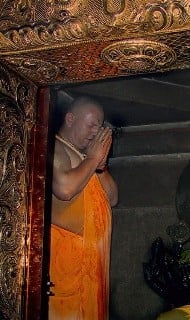
A widely shared video captures a father standing before Lord Jagannath, his ailing child in his arms, offering an earnest prayer. Moments later, the child appears to show initial signs of responsiveness, prompting a quiet sense of relief among onlookers. While the footage cannot speak to clinical outcomes, it documents a powerful convergence of devotion, parental love, and hope.
Within the dharmic ecosystem—Hinduism, Buddhism, Jainism, and Sikhism—such scenes are understood through shared values: bhakti (devotion), karuṇa (compassion), dayā (empathy), maitri (friendship), and seva (selfless service). The visual idiom of Lord Jagannath, revered in Jagannath Temple traditions and widely associated with Puri Srimandir in Odisha, symbolizes inclusivity; devotees often address the deity as Patitapaban, the uplifter of all.
The father–child bond visible in the clip resonates beyond any single shrine or sect. It affirms a simple insight: in times of distress, communities cohere around love, prayer, and mutual care. Observers frequently read such moments as reminders that sanctuaries are not only built of stone but also formed within the human heart.
An academic reading situates the episode within a longstanding cultural practice of seeking solace at sacred sites. Across dharmic lineages, ritual action and mindful intention are paired with worldly responsibility; reverence for the divine complements attending to medical guidance and community support. The video, therefore, functions less as proof of a miracle and more as evidence of living faith and social solidarity.
Frame by frame, the footage shows the parent’s steady posture, a murmured plea, and the child’s subtle movements that viewers interpret as a stirring sign of recovery. The atmosphere is subdued rather than spectacular, heightening the authenticity of an intimate plea rather than staging a spectacle.
As digital media circulates such vignettes, the emotional tenor often invites reflection: How can compassion be translated into daily action—listening with patience, offering time, or volunteering for community care—without regard to sectarian boundaries? The dharmic ideal encourages exactly this widening circle of care.
For those wishing to view the footage, the source clips are available at the following links:
Ultimately, the viral clip underscores an enduring insight of Jagannath traditions and the broader dharmic world: faith gains its deepest meaning when it nurtures humanity. In that sense, the most consequential transformations may begin not only at temple thresholds but within the quiet courage that families carry into moments of uncertainty.
Inspired by this post on Hindu Human Rights Blog.