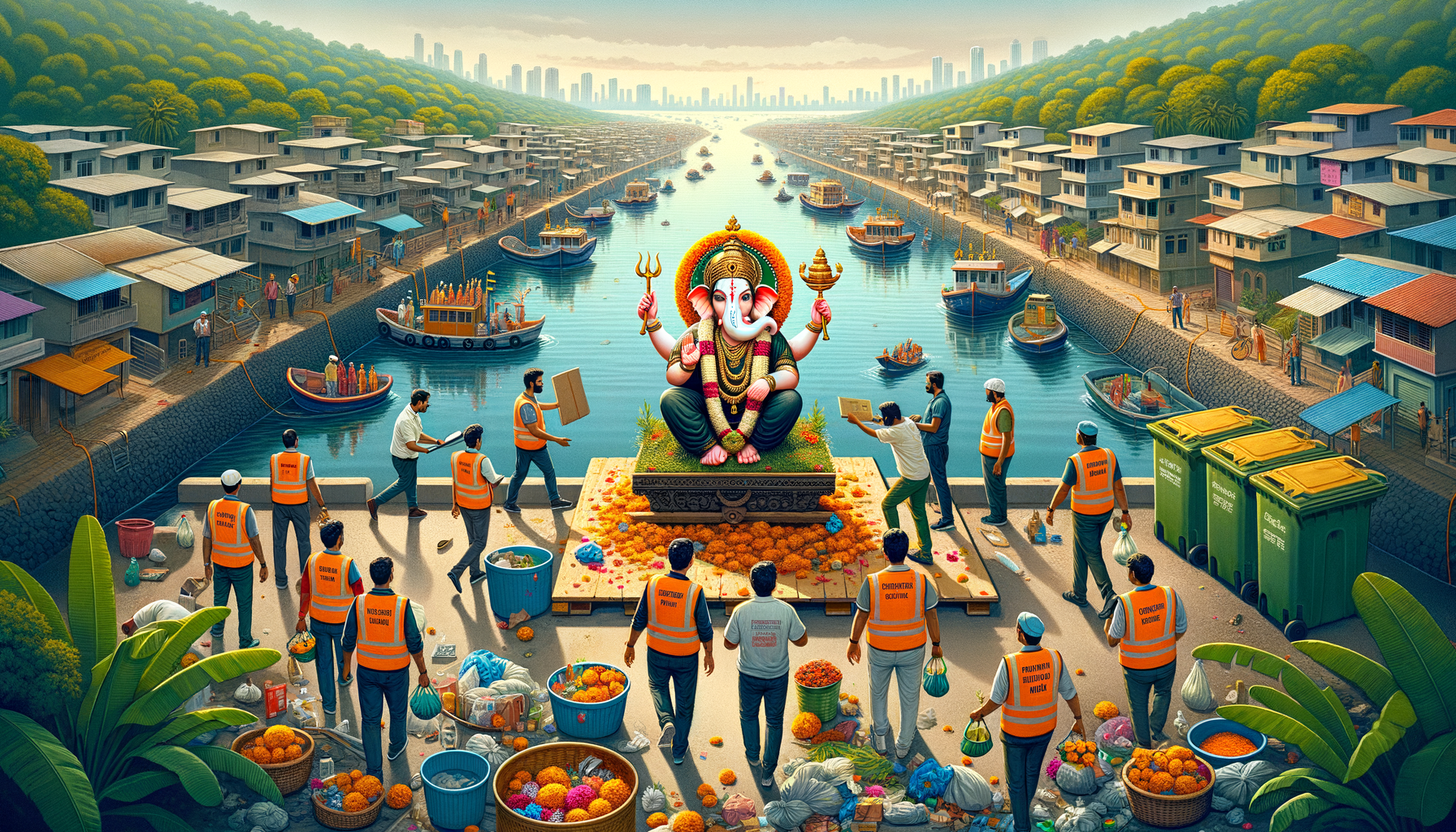
Three months after Ganeshotsav, thousands of Shree Ganesh idols reportedly remain unimmersed within the Navi Mumbai Municipal Corporation’s jurisdiction. In response, Hindu Janajagruti Samiti (HJS) has urged immediate, scripturally aligned action to complete the Visarjan process in a manner that honors religious sentiment and civic responsibility.
In Hindu festivals, timely Visarjan carries profound meaningsymbolizing cyclical renewal, gratitude, and the graceful return of Shree Ganesh. Delays can leave families and mandals with a sense of incompletion, as rituals are intended to be concluded with dignity and care. Recognizing this emotional and cultural significance can guide institutions and communities toward a respectful resolution that upholds dharmic values.
Effective coordination between municipal authorities, festival organizers, household devotees, and environmental agencies is essential. Scriptural immersion can proceed alongside eco-safe practicesuse of designated immersion ponds, careful handling of eco-friendly and non-biodegradable materials, and transparent disposal protocolsto protect water bodies while safeguarding cultural heritage. Such a framework aligns with both shastric guidance and contemporary environmental stewardship.
Approaching Visarjan through the lens of shared dharmic ethicsahimsa, responsibility toward nature, and reverence for sacred symbolsstrengthens social harmony. This spirit of collaboration resonates across dharmic traditions of Hinduism, Buddhism, Jainism, and Sikhism, encouraging volunteer mobilization, community education, and a unified commitment to cultural continuity and environmental preservation.
Clarity and transparency can restore public confidence. A published timeline, periodic updates, and concise data on the number of idols, sites used, and eco-management steps would demonstrate accountability and improve community participation. Such measures also provide a practical template for future festivals in Navi Mumbai and beyond.
By concluding Visarjan swiftly, scripturally, and safely, the community honors Shree Ganesh and reinforces the integrity of Ganeshotsav. The path forward lies in compassionate administration, informed ritual practice, and collective civic actionensuring that devotion, cultural heritage, and environmental responsibility move in harmony.
Inspired by this post on Hindu Jagruti Samiti.