James Henry Hammond, a prominent South Carolina politician and planter, advanced one of the antebellum South’s most notorious pro-slavery arguments. In his 1845 “Letter to an English Abolitionist,” he contended that slavery was more humane than wage labor, claiming enslavers provided steady care while employers merely paid wages. He wrote, “You think it is a great ‘crime’ that we do not pay our slaves ‘wages,’ and on this account pronounce us ‘robbers.’ In my former letter I showed that the labor of our slaves was not without great cost to us and that in fact they themselves receive more in return for it than your hirelings do for theirs… It is altogether praiseworthy to pay the laborer a shilling a day and let him starve on it. To supply all his wants abundantly, and at all times, yet withhold from him money, is among ‘the most reprobated crimes.’”
This thesis collapses under the weight of the enslaved people’s own testimonies. Solomon Northup’s Twelve Years a Slave offers a direct and devastating rebuttal: “The existence of Slavery in its most cruel form among them, has a tendency to brutalize the humane and finer feelings of their nature. Daily witnesses of human sufferinglistening to the agonizing screeches of the slavebeholding him writhing beneath the merciless lashbitten and torn by dogsdying without attention, and buried without shroud or coffinit cannot otherwise be expected, than that they should become brutified and reckless of human life.” Northup’s account exposes what Hammond’s rhetoric obscures: enslavement erased personhood, sanctioned terror, and licensed absolute domination over “flesh and blood.”
In practice, the labor regime of the cotton fields in the antebellum South was defined by coercion, surveillance, and punishment rather than paternal care. During peak picking seasons, enslaved workers rose before dawn, paused only briefly at noon for a cold meal, and labored until dark. Afterward, cotton was weighed against a quota; shortfalls meant flogging. The disciplinary code Northup records makes the system’s brutality unmistakable: leaves or dirt in the basket earned twenty-five lashes; breaking a branch, fifty; standing idle, a hundred; fighting with another slave, two hundred; and running away, five hundred. Northup recounts the near-fatal whipping of a woman named Patsy and describes owners who “delight[ed]” in violence for its own sakefigures far removed from Hammond’s benevolent ideal.
Beyond the fields, the marketplace itself revealed slavery’s dehumanization. Prospective buyers inspected bodies, checked teeth, and interrogated skills “as a jockey examines a horse.” People were stripped naked for scrutiny; families were severed without hesitation. Northup records a mother’s desperate pleas as her children were sold away, while the trader remained unmoved. Charles Ball, in Fifty Years in Chains, registers the psychic aftermath of such separations: “…I was now a slave in South Carolina, and had no hope of ever again seeing my wife and children. I had at times serious thoughts of suicide so great was my anguish.”
Gendered violence compounded the system’s cruelties. Harriet Jacobs, in Incidents in the Life of a Slave Girl, insisted, “Slavery is terrible for men; but it is far more terrible for women.” Her testimony documents constant sexual predation, beginning at age fifteen when she was pursued by her owner, Dr. Flint. Even attempts to find protection brought renewed threats, including the possibility that her children could be sold to force compliance. Jacobs’s account reveals how sexual coercion was embedded in the legal and social structure of slavery, not a deviation from it.
Taken togetherNorthup’s Twelve Years a Slave, Jacobs’s Incidents, and Ball’s Fifty Years in Chainsthese firsthand narratives refute the core of Hammond’s argument. Enslaved people did not simply sell labor; they were treated as saleable beings. Illiteracy was often enforced, mobility was curtailed, and overseers with dogs and weapons policed bodies to extract maximum output. When exhaustion overcame a worker, the response was not medical care but water thrown over a collapsed body and an order to resume work. Such evidence demonstrates that the claim of “benevolent provision” masked a regime of domination and dispossession.
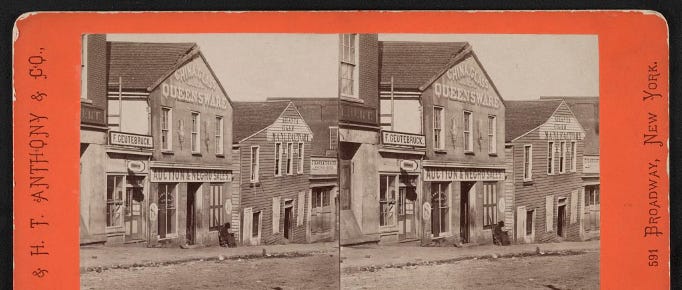
This historical record also challenges the rhetorical framing that equates wage labor with chattel slavery. However exploitative nineteenth-century labor markets could be, wage workers retained legal personhood and the theoretical power to refuse employment, organize, or move. Enslaved people, by contrast, faced a totalizing legal order that authorized physical punishment, family separation, sexual coercion, and death. The distinction is not merely economic; it is ontologicalone system presumes personhood, the other annihilates it.
For readers today, it is difficult to engage these narratives without a profound sense of sorrow and moral clarity. The testimonies of Northup, Jacobs, and Ball cultivate empathy, sharpen historical judgment, and invite a shared ethical response that crosses regional, cultural, and religious lines. Their words reaffirm a universal principle: the measure of any social order is the dignity it affords to every human being.
Viewed through dharmic values that honor ahimsa (non-violence), satya (truth), and karuna (compassion), these accounts offer a unifying lesson for diverse traditionsHinduism, Buddhism, Jainism, and Sikhism alike. Each tradition upholds the inviolability of life and the imperative to resist cruelty. Remembering the realities of the antebellum South through authentic slave narratives strengthens a shared commitment to human dignity and justice, encouraging solidarity across communities in the present.
Northup closed the circle between American ideals and lived contradictions by invoking a founding creed that promised “life, liberty and the pursuit of happiness.” His experienceand that of countless othersshows how pro-slavery apologetics inverted those ideals. The enduring value of these narratives lies in their power to dismantle myths, confront uncomfortable truths, and guide contemporary readers toward a more humane and unified moral horizon.
Inspired by this post on Varnam.