
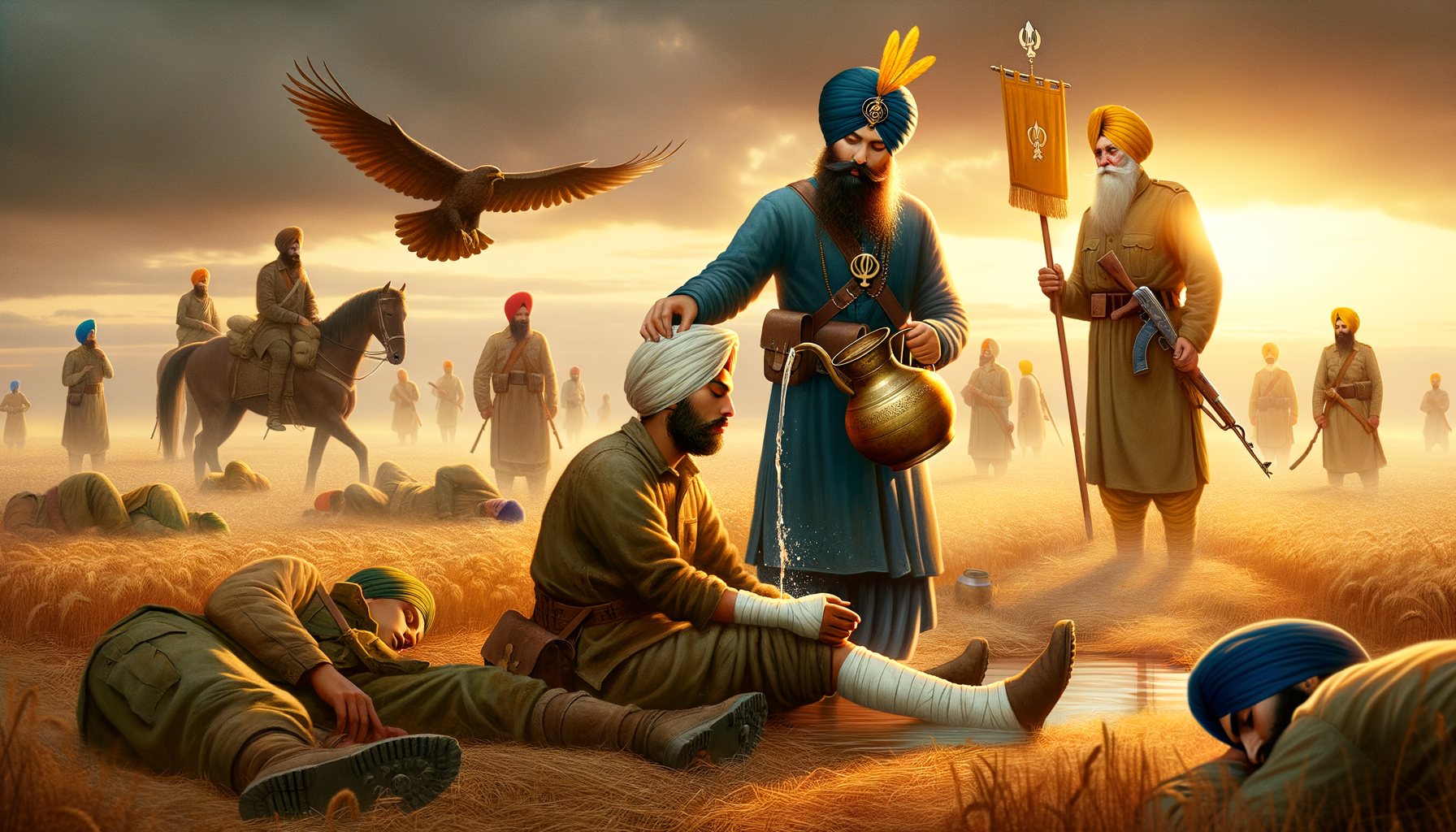
ਭਾਈ ਘਨੱਈਆ ਜੀ ਸਾਖੀ recounts a defining moment in Sikh history when Bhai Kanhaiya Ji, amidst the turmoil of battle, offered water to the wounded on all sides. Rather than perceiving adversaries, he recognized suffering humanity and responded with sevaselfless serviceguided by Sikhism’s enduring ethic of compassion.
Some Khalsa warriors expressed concern that those revived might return to the battlefield. The incident reached Guru Gobind Singh, who sought clarity. When asked why he served the fallen without distinction, Bhai Kanhaiya Ji explained that he saw no enemy or allyonly the divine light present in every being.
Guru Gobind Singh affirmed this vision of universal compassion. Far from rebuking him, the Guru encouraged and expanded his mission by providing water and medical balm, instructing him to tend to all the wounded. This moment crystallized seva as humanitarian and impartial, embodying the Sikh principle of sarbat da bhalawelfare for all.
Viewed through a broader dharmic lens, this sakhi harmonizes with shared values across traditions: ahimsa and daya in Hindu thought, karuna and maitri in Buddhism, and anukampa and vows of non-harm in Jainism. The narrative exemplifies unity in spiritual diversity, demonstrating how compassionate action can transcend sectarian lines and foster religious harmony.
Readers often recognize in this account a timeless ethical clarity: in moments of tension, compassion remains a rigorous and practical discipline. The story’s quiet strength invites reflection on contemporary humanitarian work, where neutrality and dignity can guide service in crises without amplifying conflict.
As Sikh history consistently illustrates, seva is not sentimental; it is disciplined, courageous, and transformative. Bhai Kanhaiya Ji’s examplesupported by Guru Gobind Singhoffers a complete, living model of spiritual integrity: serve first, serve all, and see the one light in every face.
Inspired by this post on SikhNet – Children Stories.











