Donald Trump’s policy unpredictability has created a rare strategic opening for India to cement its role in global trade and supply chains. Unlike earlier moments, India now enters this phase with stronger fundamentals, more reliable infrastructure, and greater institutional resilience. A historical perspective clarifies why this window is materially differentand why decisive action could transform a momentary advantage into a durable breakthrough.
India joined GATT on October 30, 1947 (effective January 1, 1948) as one of the 23 original contracting parties, but lacked the intent and preparation to leverage it fully. A combination of protectionist policy choices, the constraints of the License Raj, and a broadly socialist orientation limited the capacity to integrate into global markets. The institutional groundwork was present; the strategic readiness was not.
The 1991 reforms raised expectations for integration into global supply chains, yet domestic industry had been long shielded and needed time to adapt. At that juncture, competing national priorities constrained progress. Cross-border terrorism in Punjab and Kashmir diverted resources and attention, political instability complicated policy continuity, and infrastructure deficitsfrom ports and highways to a fragmented railway gauge system and unreliable powerundermined investor confidence. Under such uncertainty, multinational firms were reluctant to establish long-cycle manufacturing operations.
By 1995–96, corporate India began to reposition, just as GATT gave way to a more comprehensive framework under the WTO. However, geopolitical dynamics quickly intruded. Efforts to advance global nuclear test ban regimes confronted India with hard choices about sovereign security. The 1998 nuclear tests prompted stringent international sanctions, hampering capital inflows, technology transfers, and momentum toward deeper trade integration.
From 1999 to 2004, a relatively stable coalition government under Prime Minister Atal Bihari Vajpayee prioritized foundational upgrades. The Golden Quadrilateral reimagined highway connectivity, port development improved maritime throughput, and railway modernization advanced gauge standardization and electrification. These efforts aligned with a broader ambition to facilitate trade. External shocksthe dot-com bust and the aftermath of 9/11nonetheless subdued the cycle.
Between 2003 and 2009, India began a steady climb. Growth firmed and sectors from services to select manufacturing gained traction, yet skepticism persisted among global companies concerned about bureaucratic friction and compliance costs. Reform momentum slowed amid governance concerns, and the 2008 global financial crisis exposed macro-financial vulnerabilities just as confidence was building.
From 2009 onward, political and operational interference in bank lending fueled non-performing assets (NPAs), constraining credit and delaying investment cycles. A sustained reform programbank recapitalization, insolvency resolution, governance changesculminated in material stabilization by 2019. The COVID-19 shock then interrupted recovery, compressing household balance sheets and delaying demand normalization; only recently has the healing become more visible.
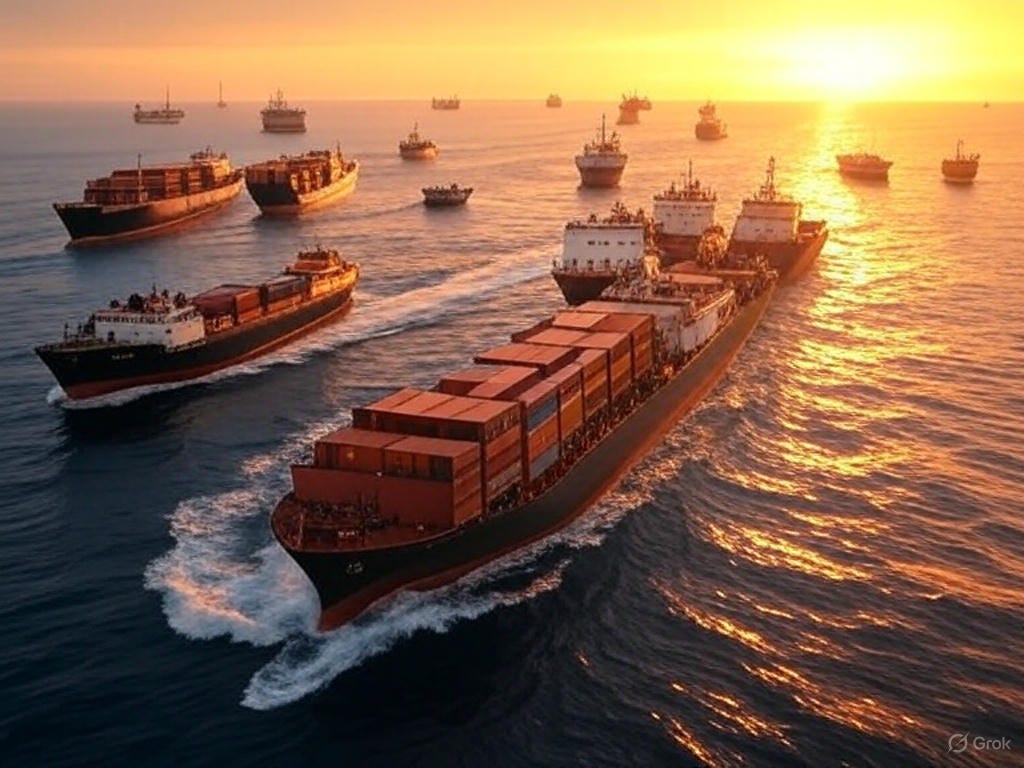
In this context, Trump-era trade dynamicsemphasizing de-risking from concentrated manufacturing hubs and recalibrating supply chain exposurehave inadvertently opened a unique channel for India. Today, the advantages are clearer: improved infrastructure across ports and highways, a more coherent rail network, enhanced power reliability including last-mile delivery, robust and inexpensive telecoms, a healthier banking system after reform, a fast-evolving digital ecosystem, and greater political stability. Together, these conditions raise India’s attractiveness for firms diversifying global supply chains while preserving cost competitiveness and resilience.
Beyond macroeconomics, India’s civilizational ethosshared across Hindu, Buddhist, Jain, and Sikh traditionsvalues resilience, disciplined effort, and collective flourishing. That unity strengthens societal capacity to absorb disruption, train talent, and scale enterprise. As global trade fragments into regional and trusted networks, this cultural cohesion becomes an underappreciated strategic asset.
To convert this opening into a lasting advantage, several priorities stand out. Streamlining bureaucracy with predictable, time-bound clearances will reduce frictional costs and unlock foreign and domestic investment. Scaled skills developmentespecially vocational and shop-floor trainingmust match the needs of electronics, precision engineering, chemicals, automotive, and renewable supply chains. Continuous infrastructure enhancementmulti-modal logistics, port turnaround times, warehousing standards, and grid reliabilitywill sharpen export competitiveness. Policy continuity, transparent regulation, and targeted incentives can anchor investor confidence across cycles.
Additional levers can accelerate outcomes. Proactive trade diplomacypursuing high-quality FTAs and mutual recognition arrangementscan deepen market access. Standards adoption and compliance capacity will be essential to meet sustainability, quality, and traceability norms. Digital Public Infrastructure can streamline trade facilitation, reduce compliance costs, and enhance MSME participation in export ecosystems. Coordinated action among government, industry, and civil societygrounded in a dharmic ethic of inclusive prosperitycan translate this window into a gateway.
The opportunity is real and time-bound. With the groundwork laid since the Vajpayee era and reinforced by recent financial cleanups and digital railings, India can move from being a beneficiary of supply-chain reconfiguration to a co-architect of a more resilient global trade order. Success will depend on speed, institutional reliability, and an unwavering focus on capability building that reflects the shared values of India’s dharmic traditions.
Inspired by this post on RightViews.