

Knowledge should not be a luxury. The simple claim that a wealth of knowledge should not cost a fortune expresses a foundational principle of an equitable society: a person’s ability to learn should not be determined solely by income, geography, institutional affiliation, or social status. Education creates private benefits for the learner, but it also produces public value through stronger communities, more capable institutions, informed citizenship, scientific progress, cultural continuity, and economic resilience. When reliable knowledge becomes easier to reach, its benefits extend far beyond the individual who first encounters it.
For many learners, the price of knowledge is not represented by a single tuition bill. It accumulates through textbooks, journal subscriptions, examination fees, software licences, internet access, transportation, childcare, language barriers, and the time required to locate trustworthy material. A resource described as “available” may therefore remain inaccessible in practice. Meaningful access requires more than putting information online; it requires affordability, discoverability, usability, credibility, accessibility, and a realistic opportunity to study.
The distinction between information and knowledge matters. Digital networks have made enormous quantities of information visible, but visibility alone does not create understanding. Information becomes useful knowledge when it is organized, contextualized, tested against evidence, explained clearly, and connected to prior learning. A search engine may return thousands of results, yet a learner still needs the intellectual tools to distinguish a primary source from commentary, evidence from assertion, and scholarly disagreement from deliberate misinformation.
This distinction explains why affordable education cannot be reduced to the distribution of free files. Learners also benefit from structured curricula, skilled teaching, feedback, discussion, assessment, mentorship, and opportunities to apply ideas. A freely accessible book can open a door, but guidance often helps a learner walk through it. Effective knowledge systems combine open resources with human relationships and institutions that support comprehension.

The economic case for wider access is substantial. Knowledge differs from many physical goods because one person’s use of an idea does not ordinarily prevent another person from learning it. Digital materials can often be reproduced at very low marginal cost, even though researching, writing, editing, reviewing, translating, hosting, and preserving them still require labour and investment. Sound policy must therefore balance two legitimate goals: expanding access and sustaining the people and institutions that produce dependable knowledge.
High prices can create consequences that reach beyond individual hardship. Students may postpone courses, rely on outdated editions, avoid specialized fields, or attempt to study without essential materials. Independent researchers and small institutions can be excluded from scholarly conversations dominated by well-funded universities. Professionals may find continuing education difficult to afford, while citizens may be unable to examine the research underlying public policy. In each case, a price barrier can become a participation barrier.
The resulting inequality is cumulative. A well-resourced learner can obtain current publications, expert instruction, quiet study space, dependable technology, and professional networks. A learner with fewer resources may spend valuable time finding substitutes for each of those advantages. The problem is therefore not merely that some people possess fewer documents. It is that they must devote more effort to reaching the same starting point.

Open educational resources offer one practical response. Textbooks, lectures, course modules, exercises, and other materials released under permissions that allow lawful reuse can reduce direct costs and give educators greater freedom to adapt lessons. A teacher may reorganize a module, add local examples, simplify a difficult explanation, or translate material for another linguistic community. Such adaptability can make education more relevant without requiring every institution to build an entire curriculum from the beginning.
Open access to research serves a related purpose. When scholarly work can be read without a subscription, it becomes more reachable to students, teachers, clinicians, entrepreneurs, journalists, community organizations, and researchers outside wealthy institutions. Wider availability can improve scrutiny and encourage collaboration. Nevertheless, openness must not be confused with the absence of standards; accessible scholarship still requires transparent methods, responsible review, accurate metadata, stable preservation, and clear disclosure of limitations.
Libraries remain essential within this landscape. Their value is not confined to shelves or databases. Libraries preserve collective memory, negotiate shared access, teach research skills, support people who lack private study environments, and connect communities with trained professionals. A strong public library can function as educational infrastructure, particularly where commercial services are unaffordable or unreliable.

Digital access can widen opportunity, but it can also reproduce inequality. Online courses and digital collections may reach learners far from major institutions, yet their usefulness depends on electricity, devices, connectivity, digital literacy, and accessible design. Large videos may be impractical on slow or expensive connections. Complex interfaces may exclude users with disabilities. Materials designed for powerful computers may fail on inexpensive mobile devices. Responsible educational technology must be evaluated under the conditions learners actually face.
Low-bandwidth pages, downloadable transcripts, searchable text, captions, audio alternatives, adjustable typography, and offline study packages can substantially improve practical access. These features are sometimes treated as optional enhancements, but they often determine whether a resource can be used at all. Accessibility is most effective when incorporated at the beginning of design rather than added after publication.
Language is another decisive dimension. A technically open resource may remain socially closed if it is available only in a language the intended community cannot read comfortably. Translation, multilingual indexing, and instruction in vernacular languages allow learners to engage complex ideas without abandoning their cultural and linguistic contexts. They also help prevent knowledge from flowing in only one direction—from dominant institutions toward communities whose own intellectual traditions are overlooked.

Cultural knowledge requires both access and stewardship. Manuscripts, oral histories, philosophical traditions, ritual practices, artistic forms, and community archives carry meanings that cannot always be separated from their custodians. Digitization can support preservation and education, but unrestricted circulation may be inappropriate for sacred, private, or sensitive material. Ethical access therefore requires consultation, accurate attribution, contextual explanation, and respect for legitimate community protocols.
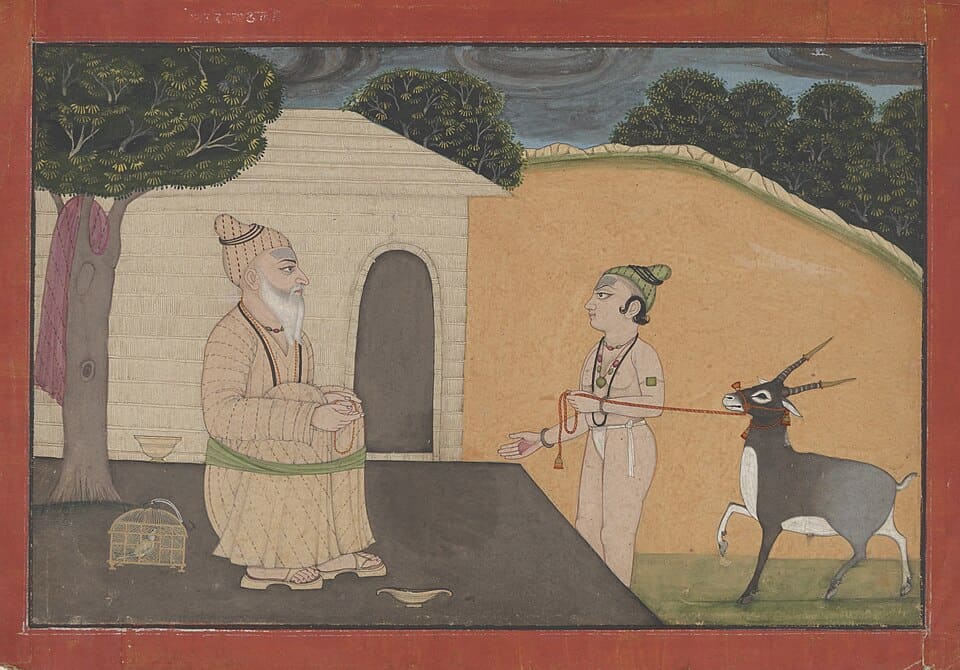
This principle is especially relevant to the dharmic traditions of Hinduism, Buddhism, Jainism, and Sikhism. Each contains extensive textual, philosophical, artistic, and lived traditions, and each has developed through internal diversity, debate, commentary, and transmission across generations. Affordable access can encourage serious comparative study while preserving meaningful distinctions. Unity is strengthened through informed respect, not by flattening different traditions into a single undifferentiated account.
Translations and introductory explanations can welcome new readers, but they should identify interpretive choices and direct learners toward primary sources whenever possible. Terms rooted in particular philosophical systems may not possess perfect equivalents in English or another target language. Careful educational work acknowledges this difficulty rather than presenting one translation as the only possible meaning. Such intellectual humility improves both accuracy and inter-traditional understanding.

Affordability must never become an excuse for poor quality. Free material can contain errors, missing citations, outdated claims, ideological distortion, or unclear authorship just as paid material can. Learners need visible publication dates, revision histories, references, author qualifications, and correction procedures. Educators and publishers should distinguish established evidence from interpretation and clearly mark unresolved questions.
Critical literacy is therefore part of access itself. A learner should be able to ask who created a resource, what evidence supports it, which perspectives are represented, what incentives may shape it, and whether independent sources confirm its claims. These habits do not encourage indiscriminate suspicion. They cultivate disciplined judgment, which is indispensable in an environment where authoritative scholarship, commercial promotion, careless summaries, and fabricated material may appear in similar formats.
Artificial intelligence adds another layer to this challenge. Automated systems can summarize material, translate passages, generate practice questions, and provide individualized explanations at scale. They can also produce confident errors, omit context, reproduce bias, or obscure the origin of a claim. Their educational value is greatest when they support inquiry rather than replace verification, primary-source reading, expert guidance, and independent reasoning.

A sustainable knowledge commons requires fair models of support. Writers, translators, teachers, librarians, editors, software developers, archivists, and peer reviewers contribute labour that should not be rendered invisible. Public funding, institutional subsidies, consortial purchasing, grants, memberships, responsible publishing fees, and mixed commercial-open models can all contribute to sustainability. No single mechanism is suitable for every field or community, but the cost should not be shifted onto those least able to pay.
Publicly funded research presents a particularly strong case for broad public availability, subject to legitimate protections for privacy, security, sensitive cultural material, and research participants. When society finances the creation of knowledge, society has a reasonable interest in benefiting from the results. Achieving that goal requires more than a policy statement; repositories need long-term maintenance, interoperable records, preservation plans, and formats that remain usable over time.
Educational institutions can reduce costs through practical decisions. They can review the total price of required materials before approving courses, support open textbooks, place essential readings in library reserves, permit lawful older editions when differences are minor, and provide device-lending or connectivity assistance. Faculty can design assignments around materials that all enrolled students can realistically obtain. These measures treat affordability as an element of academic quality rather than a separate welfare concern.

Governments and civic institutions also shape the knowledge environment. Investment in schools, libraries, broadband, archives, teacher development, translation, and digital public infrastructure can lower barriers across an entire population. Clear procurement rules and open technical standards can prevent public institutions from becoming permanently dependent on expensive proprietary systems. Privacy and security protections remain necessary, because access should not require learners to surrender excessive personal data.
Learners themselves are not passive recipients. Study circles, community classes, peer mentoring, reading groups, and collaborative annotation can transform isolated materials into shared understanding. A difficult concept often becomes manageable when discussed with others, and teaching an idea can reveal gaps in one’s own comprehension. These practices demonstrate that a wealth of knowledge can grow through responsible sharing rather than diminish through use.
Everyday experience makes the principle tangible. A worker trying to learn a new skill after a long shift, a parent returning to education, a rural student using a mobile phone as the household’s only connected device, or an independent reader exploring philosophy outside a university may possess abundant curiosity but limited resources. For such learners, a modest fee, an inaccessible format, or an unclear explanation can decide whether study continues. Good knowledge systems recognize these circumstances without lowering intellectual expectations.
The most useful measure of access is therefore not the number of documents uploaded or courses advertised. It is whether diverse learners can find relevant material, understand it, evaluate it, use it lawfully, and build upon it. Completion rates, learning outcomes, accessibility testing, translation quality, user feedback, and the representation of underserved communities provide more meaningful evidence than raw publication totals.
Affordable knowledge strengthens both continuity and innovation. It allows inherited wisdom to remain alive through study while enabling new generations to question, interpret, and apply it. It supports scientific and technical development without separating progress from ethics, history, or culture. It also creates conditions in which people from different religious and philosophical traditions can encounter one another through reliable sources rather than stereotypes.
The proposition that knowledge should not cost a fortune does not imply that knowledge has no cost or that intellectual labour has no value. It means that society should distribute those costs intelligently, transparently, and fairly. The objective is neither a market without responsibility nor a free repository without quality control. It is an ecosystem in which creators are sustained, institutions remain accountable, communities retain dignity, and learners are not excluded by avoidable barriers.
Knowledge becomes a genuine form of wealth when it can be examined, shared, preserved, and transformed into wise action. Affordable access expands the number of people able to participate in that process. In doing so, it does more than reduce expenses: it enlarges the intellectual capacity of society, protects cultural memory, encourages respectful dialogue among dharmic traditions, and gives curiosity a fair chance to become understanding.
Inspired by this post on SikhNet – News.








Leave a Reply
You must be logged in to post a comment.