
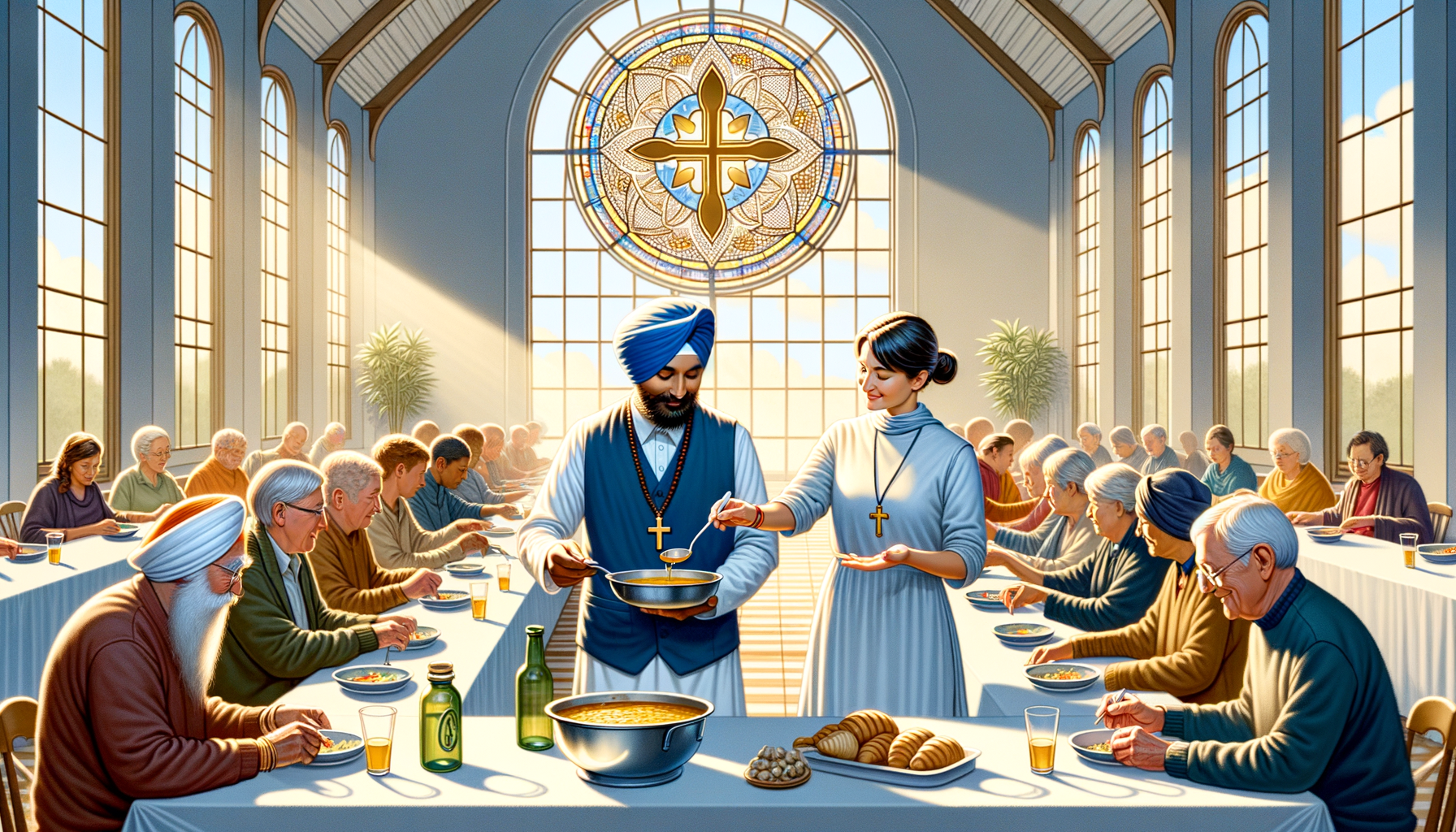
Pope Leo’s appeals for peace, moral clarity, and social concord find a natural echo in Sikh teachings that center on Ik Onkar, seva, and sarbat da bhala. Read together, these two traditions illuminate a shared horizon: interfaith unity grounded in dignity, justice, and the common good. The convergence is not accidental; it follows from a deep recognition that authentic spirituality nurtures both inner transformation and collective well-being.
In Catholic social teaching, the common good and social harmony are core principles that orient communities toward responsibility and mutual care. Sikh values express a parallel ethic. Ik Onkar affirms oneness, sarbat da bhala extends compassion to all, and seva anchors service in humility. Together, these visions offer a coherent path for interreligious dialogue and religious harmony in plural societies.
The practical expression of this unity is visible in service. The Sikh tradition of langar welcomes every person without distinction, while Catholic parishes have long sustained charitable works that prioritize the vulnerable. Such actions translate lofty principles into lived realities, demonstrating how interfaith unity in daily life strengthens trust, reduces polarization, and builds resilient neighborhoods.
These convergences resonate powerfully with the wider dharmic familyHinduism, Buddhism, and Jainismwhere ahimsa, karuna, and dana cultivate moral clarity and communal care. When these traditions collaborate, unity in diversity moves from aspiration to practice. Shared service projects, study circles, and compassionate outreach become laboratories for interreligious dialogue, enabling communities to learn with, not merely about, one another.
Historically, Pope Leo’s leadership emphasized social peace, ethical responsibility, and the dignity of work, themes that harmonize with the Sikh Gurus’ creation of an egalitarian community anchored in devotion, justice, and service. Each tradition insists that spiritual insight must lead to social responsibility. This convergence offers a reliable framework for addressing contemporary challenges marked by fragmentation and distrust.
Across gurdwaras and community halls, interfaith kitchens, disaster relief drives, and blood donation camps show how seva nurtures belonging. In parallel, parish food pantries, counseling ministries, and neighborhood initiatives embody the common good. When these efforts intersectthrough joint events, shared logistics, or mutual volunteer teamsinterfaith unity becomes tangible, and religious harmony deepens through relationships forged in service.
Practical collaboration can follow simple, replicable steps. Communities can convene small interfaith service teams to run weekend langar-style meals and parish pantries together; build reading circles that explore Sikh values alongside Catholic social teaching; host music and reflection gatherings that honor each tradition’s integrity; and create youth-led projects focused on environmental stewardship and neighborhood care. Each effort turns principles into local impact.
For many families living at the crossroads of traditions, these collaborations are already part of everyday life: neighbors share a meal at langar, volunteer side by side at community centers, and celebrate festivals with mutual respect. Such experiences cultivate empathy, reduce stereotypes, and offer a felt sense of unity that policy statements alone cannot achieve. The result is a culture of trust that endures beyond single events.
At their best, both perspectives affirm that social peace begins with spiritual discipline and blossoms through compassionate action. Sarbat da bhala and the common good name the same moral horizon: a society where every person’s dignity is protected and every community is invited to contribute. In that horizon, Pope Leo’s call to unity and Sikh commitments to seva converge, guiding dharmic traditionsHinduism, Buddhism, Jainism, and Sikhismtoward a shared future marked by interfaith unity, religious harmony, and sustained service.
Inspired by this post on SikhNet – News.










