Nick Jonas Embraces Hindu Values with Priyanka Chopra: Multifaith Parenting and Dharma

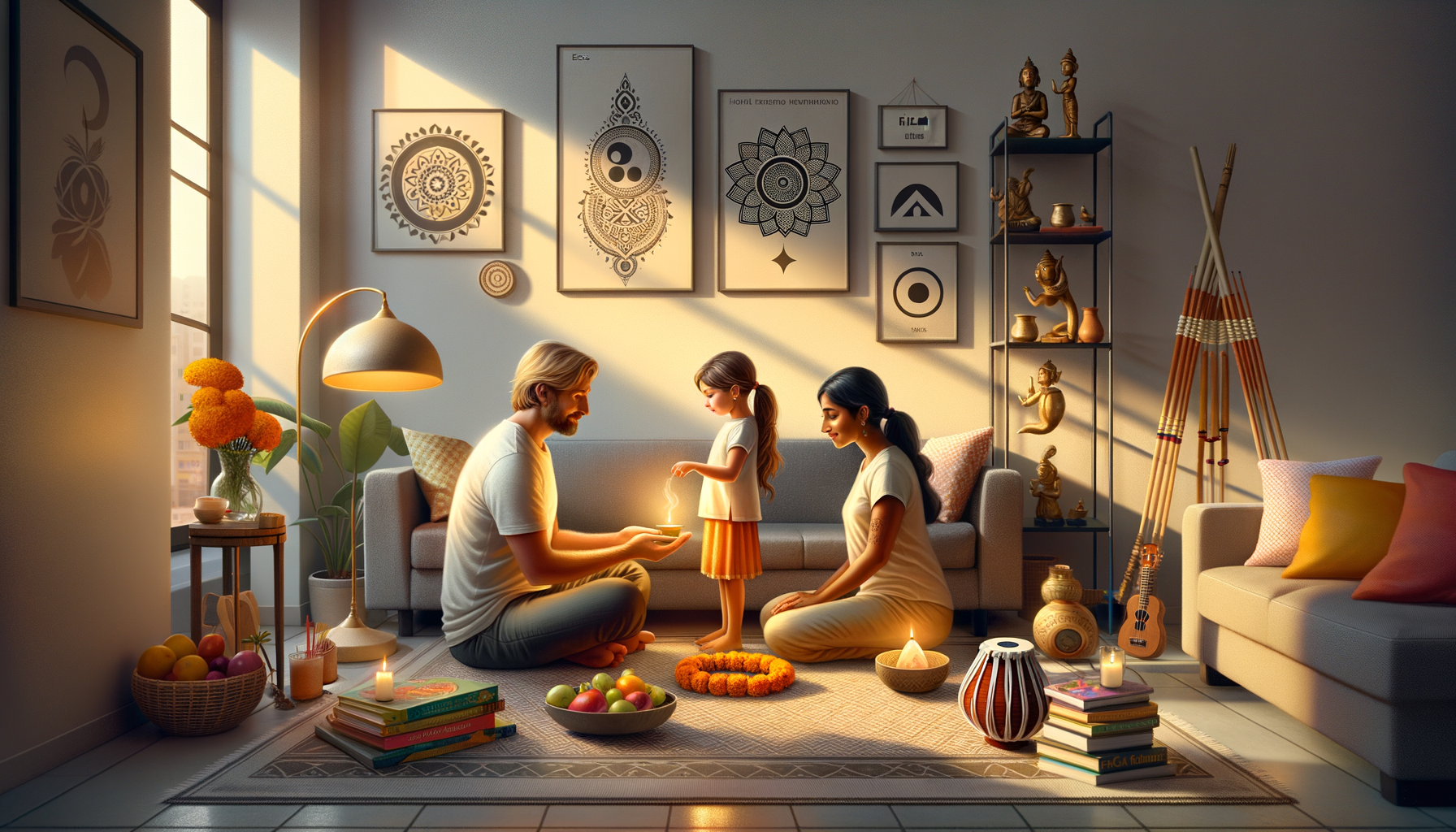
Sunlit living room scene where two adults and a child kneel around a glowing oil lamp, with marigold garland, candles, fruit, books, art prints, and instruments creating a warm, festive home atmosphere.

American singer-songwriter and actor Nick Jonas describes a deep engagement with Indian culture and Hinduism since marrying Priyanka Chopra, noting that learning about karma, dharma, and Indian traditions has been both meaningful and transformative. He emphasizes that their family identifies as multicultural and multi-religious, and that their daughter is being raised with authentic Hindu values rooted in respect, ritual practice, and everyday understanding.

This approach to multifaith parenting aligns with shared ethical foundations across the dharmic traditions of Hinduism, Buddhism, Jainism, and Sikhismprinciples such as compassion, duty, seva, and mindful conduct. By centering values rather than labels, the family’s practice illustrates cultural integration and unity in diversity, echoing widely observed patterns in the Hindu diaspora and in interfaith dialogue. Such an orientation strengthens social cohesion while honoring distinct paths within a pluralistic framework.

In practical terms, families navigating similar journeys often find that introducing children to stories from the epics, simple explanations of karma and dharma, shared seva activities, and age-appropriate mindfulness practices fosters moral clarity and belonging. Celebrating festivals together, learning basic prayers or mantras, and engaging in cultural arts and musiccommon bridges in hollywood and hinduismcan nurture cultural literacy and empathy without diminishing any tradition. Research and community experience alike suggest that this balanced approach supports healthy identity formation and intercultural competence.

Watch the conversation here: http://www.hinduhumanrights.info/wp-content/uploads/2026/02/YTDown.com_YouTube_Nick-Jonas-on-what-he-s-learned-from-Hin_Media_Y3YCMZ0AIgY_004_360p.mp4

Overall, the family’s emphasis on Hindu valuesunderstood through the lenses of karma, dharma, gratitude, and reverenceoffers a constructive model for interfaith families. It demonstrates how multicultural households can cultivate shared ethics while honoring multiple faith traditions, reinforcing the broader dharmic commitment to mutual respect, understanding, and peaceful coexistence.


Inspired by this post on Hindu Human Rights Blog.


Graphic with an orange DONATE button and heart icons on a dark mandala background. Overlay text asks to support dharma-renaissance.org in reviving and sharing dharmic wisdom. Cultural Insights, Personal Reflections.

FAQs

What Hindu values does the article say Nick Jonas has embraced?

The article says Nick Jonas has engaged deeply with karma, dharma, Indian traditions, respect, ritual practice, and everyday understanding since marrying Priyanka Chopra. It frames these values as meaningful parts of a multicultural and multi-religious family life.

How does the article describe multifaith parenting?

It describes multifaith parenting as centering shared values rather than labels while honoring distinct spiritual paths. The post highlights respect, unity in diversity, and a pluralistic home where multiple traditions can be preserved.

What practical practices does the post suggest for children in interfaith families?

The post suggests stories from the epics, simple explanations of karma and dharma, shared seva activities, age-appropriate mindfulness, festivals, basic prayers or mantras, and cultural arts or music. These practices are presented as ways to build moral clarity, belonging, cultural literacy, and empathy.

Which dharmic traditions are connected in the article?

The article connects Hinduism, Buddhism, Jainism, and Sikhism through shared ethical foundations. It names compassion, duty, seva, and mindful conduct as principles that resonate across these traditions.

Why are festivals, arts, and music important in this parenting model?

The post presents festivals, arts, and music as accessible bridges for children learning about Indian culture and Hindu values. It says these practices can nurture cultural literacy and empathy without diminishing any tradition.

What role does the linked video play in the post?

The post directs readers to watch the conversation linked in the article and notes that the piece was inspired by a Hindu Human Rights Blog post. The video is presented as direct context for the reflections on Hindu values, parenting, and family life.









