Sankranthi, also known as Pongal in Tamil Nadu, stands among the most widely celebrated harvest festivals across Andhra Pradesh, Tamil Nadu, and Karnataka. Central to these celebrations are Muggulu, Kolam, and Rangolithreshold artworks that transform homes and streets into vibrant spaces of welcome and auspiciousness. For 2026, households preparing Sankranthi Muggulu and Pongal Kolam can draw on timeless motifs that honor the sun, the harvest, and community bonds while showcasing regional artistry.
Across dharmic traditions, these designs convey shared values of harmony, gratitude, and renewal. The threshold becomes a symbolic meeting point of the inner and outer worlds, where geometric symmetry, floral patterns, and sacred motifs invite prosperity and wellbeing. The use of rice flour, natural colors, and flowers reflects ecological care and generosity, as the materials often feed birds and small creaturesan act of everyday compassion embedded within festival practice.
Design planning for Sankranthi 2026 benefits from aligning patterns to each day of the four-day observance. In Telugu households, Muggulu often evolves from simple dotted layouts to complex geometric interlaces; in Tamil homes, Kolam may progress from understated pulli kolam to intricate sikku kolam and padi kolam; in Karnataka, Rangoli often blends floral and geometric borders with celebratory symbols. This gradual progression mirrors the festival’s movement from cleansing and renewal to gratitude and community sharing.
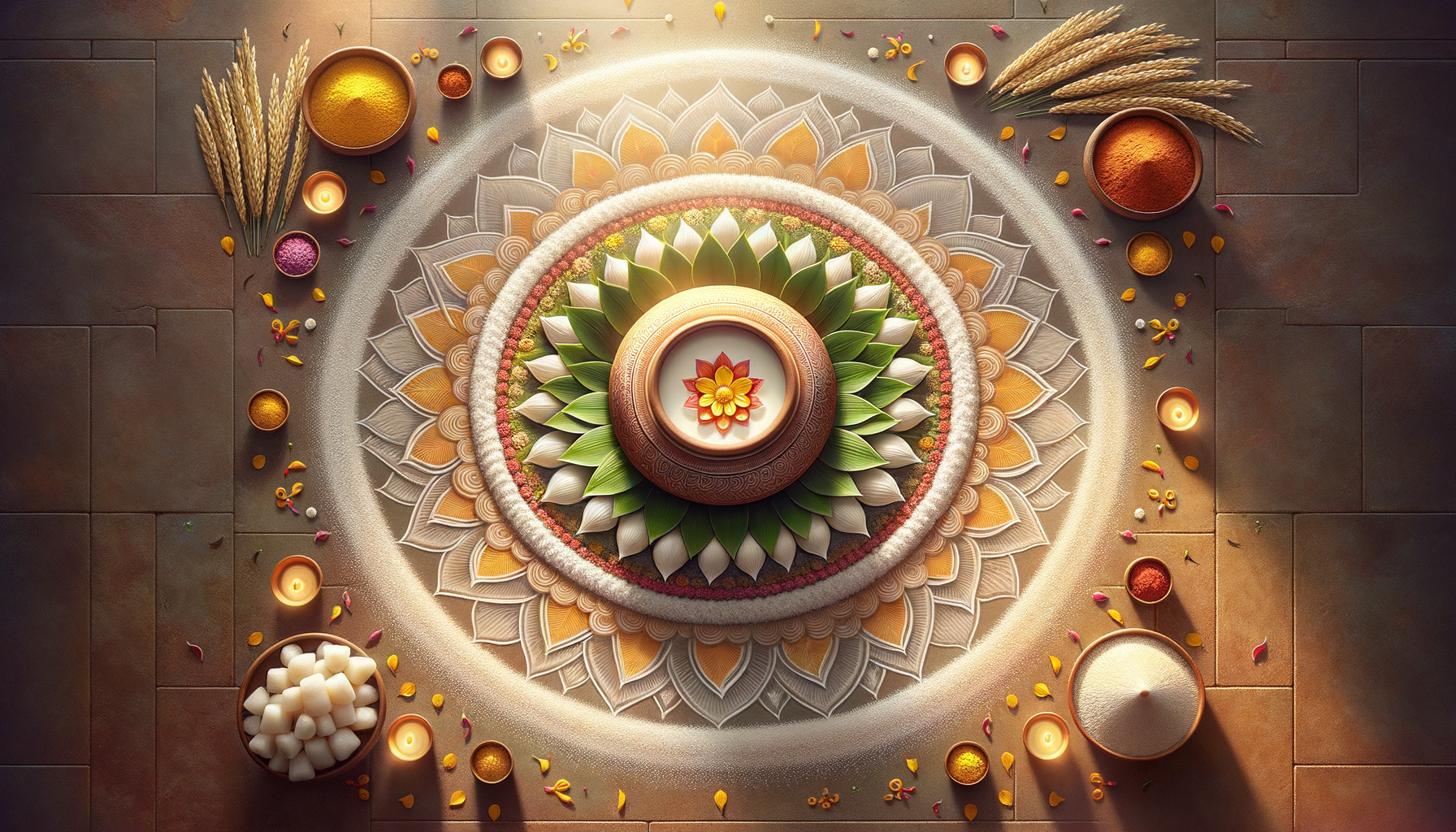
For Bhogi, designs that emphasize cleansing and fresh beginnings are favored. Circular mandalas with clear symmetry, small dotted pulli layouts, and neat borders signal order and intention. Many families prefer white rice-flour bases accented with a restrained palette, allowing the geometry to stand out. Such patterns set a contemplative tone and prepare the space for the auspicious days that follow.
On Makara Sankranti and Thai Pongal, celebratory motifs take center stage. Sugarcane clusters, an overflowing pongal pot, the radiant sun, and harvest sheaves express abundance and gratitude. Padi kolam borders frame these motifs with elegant lines, while turmeric, kumkum, and colored powders add warmth. Placing deepam around the kolam at dusk enhances both the luminosity and the sanctity of the design.
Mattu Pongal and Kanuma highlight reverence for cattle and the agrarian cycle. Gentle bovine motifs, footprints, floral swirls, and lotus-centered rangoli communicate respect, care, and interdependence with nature. In many courtyards, these kolam or muggulu are drawn near cowsheds or along pathways to signify gratitude for bovine service to farming life.
Kaanum Pongal and Mukkanuma often spotlight social harmony and family togetherness. Interlaced sikku kolam, auspicious lotus medallions, sun rays, and time-honored symbols of prosperity reflect wishes for collective wellbeing. Geometric mandalas and swastika-based grids, when treated with cultural sensitivity, embody auspiciousness across dharmic traditions and express unity without exclusivity.
Practical preparation enhances durability and clarity. Smooth, swept thresholds and courtyards allow lines to remain crisp; a light base wash with diluted rice paste can help designs endure foot traffic. Natural materialsrice flour, rock salt for bright white, flower petals, turmeric, and kumkumcreate rich textures and tones. A chalk or dot-grid underlay assists with proportion, especially for larger or more complex layouts.
Placement and scale matter as much as motif. Doorstep muggulu, puja-room kolam, and courtyard rangoli can be varied in size yet remain cohesive through repeated borders or a shared central emblem. Many households draw at dawn to align with the calm of the morning and the rising sun, reaffirming the festival’s solar and seasonal rhythms. In this way, Sankranthi Muggulu and Pongal Kolam in 2026 become living practices that preserve heritage, cultivate mindfulness, and affirm unity across communities and dharmic pathways.
Inspired by this post on Hindu Pad.