Nirjala Ekadashialso known as Nirjal Ekadashi, Pandava Ekadasi, or Bhimsen Ekadashifalls on the Ekadashi tithi of Shukla Paksha in the Jyeshtha month of the Hindu calendar. In 2026, Nirjala Ekadashi is observed on Thursday, 25 June (India), a day renowned for its rigorous waterless fast, deep devotion to Vishnu, and expansive emphasis on dana (charity) and mantra-japa. The vrata is revered in the Brahma Vaivarta Purana for its transformative spiritual merit, said to bestow the fruit of observing all Ekadashi fasts in a year when performed with sincerity and adherence to the vidhi.
Tradition preserves the vrat katha in which Bhima (Bhimsen) of the Pandavas, known for his formidable appetite, found it difficult to fast on every Ekadashi. Seeking guidance, he was advised that a single, uncompromising waterless fast on Jyeshtha Shukla EkadashiNirjalawould confer the collective fruit of all Ekadashi observances. This is why the observance is also called Pandava Ekadasi and Bhimsen Ekadashi, and why it resonates so profoundly with practitioners who value discipline (tapas), self-restraint (dama), and unwavering devotion (bhakti).
From a calendrical perspective, Ekadashi is the eleventh tithi, defined astronomically by the longitudinal angle between the Sun and Moon. A tithi spans approximately 12° of solar-lunar separation; Ekadashi therefore occupies the interval from 120° to 132°. Observance follows the sunrise rule: the Ekadashi fast is kept on the day when sunrise occurs with Ekadashi prevailing. If the tithi spans two civil days, nuanced rules from Smarta and Vaishnava traditions guide selection to avoid impurity due to overlap (viddha). Practitioners should consult a reliable local Panchang for accurate tithi boundaries and parana windows, as these are sensitive to longitude, latitude, and time zone.
In 2026, most regions in India will observe Nirjala Ekadashi on 25 June, with Dwadashi parana the following day after sunrise, observing the “Hari Vasara” restriction (the initial one-fourth of Dwadashi) before breaking the fast. Outside India, the date may shift by a day depending on local sunrise and tithi spans; therefore, checking a trustworthy regional Panchang or temple schedule is essential. This ensures the vrata aligns with the canonical timing that preserves the sanctity and fruit (phala) of the observance.
Preparation begins on Dashami (the day before Ekadashi). Dietary austerity (saatvik, light, and ideally single meal before sunset) and mental resolve set the foundation. Many take a firm sankalpa at night or at dawn on Ekadashi, explicitly committing to a waterless fast (nir-jal) until the prescribed parana on Dwadashi. Because this vrata is exceptionally austere, householders, elders, and working professionals often plan thoughtfully to maintain steadiness, calm, and safety throughout the day.
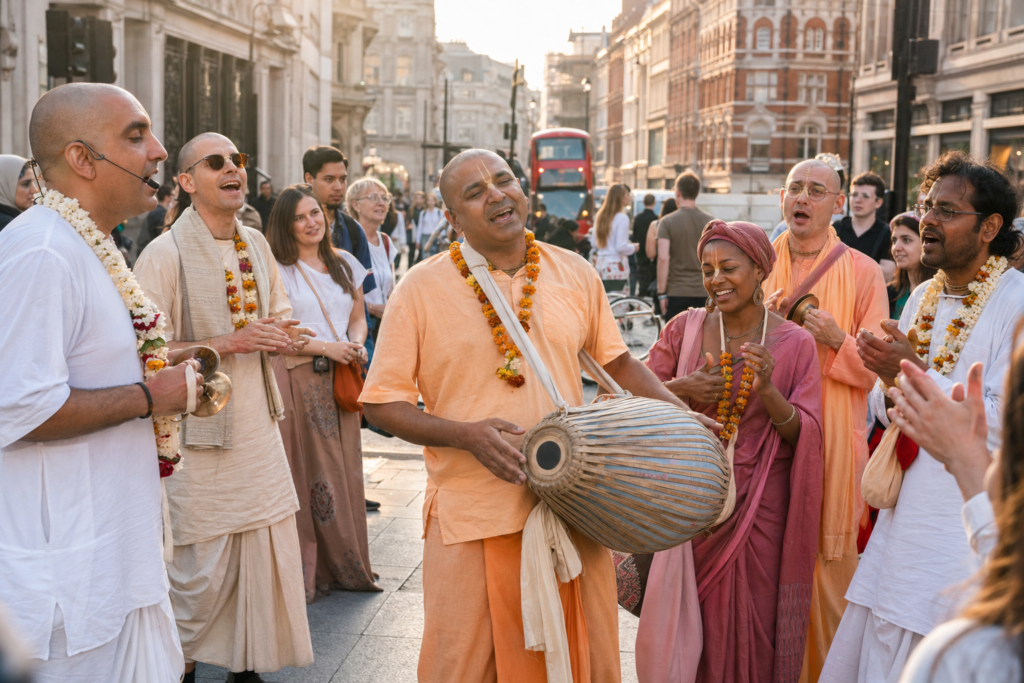
The core puja (vrat vidhi) on Ekadashi emphasizes simplicity, purity, and sustained remembrance of Vishnu. A pre-dawn bath, clean attire, and sanctification of the altar begin the observance. Offerings may include tulasi leaves, incense, lamp (deepa), fruits, and flowers, with recitation of Vishnu Sahasranama, Bhagavad-Gita passages, or the Ashtakshari“Om Namo Narayanaya.” Japa, kirtan, and quiet study of Vaishnava scriptures are recommended. Many keep a partial or full night vigil in contemplation and mantra, aligning body-mind discipline with devotion.
The hallmark of Nirjala is abstention from both food and water. However, dharma prioritizes life and health. Those with medical conditions, pregnant or lactating individuals, children, the elderly, or anyone advised by a physician should not undertake a strict waterless fast. An anukalpa (modified) observancesuch as phalahar, milk, or limited hydration under guidancepaired with intensified japa, seva, and dana, is fully in the spirit of Ekadashi. The Puranic vision emphasizes intent and integrity of practice over mere external austerity.
Charity on Nirjala Ekadashi is especially praised. Jal-daan (gifting water), earthen pots (matka), fans, umbrellas, clothing, and grains are considered meritorious, particularly for the relief of heat during Jyeshtha. Offering cool drinking water to travelers, temple-goers, and community members on this day meaningfully embodies compassion (daya) and gratitude for water, a sacred resource in dharmic thought. Many households conclude the vrata with ann-daan on Dwadashi after parana, extending the day’s inner discipline into social care.
Paranathe formal breaking of the fasttakes place on Dwadashi after sunrise and after the Hari Vasara segment ends. The general sequence endorsed in Vaishnava and Smarta manuals is: conclude mantra-japa, offer a brief worship to Vishnu, then sip water to end the waterless vow, followed by light, easily digestible sattvic food. If Dwadashi tithi ends before sunrise or is unusually short, specialized rules govern the timing, often requiring parana within defined daylight windows; such cases call for precise local Panchang consultation.
Smarta and Vaishnava calendars sometimes differ in ekadashi selection criteria due to viddha avoidance protocols and lineages’ traditional canons. When in doubt, local temple announcements or established sampradaya calendars (e.g., Gaudiya, Sri, Madhva) offer authoritative guidance. Consistency with one’s tradition preserves liturgical integrity and assures the vrata-phala described in the Puranas.
Nirjala Ekadashi’s spiritual significance is both austere and expansive. The Brahma Vaivarta Purana repeatedly associates the vrata with purification (papa-kshaya), sharpening of awareness, stability of mind, and proximity to Vishnu’s grace. The lore of Bhima frames the vrata as a path for those who seek a single, focused act of devotion that concentrates the merits of many observances. For householders, the day becomes a yearly anchora reminder of self-mastery, ethical alignment, and compassionate service.
The physiological dimension of a waterless fast underscores the need for prudence. Quietude, shade, minimal exertion, and meditative breathing help maintain equilibrium. If at any point symptoms arise (dizziness, palpitations, undue fatigue), the dharmic course is to end the fast safely. Fasting in dharma is never a contest but a means to clarity; the purpose is inner refinement, not self-harm.
Regional practice reflects India’s cultural diversity. In North India, the day is often called Bhim Ekadashi and is widely observed with jal-daan booths. In Vaishnava communities, temple programs feature kirtan, satsang, and extended recitations of Vishnu Sahasranama. Many devotees visit riverbanks for snana at dawn, symbolically uniting personal discipline with reverence for sacred waters, especially during the heat of Jyeshtha.
Across dharmic traditions, fasting, mindfulness, and service are shared ethical threads. Buddhists observe Uposatha on lunar days with heightened precepts, meditation, and simplicity; Jains undertake poshadha and extended fasts oriented toward ahimsa and self-purification; Sikhi centers discipline on simran and seva, with a living tradition of chabeel (free sweetened water service) in June that beautifully echoes Nirjala’s spirit of jal-daan. Such resonances affirm a deeper unity of purposeself-restraint, compassion, and solidarityacross Sanatana Dharma, Buddhism, Jainism, and Sikh teachings.
For study-oriented practitioners, the day offers a rich confluence of scripture and practice. The Brahma Vaivarta Purana supplies the Bhima narrative and merit statements; complementary insights appear across Puranas such as the Padma Purana and Skanda Purana on the sanctity of Ekadashi and the centrality of Vishnu-bhakti. Reading and reflection, when joined with puja and japa, integrate head and heartan academic understanding elevated by lived devotion.
In practical terms, a balanced Nirjala Ekadashi 2026 plan may include: an early Dashami meal, a calm schedule on Ekadashi with minimal heat exposure, dedicated time for Vishnu Sahasranama or Bhagavad-Gita, quiet meditation, and a simple parana on Dwadashi after the Hari Vasara. Adding jal-daan or ann-daan strengthens the social dimension of the vow, linking inner austerity with outer generosity.
Finally, the ecological message of Nirjala is timely. A day-long fast that venerates water as sacred encourages mindful consumption, gratitude for natural resources, and care for those who lack them. The vrata’s inner silence and outer service together cultivate a Dharma-centered lifestyleone that honors the sanctity of life, uplifts community, and deepens connection to the divine.
Key takeaways for 2026: Nirjala Ekadashi is on 25 June (India); observe a waterless fast only if health permits; follow local Panchang for exact parana on Dwadashi; prioritize japa, puja to Vishnu, and charity; and approach the day as an integrated practice of discipline, devotion, and compassion consonant with the wider dharmic ethos that unites Hinduism, Buddhism, Jainism, and Sikhism in shared values of self-transformation and seva.
Inspired by this post on Hindu Pad.