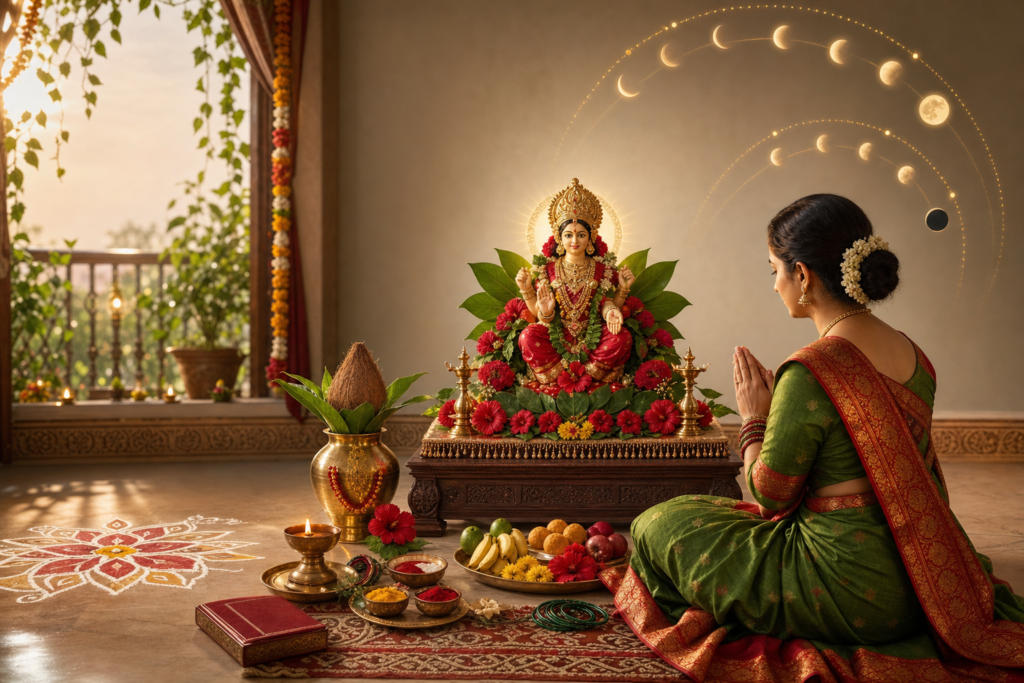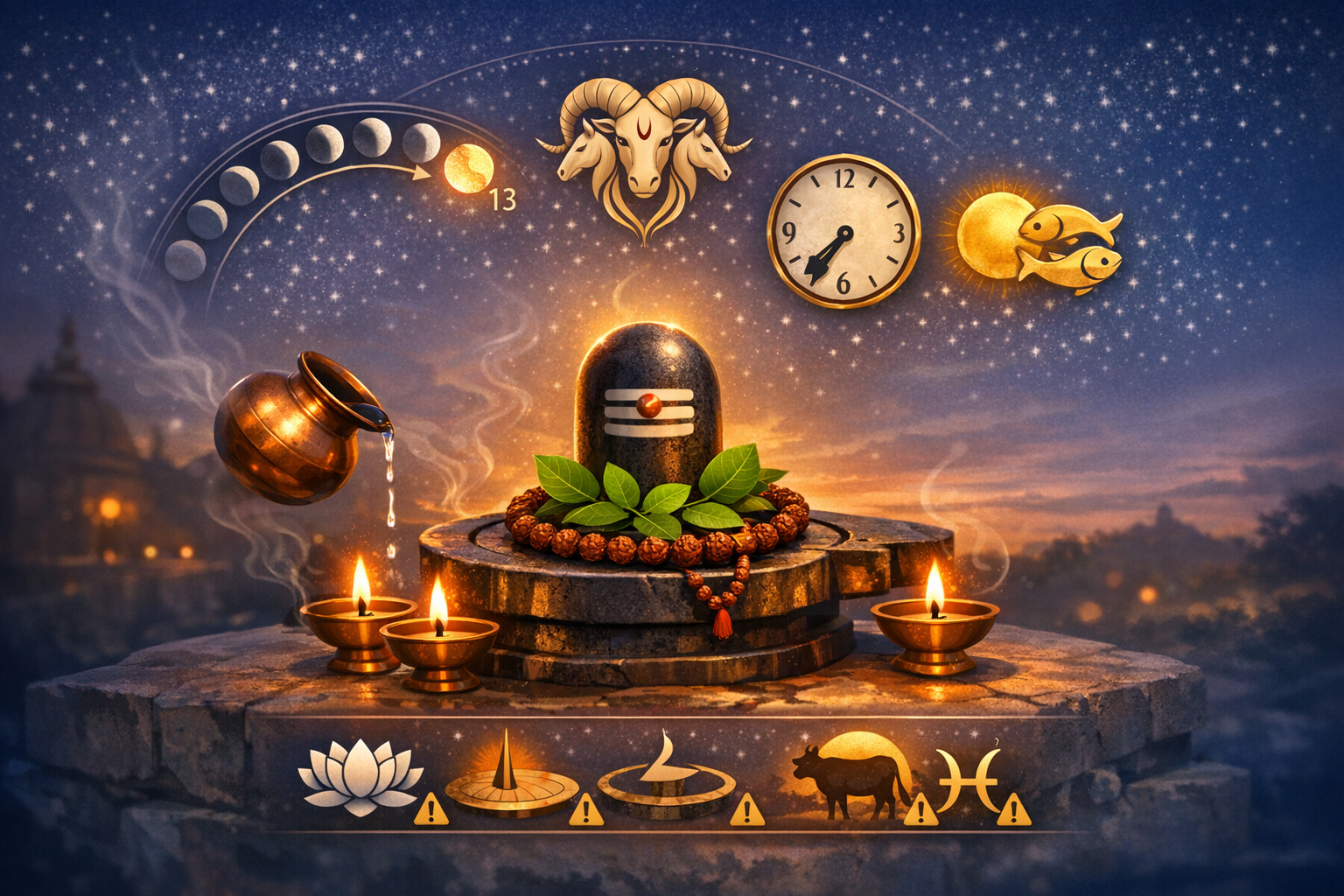
Monday, March 16, 2026, is marked in the Hindu Calendar (Panchang) by a decisive tithi transition that shapes the day’s observances. It is Krishna Paksha Dwadashi until 7:40 AM (IST), after which Krishna Paksha Trayodashi prevails for the remainder of the day. With Trayodashi spanning the evening twilight, the day carries the auspicious observance of Som Pradosh (Pradosha falling on a Monday), a widely venerated Shiva-focused vrata. Given the proximity to Amavasya, the day is also strategically important for those planning devotional work, donations, and sadhana anchored in muhurta-guided timing.
Tithi specifics are central for ritual accuracy. Krishna Paksha Dwadashi, the twelfth lunar day of the waning fortnight, concludes at 7:40 AM. By established dharmic practice, those who observed Ekadashi fasting on the previous day should perform paran (fast-breaking) during Dwadashi after sunrise and before the tithi ends. Because Dwadashi is brief on this date, paran should be completed as close to sunrise as feasible and strictly before 7:40 AM. Thereafter, with Krishna Paksha Trayodashi in effect, the evening naturally becomes the window for Pradosh worship.
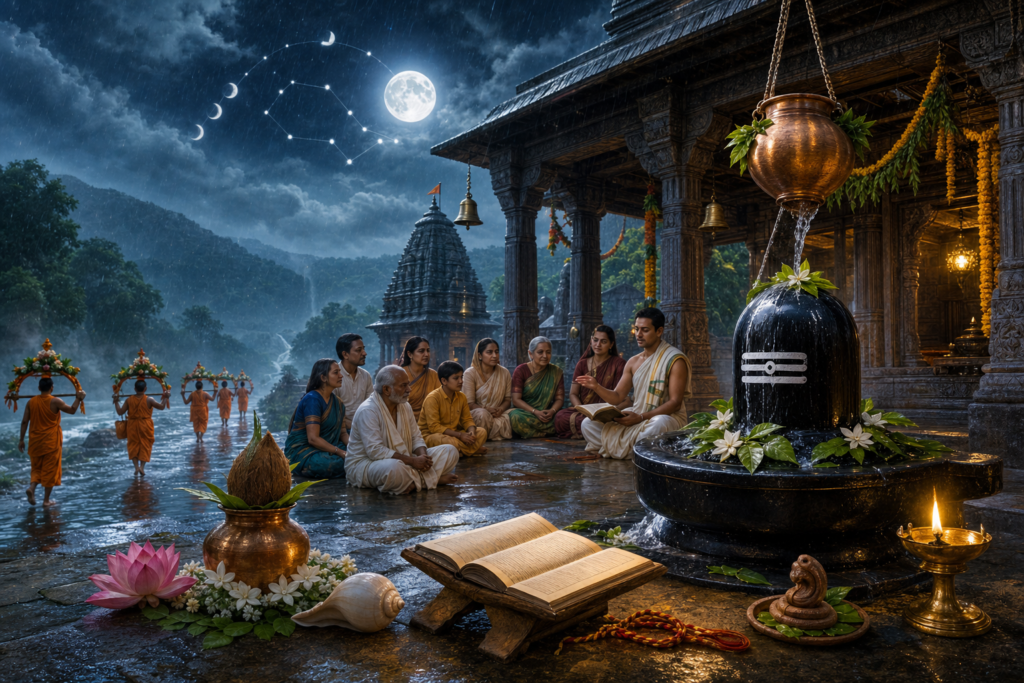
Som Pradosh carries particular devotional resonance. Pradosha Kaalthe period around local sunset, classically approximated as about 72 minutes before and after sunsetis dedicated to Shiva’s grace. Householders commonly perform Shiva abhishekam, offer bilva leaves, and recite stotras such as the Shiva Mahimna Stotram or the Mahamrityunjaya Mantra. The core emphasis is on inner stillness, restraint, and prayerful reflection during the twilight when, as the Puranic tradition notes, deities and rishis assemble to receive the devotee’s worship. For those following regional sampradaya rules, the Pradosha puja should be timed precisely within Trayodashi’s overlay on local sunset.
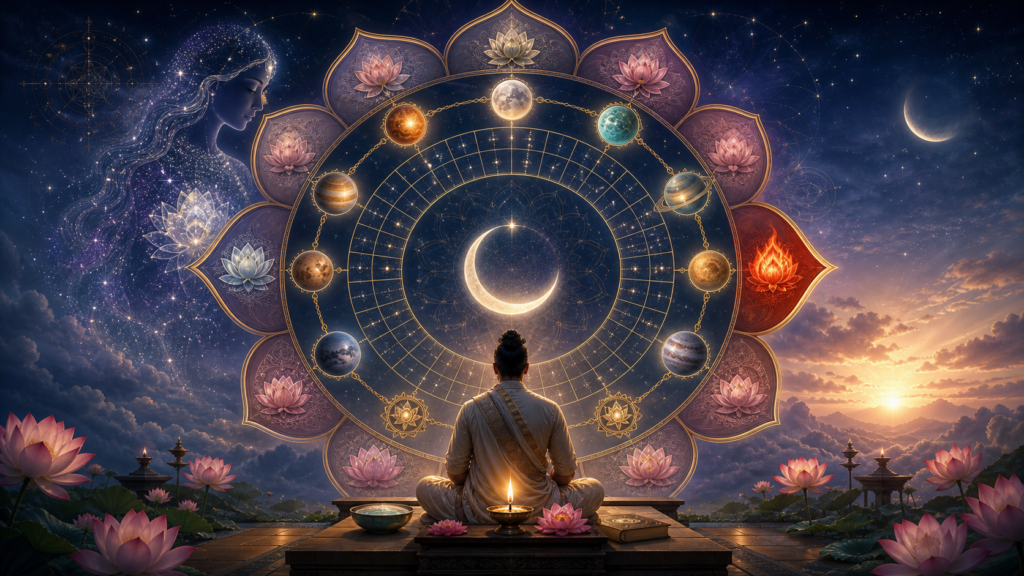
Expected lunar positions help refine planning. For most Indian locations, the Moon is likely to be in Mesha (Aries) through much of the day, commonly transiting Ashwini Nakshatra with a possible progression toward Bharani depending on longitude and local sunrise/sunset. The Sun is in Meena (Pisces) in the sidereal zodiac around this period each year. Because nakshatra and rashi edges are sensitive to time and place, local panchang data should be consulted for city-specific confirmation. The day’s practical reading, however, aligns well with Ashwini’s swiftness and healing impulse, favoring concise tasks, treatments, and beginnings undertaken during auspicious windowsand always outside malefic segments.
Auspicious timings (muhurtas) organize the day beyond the tithi. Practitioners often leverage three anchors: Brahma Muhurta (pre-dawn), Abhijit Muhurta (centered on local solar noon), and Godhuli Bela (evening glow). Brahma Muhurta is ideal for dhyana, japa, and sankalpa-setting; Abhijit Muhurtathe roughly 48-minute span centered on solar noonis traditionally neutral-to-auspicious and suitable for executive decisions, documentation, and initiations that cannot be scheduled in the morning; Godhuli Bela supports light spiritual routines and preparatory activities ahead of Pradosh.
Inauspicious segments are equally important to identify and avoid for high-stakes undertakings. Rahu Kaal on Mondays falls in the second segment of daylight; practically, near the March equinox in India this often approximates the window about 1.5 to 3 hours after sunrise. Yamaganda on Mondays aligns with the fourth daylight segment (mid-to-late morning), while Gulika Kaal corresponds to the seventh (mid-to-late afternoon). To compute precisely, divide the local daylight span (sunrise to sunset) into eight equal parts; assign the segments per weekday sequence (Monday: Rahu Kaal = 2nd; Yamaganda = 4th; Gulika = 7th), and apply local sunrise/sunset times.
Choghadiya adds a fine-grained, widely used layer to Panchang-based planning. Daytime Choghadiya comprises eight repeating segmentsAmrit, Kaal, Shubh, Rog, Udveg, Char, Labh, and again Amritwith Monday’s daytime cycle starting from Rog at sunrise. In practice, Shubh, Labh, and Amrit are preferred; Char is generally neutral; Kaal, Udveg, and Rog are avoided for new beginnings. Because each segment is one-eighth of the day, users should compute them from their own sunrise, stepping through the fixed sequence. The night Choghadiya follows its distinct sequence starting from local sunset.
From a ritual standpoint, Trayodashi’s alignment with Pradosh takes priority over generic “good time” windows. Devotees typically complete preparatory chores in Shubh/Labh/Amrit Choghadiya segments and then focus on Pradosh puja squarely within the twilight when Trayodashi is in force. Acts of daana, archana, and sankalpa for well-being, release from obstacles, and clarity of mind are thematically apt for Som Pradosh, reflecting the calming soma (Monday–Moon) influence and Shiva’s anugraha.
Month naming conventions vary by region and tradition. In the Purnimanta system (followed widely in North India), this day falls in the Krishna Paksha of the month that ends on Purnima; in the Amanta system (common in peninsular India), the naming aligns with the month ending on Amavasya. Around mid-March, the fortnight typically belongs to the concluding phase of Phalguna in one system and to the preceding month’s closing waning phase in the other, with regional almanacs providing the definitive label. These differences are conventional and do not affect the tithi or its ritual priorities.
Technical note on tithi determination supports calendar literacy. A tithi is defined by the angular elongation between the Moon and the Sun, with each tithi spanning 12 degrees of elongation. Krishna Paksha Dwadashi corresponds to the interval when the solar–lunar separation decreases through the 24°–36° band prior to Amavasya; Trayodashi corresponds to 12°–24°. This purely astronomical definition ensures that panchangs across schools converge on the same tithi boundaries when computed for a given location and time zone, even when naming conventions for months differ.
For cross-traditional harmony, the day lends itself to shared values across dharmic communities. Many Vaishnava households will prioritize timely Ekadashi paran on Dwadashi; Shaiva and Smarta families emphasize Som Pradosh; members of the Jain community who observe periodic upavasa or poshad cycles may adapt the morning Dwadashi window for gentle fast-breaking; and Sikh households may align seva, simran, and community support with the day’s emphasis on restraint and clarity. The unifying thread is inner discipline (samyama), compassion (daya), and service (seva), approached with mutual respect for diverse practices.
Practical scheduling draws on the above principles. Early morning is ideal for sadhana and, where applicable, Ekadashi paran before 7:40 AM. Administrative work, study, and key decisions may be reserved for Abhijit Muhurta if morning is unavailable. High-stakes initiations, interviews, and large financial commitments are prudently kept outside Rahu Kaal, Yamaganda, and Gulika Kaal. As sunset approaches, households can prepare the altar, complete abhishekam materials, and enter Pradosh worship with an inward, unhurried focus.
Safety in interpretation rests on localization. All tithi, nakshatra, and muhurta spans are inherently location-dependent, varying with longitude, latitude, and local sunrise/sunset. The Dwadashi-to-Trayodashi transition at 7:40 AM (IST) is the anchor for most Indian regions on March 16, 2026; specific nakshatra boundaries and fine muhurta slicing should be verified via a reliable, city-specific panchang if precision to the minute is required.
Summary for planners: Krishna Paksha Dwadashi ends at 7:40 AM (IST), followed by Krishna Paksha Trayodashi the rest of the day; Som Pradosh is observed in the evening twilight of March 16. The Moon is expected in Mesha (Aries), typically under Ashwini Nakshatra for much of the day, with regional variation near the Bharani cusp; the Sun is in Meena (Pisces). Prioritize Brahma Muhurta and Abhijit Muhurta for personal and professional tasks; avoid Rahu Kaal (Monday’s 2nd daylight segment), Yamaganda (4th), and Gulika Kaal (7th). This alignment offers a coherent, tradition-rooted framework to balance devotion, duty, and clarity.
Inspired by this post on Hindu Blog.