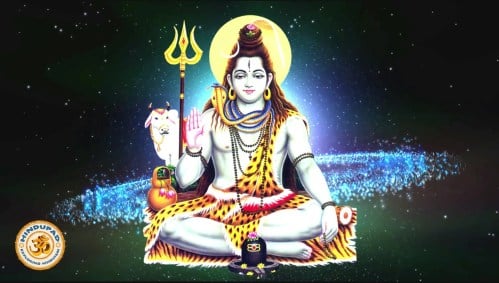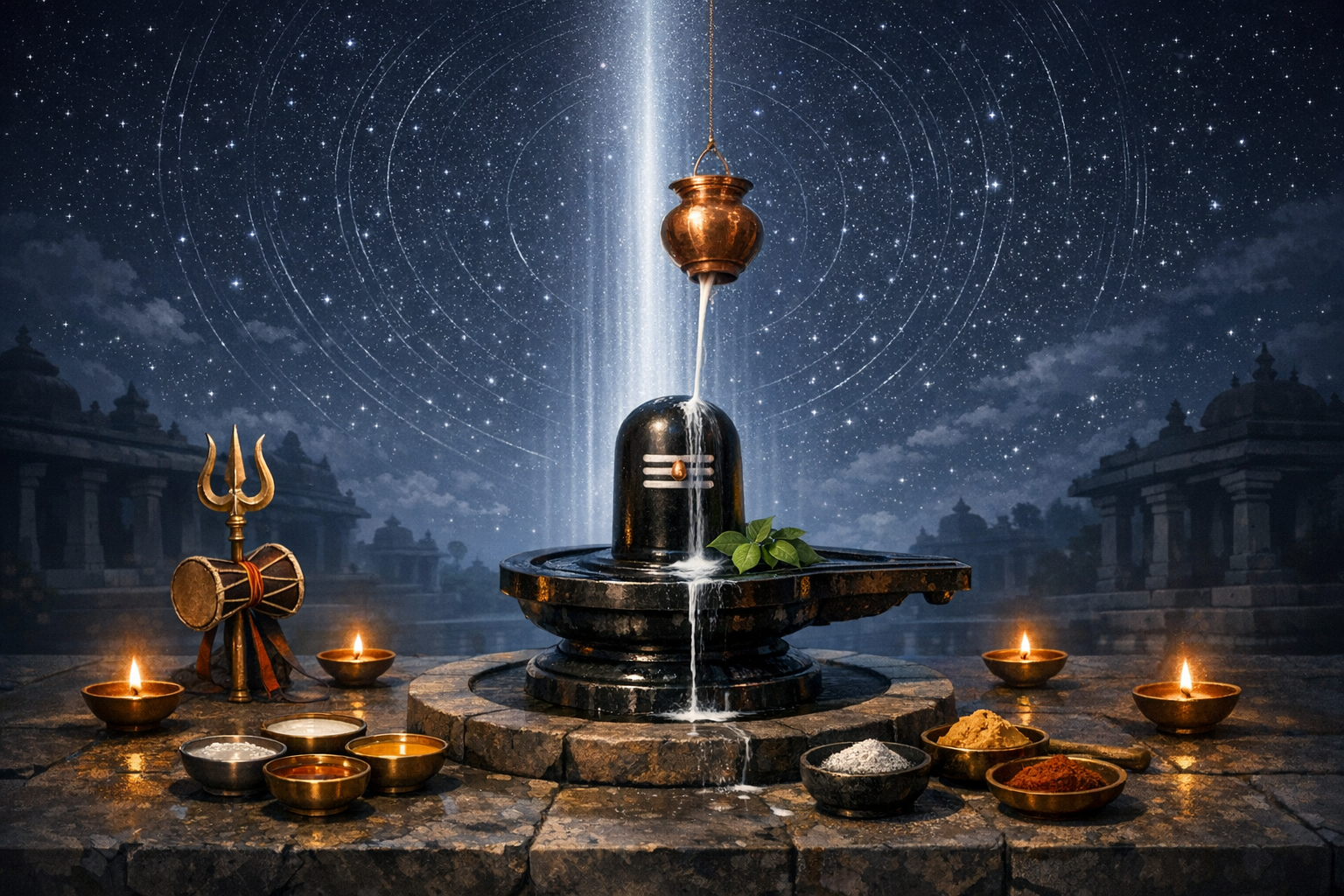
Maha Shivratri (also written Shivaratri) is the luminous night of Lord Shiva, observed with fasting, vigil, and the sacred Shivalinga puja. For 2026, the festival falls on the night of 15 February across both South India and North India, uniting regional calendars in a single transformative observance that emphasizes inner stillness, tapas, and devotion to Shiva.
Shivratri is anchored to the lunar tithi of Krishna Paksha Chaturdashi, and its core observance is performed during the deep-night Muhurat known as Nishita Kala. In 2026, the Nishita Kala on the night of 15 February is recognized as the most refined, scripture-aligned window for Shiva Puja, aligning with the traditional emphasis on Ratri (night) worship for this vrata.
Nishita Kala, the “true midnight” interval according to traditional Hindu timekeeping, is singled out in the Agamas and Puranas as the most auspicious period for invoking Shiva’s grace on Maha Shivratri. Devotees give special attention to this span because it corresponds to the moment of cosmic equipoise when the mind is naturally inclined toward inwardness, mantra, and meditative awareness.
Shivratri’s deeper theological motif is the Lingodbhava narrative: Shiva’s self-revelation as an infinite pillar of light beyond measure by Brahma and Vishnu. The Mahalingodbhava kala commemorates this mystery specifically during the night’s still point. Ritualists therefore prefer performing Shivalinga abhishekam and japa in Nishita, when silence and attention coalesce into a powerful sadhana.
Calendar nomenclature varies by region (Purnimanta in much of North India and Amanta in much of South India), yet both streams converge on the same lunar night. Thus, while month names may differ, 2026 Maha Shivratri synchronizes to Sunday night, 15 February, across India. This unity in practicedespite technical calendrical differencesunderscores the integrative character of dharmic time-reckoning.
Determining the correct Shivratri Puja time hinges on tithi and the Ratri-first principle: Chaturdashi tithi prevailing during the night drives the vrata, and the Nishita interval within that night is the definitive Muhurat. When tithi overlaps more than one night, the night that includes Nishita within Chaturdashi is selected for Maha Shivratri Puja.
Nishita Kala is calculated locally and is not tied to a fixed clock hour across geographies. The traditional method treats the “night” as the interval from local sunset to the following sunrise, then identifies true midnight as the halfway point. For example, if sunset is at 18:00 and sunrise at 06:00, Nishita centers around 00:00, with its precise start and end derived from the canonical sub-divisions of night. Local Panchang consultation refines these limits to the minute.
Practical scheduling for 2026 follows a simple hierarchy: begin preparatory rites after sunset on 15 February, ensure that Krishna Chaturdashi is in effect during the night, and reserve the principal abhishekam and mantra-japa for the Nishita Kala. If performing multiple rounds, distribute worship across the four ratri praharas and concentrate the most elaborate offering in Nishita.
Shivratri Puja is often performed in four segments through the night, corresponding to the night’s quartered flow. This structure helps sustain dhyana (meditative focus) and japa (mantra repetition) without fatigue, while aligning the devotee with the unfolding inner quietude that naturally peaks at true midnight.
Shivalinga Puja centers on snana (abhishekam) and upacharas (offerings). Commonly used substances include water, panchamrita (milk, curd, ghee, honey, sugar), sacred ash (vibhuti), and cooling items such as sandal paste. Bilva (Bel) leaves are specially revered in Shiva worship and are placed with mindful recitation of Om Namah Shivaya, alongside Rudram, Chamakam, and the Mahamrityunjaya mantra where tradition permits.
A typical home Puja sequence is: sankalpa (intention and resolve), achamana (ritual purification), dhyana (invocation of Shiva), abhishekam (consecrated bathing of the Linga), alankara (adornment), dhoopa (incense), deepa (lamp), naivedya (satvik offering), and kshama prarthana (prayer for forgiveness). The spiritual thrust is inward: each upachara symbolizes offering one’s senses and actions into the stillness of Shiva’s presence.
Fasting (upavasa) on Shivratri is observed to the extent health allows. Many follow phalahara (fruits and light satvik foods) or liquid fasting, while some undertake nirjala (waterless) austerity. Classical guidance concludes the vrata with Parana after sunrise the next day, at an appropriate time once the Chaturdashi tithi and core observances have concluded, in keeping with local Panchang and family sampradaya.
Temple traditions across India illuminate the night with continuous Rudrabhishekams, Vedic chanting, and Lingodbhava darshan. In many South Indian temples, the Lingodbhava icon or depiction is specially venerated during Nishita. In the North, extended kirtan and mantra-japa often accompany the layered Puja schedule, collectively reinforcing the night’s contemplative tenor.
Scriptural foundations for Maha Shivratri appear across the Shaiva Agamas and Puranas (notably the Linga and Skanda traditions), which emphasize the singular efficacy of night worship for Shiva. The Ratri-focus coheres with the festival’s philosophical aim: attenuation of sensory turbulence so that the devotee, seated in mantra and breath, encounters the silence beyond attributes.
Astrologically, the festival is tied to the tithi rather than a specific nakshatra. The Moon’s waning phase (Krishna Paksha) culminates in Chaturdashi, which becomes the ritual bedrock. The night-long vigil (jagaran) complements this, as the mind’s oscillations are soothed by repetition and steady breath, enabling more sustained dhyana on the Shivalinga.
Ritual clarity helps avoid common errors. Tulsi is not traditionally offered to Shiva, and turmeric is generally not applied to the Shivalinga. Bilva leaves should be whole and fresh, placed rib-side up. Offerings are made with clean hands and a steady mind, repeating Om Namah Shivaya without haste, letting the mantra shape the night’s rhythm.
Those with health considerations can adapt fasting and vigil responsibly. The vrata’s essence is sincerity and inner steadiness, not extremity. Many householders maintain Puja through at least one prahara, ensuring Nishita Kala worship, and then rest, preserving both spiritual intent and well-being.
Eco-sensitive observance is encouraged. Use moderate quantities of water for abhishekam, prefer reusable Puja vessels, and opt for organic, locally sourced flowers and leaves where possible. Such stewardship of resources aligns seamlessly with Shiva’s archetype as the benevolent ascetic and guardian of nature.
Maha Shivratri also resonates with the broader dharmic ethos shared across Hindu, Buddhist, Jain, and Sikh traditions: disciplined vigil, mindful recitation, and compassionate conduct. While the festival is distinctly Shaiva, its inward orientationsilence, self-scrutiny, restraintechoes uposatha mindfulness in Buddhism, tapas and ahimsa-centered fasting in Jainism, and simran (remembrance) in Sikh practice, reinforcing a civilizational kinship in values.
For 2026, the unifying detail is straightforward and practical: the night of 15 February hosts the central observance across India, with Nishita Kala as the gold-standard Muhurat. Whether conducted at home or in a temple, the Shivalinga Puja arranged around this midnight window fulfills the festival’s doctrinal and spiritual contours.
To finalize personal schedules, local Panchang consultation remains the preferred method because sunrise and sunset vary by location, slightly shifting the precise Nishita interval. Nevertheless, the sequencesunset preparations, night-long worship as feasible, principal abhishekam in Nishita, and Parana after sunriseremains consistent across sampradayas.
In sum, Maha Shivratri 2026 offers a meticulously aligned convergence of tithi, night-worship, and the Lingodbhava mystery. The discipline of the fast, the cadence of Om Namah Shivaya, and the cool, measured abhishekam on the Shivalinga become vehicles for returning attention to the heart of dharmaquietude, clarity, and compassion toward all beings.
Key takeaways for devotees planning Shivratri Puja Time 2026: observe on 15 February night across India, prioritize the Nishita Kala Muhurat for the main Shivalinga Puja, distribute worship across the four praharas if possible, adapt fasting to health, and close the vrata with Parana at the appropriate time next morning. These principles align personal practice with scripture-backed timing and the festival’s enduring spiritual intent.
Inspired by this post on Hindu Pad.