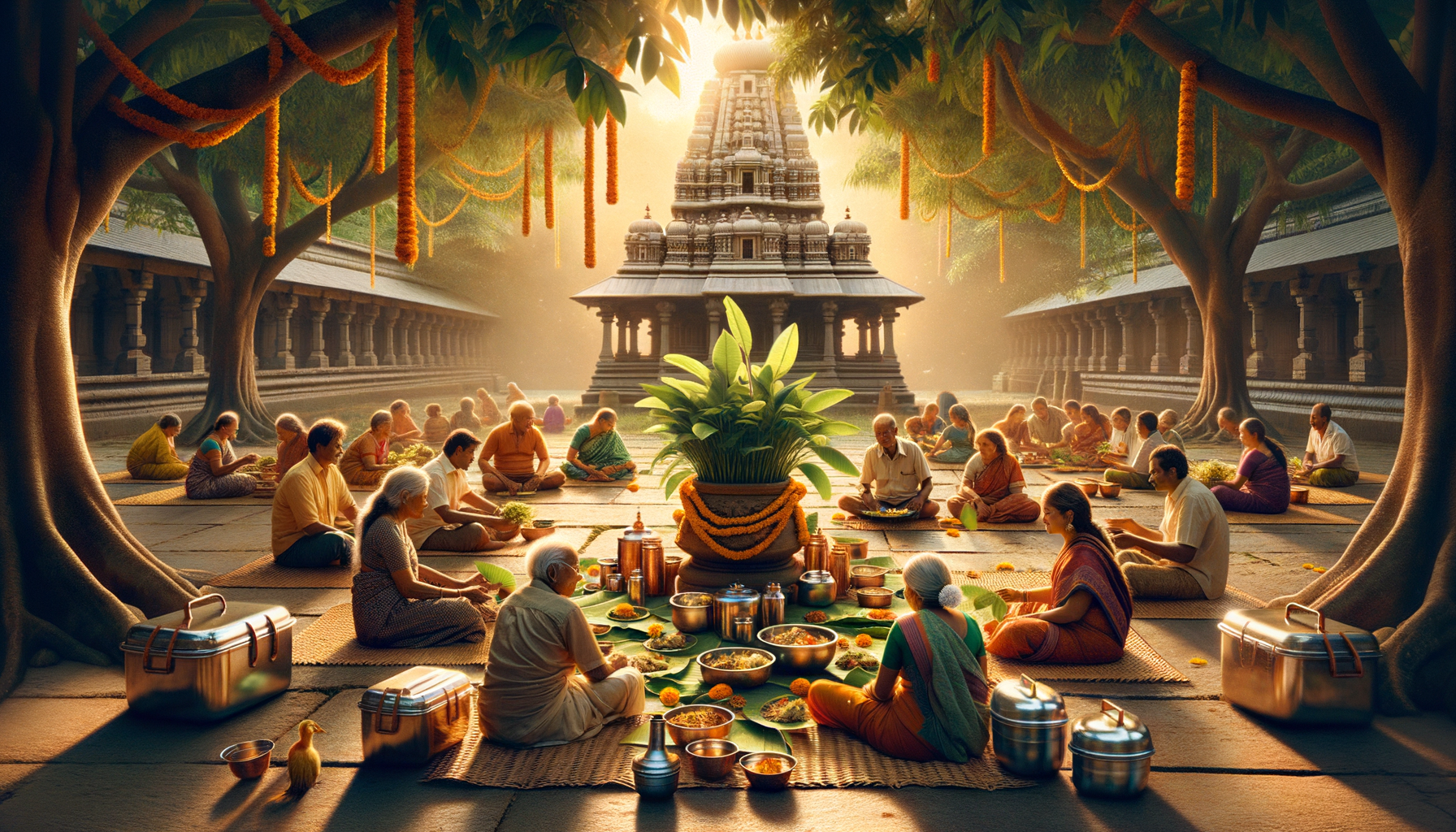
Kartika Vanabhojanam (Vanbhojan), also known as Kartika Masa Vana Mahotsavam, is a community gathering observed during Kartika masam in Andhra Pradesh. Organized by families and cultural associations, it takes the form of a garden picnic held in temple courtyards, groves, or parks. This tradition foregrounds the sacredness of plant life in Hinduism and highlights the seasonal ethos of Kartika masam, a month associated with devotion, simplicity, and ecological mindfulness.
In the broader dharmic worldview, plants embody divinity and are integral to ritual life and ethical conduct. Tulasi (Ocimum), Usiri (Amla), Bilva, and Durva are venerated as auspicious, life-supporting presences and frequently appear as sacred offerings in worship. Their inclusion during Kartika Vanabhojanam reflects an ethic of reverence toward nature that is central to many Hindu practices, while also resonating with shared values of environmental care across Buddhism, Jainism, and Sikhism.
The practice typically involves gathering outdoors to share a simple, sattvic meal prepared collectively. Participants engage in devotional songs, storytelling, and discussions that pass down seasonal customs to younger generations. Such shared experiences cultivate intergenerational learning, strengthen family bonds, and foster a sense of communal belonging rooted in cultural heritage.
Participants often describe the atmosphere as contemplative and joyful: elders recall earlier village gatherings, children explore groves and temple gardens, and families pause to offer gratitude to the Tulasi or Usiri (Amla) tree before the meal. These reflections underscore how Kartika Vanabhojanam blends sentiment with practiceembedding emotional memory within a framework of ritual and community care.
Beyond the convivial meal, the observance carries ethical and ecological dimensions. Many communities emphasize mindful consumption, cleanliness of shared spaces, and seasonal restraint during Kartika masam. The honoring of Bilva and Durva, for instance, symbolically affirms interdependence with the natural worldan ethos aligned with ahimsa, stewardship, and conservation articulated across dharmic traditions.
Regionally, Kartika Vanabhojanam is most visible in Andhra Pradesh during Kartika masam (roughly October–November), though related practices appear throughout South India. The terms Kartika Vanabhojanam and Kartika Masa Vana Mahotsavam are often used interchangeably to describe these nature-centered gatherings. As urban life expands, the tradition adapts to parks and temple gardens in cities, retaining its core intent: to celebrate nature, community, and seasonal devotion together.
Ritual elements may include offerings to Tulasi, the use of Bilva leaves, and reverence for Durva grass within associated worship. While Kartika observances vary by locality, the shared emphasis on sacred plants during this month situates the picnic within a continuum of devotional practices. In this way, Kartika Vanabhojanam complements other Kartika masam rituals and enriches the month’s devotional fabric.
Contemporary communities also view Kartika Vanabhojanam as a living expression of cultural preservation. In both rural and urban settingsand among the diasporathe gathering functions as a bridge between traditional knowledge and modern life. By situating the meal amid trees and temple gardens, participants reaffirm a dharmic ethic of care that unites Hinduism, Buddhism, Jainism, and Sikhism in honoring the sanctity of nature and the value of communal harmony.
Thus, Kartika Vanabhojanam endures as a seasonal celebration that integrates devotion, social cohesion, and environmental respect. Its academic significance lies in demonstrating how everyday ritual practices transmit ethical principles and cultural memory, while its lived appeal rests in the warmth of shared food, shared stories, and shared stewardship of the natural world.
Inspired by this post on Hindu Pad.