Kartika Maasa is revered as the holiest month in the Hindu lunar cycle, especially cherished by devotees of Lord Shiva and Lord Vishnu. In the Kannada Panchang, it is the 8th month, observed with discipline, devotion, and community service. As per the Hindu traditional calendars followed in Karnataka, Karthika Maasa in 2025 begins on 22 October and concludes on 20 November.
Across Karnataka, the month is marked by daily practices such as early-morning snana, lighting rows of oil lamps at dusk (deepa dāna), tulasi puja, and the recitation of sacred texts like Vishnu Sahasranama and Shiva stotras. Mondays during Karthika Somavara are observed with special vrata dedicated to Lord Shiva, while many households adopt the Damodara vrata with a focus on Vishnu bhakti. These disciplines cultivate steadiness, simplicity, and mindful livingqualities central to the Hindu way of life.
Key milestones within the month include the auspicious start with Kartika Shukla Pratipada on 22 October 2025, celebrated in many homes as Balipadyami (Annakut/Govardhana Puja). Yama Dwitiya (Bhai Dooj) follows, and the period between Shukla Ekadashi and Purnima is widely observed as the window for Tulasi Vivaha. Kartik Purnima, the full-moon celebration that crowns the month’s devotional arc, is observed with lamp-lighting, temple visits, and sacred bathing. The month then completes its cycle on 20 November 2025.
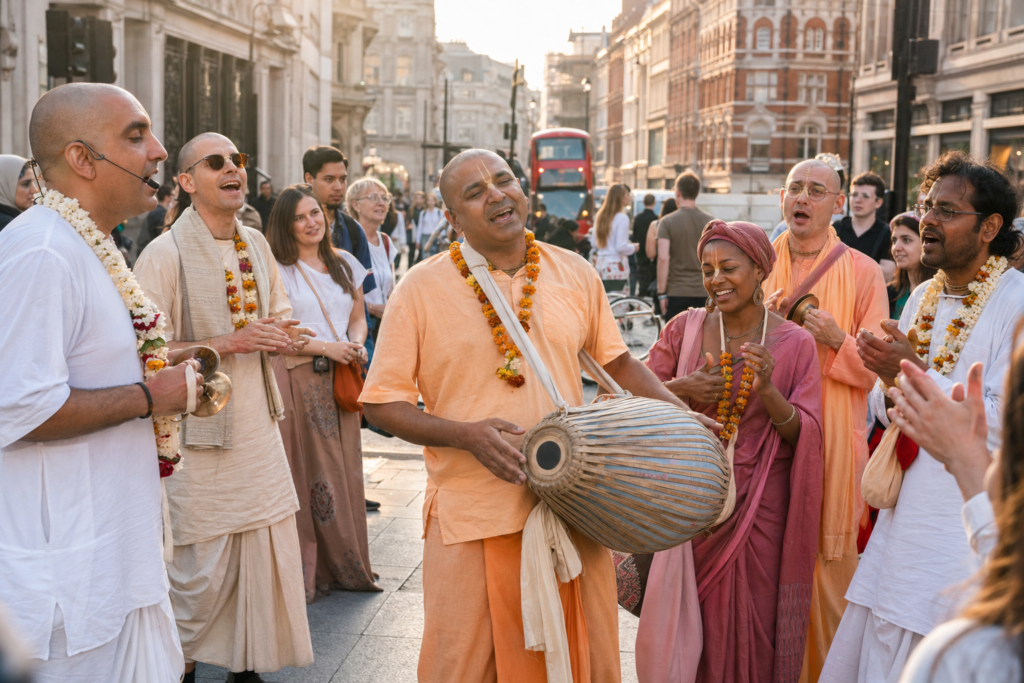
Communities in Karnataka often describe Kartika Maasa as a time when devotion becomes tangible. Homes and temples glow with lamps, riverbanks come alive at dawn with sacred snana, and families share simple satvic meals after vrata. Many recall how the fragrance of oil lamps and tulasi, coupled with the quiet rhythm of evening prayers, nurtures an emotional connection that endures well beyond the month.
This season also embodies unity among dharmic traditions. Jain communities mark the New Year around Kartika Shukla Pratipada and engage in practices such as Pratikraman and dana. Sikhs commemorate Guru Nanak Jayanti, which often aligns with Kartik Purnima, emphasizing remembrance, kirtan, and seva. In many Buddhist communities, Kathina Danaoffering robes and requisites to the Sanghaoccurs in this period, underscoring generosity and gratitude after the rains retreat. These observances, while rooted in distinct lineages, share a common ethos of inner refinement, compassion, and collective well-being.
For planners and families, Kartika Maasa 2025 in the Kannada Calendar offers a structured pathway to spiritual practice. Selecting appropriate muhurta for vrata and tulasi puja, organizing sustainable deepa arrangements, and scheduling temple seva or community annadana helps maintain consistency. Many neighborhoods also undertake riverbank clean-ups and lamp-recycling drives, aligning devotion with environmental stewardship.
In essence, Kartika Maasa 2025 (22 October–20 November) in Karnataka invites a balanced sadhana: ritual precision supported by heartfelt engagement. Whether through Karthika Somavara vratam, Tulasi Vivaha, or the luminance of Kartik Purnima, the month provides a proven framework to deepen devotion, strengthen family bonds, and celebrate a shared dharmic heritage that harmonizes Hindu, Jain, Sikh, and Buddhist values.
Inspired by this post on Hindu Pad.