On Tuesday, 12 May 2026 (Vaishakha Bahula Dasami), Tirumala Tirupati Devasthanam (TTD) will present Pattu Vastrams to Sri Japali Hanuman in Tirumala and observe special pujas for Sri Bedi Anjaneya Swamy near the Srivari Temple precincts. This annual observance, rooted in Agama traditions and local lore, draws thousands of devotees who revere Hanuman as the embodiment of unwavering bhakti, service, and inner strength. The offering of silk vastrams, or Pattu Vastrams, forms a key part of the day’s alankara and archana, signifying purity, auspiciousness, and the devotee’s surrender to the divine.
Hanuman Jayanti is celebrated on different tithis across India, but in Tirumala the observance aligns with Vaishakha Bahula Dasami, a date that honors local temple tradition and the flow of the Vaikhanasa-based worship followed by TTD for its Vaishnava deities. In 2026, this falls on 12 May. The day’s liturgy integrates shodashopachara (the canonical sixteen-fold worship), Abhishekam, alankaram, archana, and collective parayanam of devotional texts associated with Hanuman’s valor and humility.
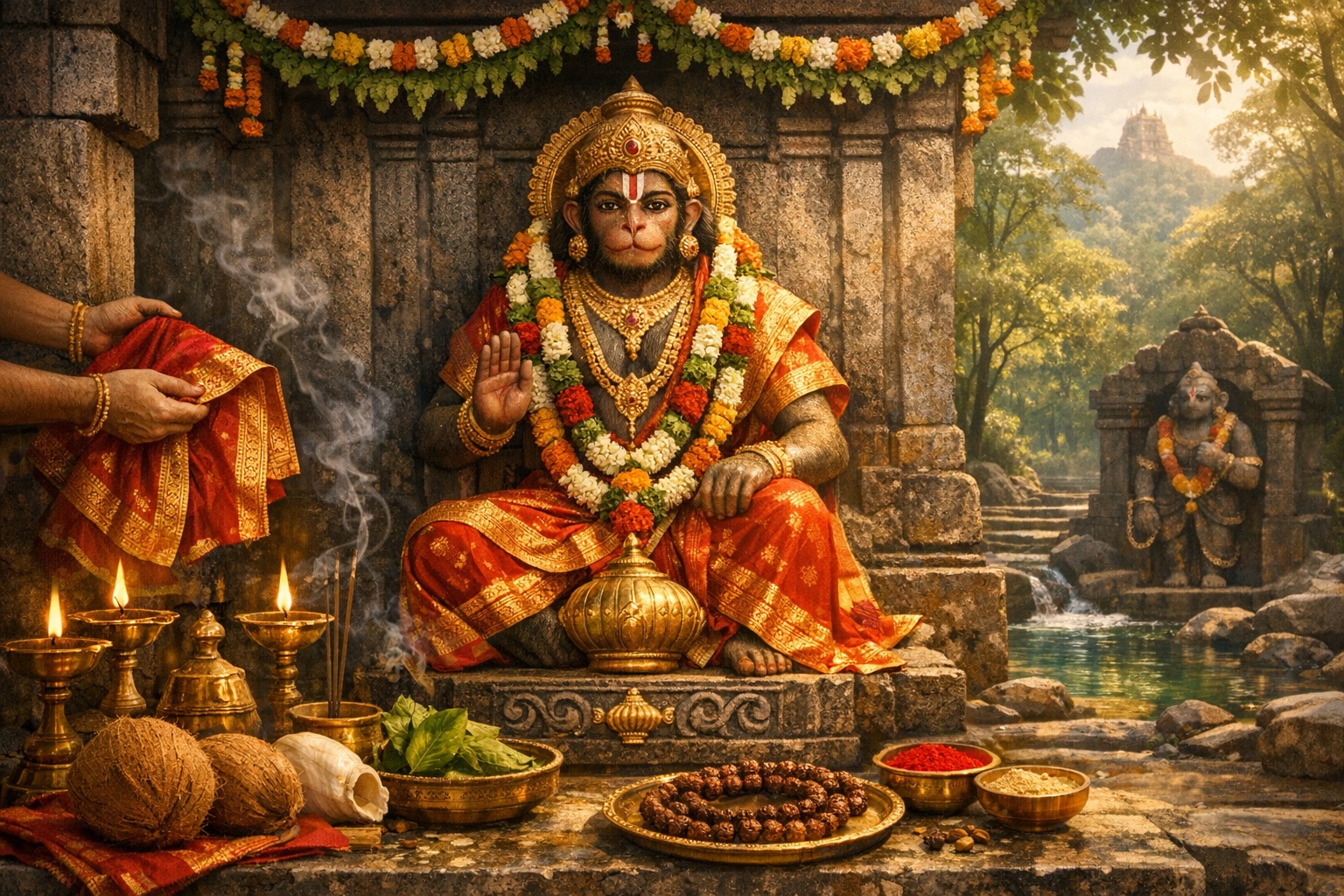
Sri Japali Hanuman is enshrined at Japali Theertham, a sacred forest enclave on the Tirumala–Papavinasanam route that tradition associates with the sage Jábáli and the Ramayana’s forest sojourn narratives. The serene setting—where a natural spring (theertham) and the shrine come together—has made this a center for quiet japa, tapas, and contemplation. TTD’s ceremonial presentation of Pattu Vastrams to Sri Japali Hanuman each year on Hanuman Jayanti underscores a living link between scripture, sacred landscape, and continuous temple practice.
The ritual act of vastra-samarpana (offering of garments) is deeply symbolic in Agamic worship. Silk is preferred for its purity and durability, qualities that align with the deity’s radiance and the devotee’s intent to offer the best available. In theological terms, vastra-samarpana functions as both upachara (service to the deity) and a visual theology: the deity is honored as a living presence, clothed, adorned, and invoked to reside in the sanctum as protector and guide. In the case of Vayuputra Hanuman, the alankara also echoes his role as Rama-bhakta par excellence, whose strength is inseparable from humility and dharmic service.
Special observances for Sri Bedi Anjaneya Swamy—an iconic shrine opposite the main Tirumala temple—complement the day’s proceedings. The epithet “Bedi,” meaning shackles, relates to a popular local narrative of Hanuman’s boundless energy being lovingly restrained, conveying a child-like trust and discipline before dharma. Devotees offer prayers for resolve, focus, and protection, often undertaking simple vratas or recitations that express Hanuman’s qualities of steadiness and self-mastery.
While TTD will release detailed timings closer to the date, the liturgical sequence on Hanuman Jayanti typically includes Suprabhata-style awakening, Abhishekam with sanctified dravyas, alankaram featuring the Pattu Vastrams, archana with namavalis, and deepa-harati. Parayanam—especially Sundara Kanda recitation and collective chanting of Hanuman Chalisa—is customary in many pilgrim groups and mathas on the hill, affirming the day’s emphasis on remembrance, courage, and seva. Naivedyam and prasadam distribution are undertaken according to temple protocols and crowd-management guidelines.
Devotees visiting Japali Theertham on 12 May 2026 should plan for moderate trekking along a well-marked forest path from the roadside drop-off on the Papavinasanam route. The setting lies within the Seshachalam Biosphere Reserve, and pilgrims are advised to carry water, wear comfortable footwear suitable for a natural trail, and observe eco-sensitivity by avoiding plastics and maintaining silence around the theertham. TTD and local staff typically guide footfall and ensure orderly movement during peak hours.
For those focusing on darshan of Sri Bedi Anjaneya Swamy near the main temple, early arrival is advisable due to increased footfall throughout the day. Pilgrims often align their visit with Srivari darshan, participating in a simple archana or lighting a ghee lamp where permitted. As customary in Tirumala, adherence to TTD’s dress code, queue regulations, and photography restrictions ensures a dignified and efficient darshan experience for all.
The theological grammar of the day centers on Hanuman’s attributes—shraddha (faith), bala (strength), buddhi (clarity), and dhriti (steadfastness)—which are extolled in stotras and kirtanas. In Vaishnava praxis, these virtues are cultivated through disciplined sadhana: mindful japa, scriptural listening (sravana), and service (seva) to the deity, the guru, and the community. The offering of Pattu Vastrams does not stand alone; it integrates with a matrix of upacharas and internalized meditations that aim to align the devotee’s inner state with Hanuman’s exemplar.
From a cultural-historical perspective, Hanuman Jayanti at Tirumala reflects how pan-Indian festivals are harmonized with local tithi reckoning and temple-specific Agama traditions. While many regions observe Hanuman Jayanti on Chaitra Purnima, Tirumala’s observance on Vaishakha Bahula Dasami underscores the plurality within dharmic calendars, sustained by parampara (lineage) and lokachara (community practice). This continuity gives pilgrims a stable annual rhythm while allowing space for diverse regional expressions of devotion.
In keeping with the spirit of unity among dharmic traditions—Hinduism, Buddhism, Jainism, and Sikhism—the festival’s ethical core speaks broadly to courage with compassion, disciplined service, and humility before truth. The virtues personified by Hanuman parallel values cherished across these traditions, such as seva, ahimsa, inner vigilance, and communal harmony. Pilgrims and visitors often remark that collective chanting and shared participation on this day foster a palpable sense of solidarity and reverence that transcends sectarian boundaries.
Practical planning remains essential. Crowd density typically peaks around mid-morning and early evening; seniors and families with children may prefer early hours for a quieter experience. Weather in mid-May can be warm on the hill; hydration and sun protection are prudent. As with all major observances in Tirumala, devotees are encouraged to consult TTD’s official advisories for any updates on access, traffic diversions, or adjustments to sevas and parayanam spaces on the day of the festival.
In summary, Hanuman Jayanti on 12 May 2026 in Tirumala integrates scriptural fidelity, sacred geography, and compassionate crowd stewardship. The presentation of Pattu Vastrams to Sri Japali Hanuman and the special pujas to Sri Bedi Anjaneya Swamy embody an offering of the heart as much as of silk—an invitation to cultivate strength without pride, devotion without hesitation, and service without expectation. For those journeying to the Seshachalam hills, the day offers an opportunity to absorb the quiet power of the theertham, the resonance of kirtan, and the shared aspiration for unity and peace across the broader dharmic family.
Inspired by this post on Hindu Pad.