Gaura Purnima Fasting Demystified: Ekadasi Prasadam or Grain Feast? An Evidence-Based Guide
Gaura Purnima annually inspires deep devotion and sweeping celebration across the Gaudiya Vaishnava world, yet a practical question continues to puzzle many communities: after fasting until moonrise, should the observance conclude with only Ekadasi prasadam or with a full-grain feast on the evening of Gaura Purnima? The stakes are more than culinary; the answer reflects how communities interpret tradition, align with Srila Prabhupada’s standards as understood within ISKCON, and preserve unity across a global, diverse sangha.
Clarity on this point matters because fasting practices are integral to Vaishnava sadhana. They shape the devotional mood of the day, determine what is offered to the Deity, and influence how communities express hospitality and inclusivity. When everyone understands the same standard, the celebration flows without distraction, and the spirit of bhakti remains central.
Gaura Purnima marks the appearance of Sri Chaitanya Mahaprabhu, celebrated when the full-moon tithi prevails at moonrise. The traditional Gaudiya Vaishnava observance includes kirtana, reading from Chaitanya-caritamrita and related biographies, abhisheka, and a vrata observed until moonrise. The fast embodies upavasa in its core sense: drawing near to the Lord through simplicity, restraint, and intensified remembrance.
In Gaudiya Vaishnavism, appearance-day vratas for Vishnu-tattva are typically conducted with Ekadasi-like discipline. That means abstaining from grains and legumes on the festival day, with anukalpa (non-grain preparations) permitted as needed for health or service. The intention is to minimize bodily demands so that the heart can rest fully in nama-sankirtana and seva.
Within ISKCON circles, two practices are observed: some centers break the fast after moonrise with Ekadasi prasadam and then hold a full-grain feast the following day (Jagannath Misra Mahotsava), while others conduct a grain feast immediately after moonrise on Gaura Purnima evening. Both intend to honor Mahaprabhu; the difference arises from how the term feast is interpreted and how legacy communications have been understood.
A careful reading of standard Gaudiya Vaishnava guidance favors the Ekadasi-style observance on the appearance day itself. Many ISKCON calendars and established festival guidelines indicate fasting until moonrise on Gaura Purnima, followed by anukalpa (Ekadasi prasadam) that evening, and a full-grain, opulent festival meal the next day in honor of Jagannath Misra. This mirrors the normative pattern seen on Janmashtami and Nrisimha Chaturdashi, where devotees take non-grain prasadam at the festival’s sacred juncture and reserve a grain feast for the subsequent day.
The term feast has sometimes led to confusion. In devotional parlance, feast can mean a joyful, opulent offering to the Lord and the Vaishnavas without necessarily implying grains. An evening of abundant Ekadasi prasadam at moonrise is a true festival meal in spirit, while still honoring the vrata that continues through the appearance day. The following day’s celebratory grains then complete the observance in a manner consistent with long-standing Vaishnava custom.
Deity worship considerations also support this approach. On Ekadasi and on major appearance days, temples commonly refrain from offering grains to the Deities to preserve the mood of vrata. Offering non-grain bhoga on Gaura Purnima day harmonizes the kitchen, altar, and congregational mood, while the next day’s grain offerings allow for the fullest expression of anna-bhoga and community feasting.
There are practical reasons as well. After a full-day fast to moonrise, many devotees find it gentler to reintroduce food as anukalpa rather than with heavy grains. This approach protects digestion and energy levels and helps those who have observed a stricter vrata or served continuously in kitchens and on the altar.
Technically, the fast breaks after local moonrise time. Vaishnava calendars determine festival observances by tithi rather than the civil day, with Gaura Purnima observed when Purnima prevails at moonrise. In practice, communities follow reliable panchanga calculations for their location. If the moon is obscured by clouds, the computed time still governs; the vrata is tied to the lunar moment, not physical sighting.
A consistent, unity-focused best practice thus emerges: on Gaura Purnima, fast until moonrise and then take Ekadasi prasadam as a joyful, abundant, non-grain festival meal; on the following day, celebrate Jagannath Misra Mahotsava with a full-grain feast. This pattern respects shastric logic, aligns with widely published ISKCON calendars, and sustains a devotional atmosphere that many communities find both elevating and practical.
Compassionate exceptions are built into Vaishnava practice. Children, the elderly, pregnant or nursing mothers, and those with health conditions can adjust the vrata while keeping the devotional intention intact. Guidance from local temple authorities helps ensure that concessions are made transparently and with care for both health and the sanctity of the festival.
Temple planning benefits from clearly communicating the standard well before the festival: kitchens should be dedicated to non-grain offerings on Gaura Purnima day, with separate utensils as needed; signage and announcements can explain the meaning of anukalpa; and kitchens can prepare a grand, grain-based feast for the next day. This practical choreography removes uncertainty and channels everyone’s energy toward seva and kirtana.
For many, the devotional mood on Gaura Purnima evening is unforgettable: the temple glows, kirtana swells, and the community collectively feels the sacred passage as moonrise approaches. Breaking the fast with Ekadasi prasadam at that moment preserves the sanctity of the vrata while creating a shared experience of grace that lingers long after the lamps are dimmed.
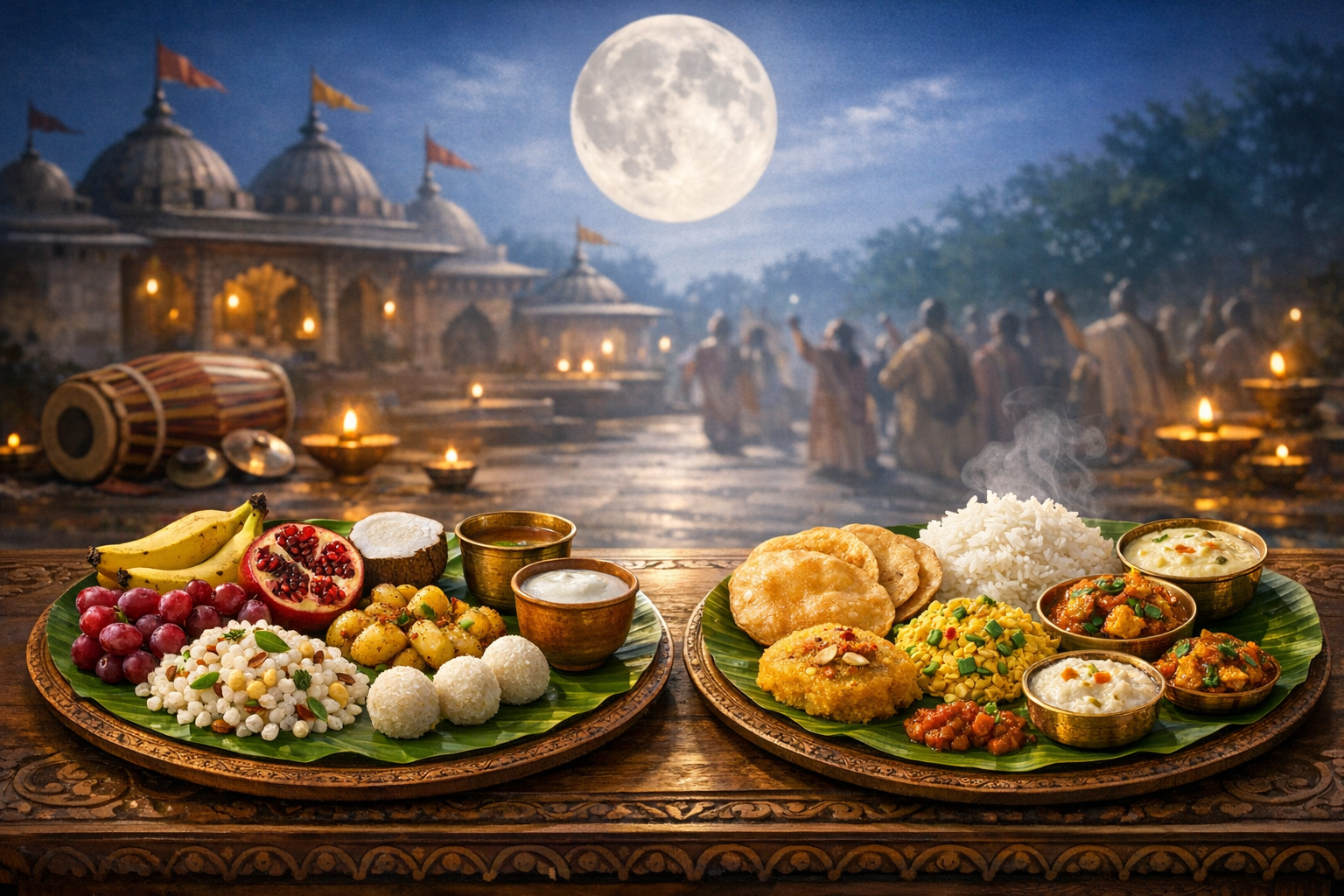
Menu design on the festival day can be both traditional and inclusive. Rich fruit salads, sabudana khichdi, baked or sautéed potatoes, kuttu or rajgira preparations, singhara-based sweets, nut-and-milk confections, gently spiced vegetable dishes cooked without grains, and fragrant herbal teas form a generous Ekadasi spread. The following day can then feature a full range of grain offerings, including rice, rotis, khichdi, halava, and festive sweets, allowing devotees to express abundant hospitality and gratitude.
Global congregations face time zone and calendar variations, yet the principle remains constant: follow the local moonrise and authoritative Vaishnava calendar for the city. In regions where community members rely on different panchanga sources, it helps to agree on a single, temple-approved calculation for the sake of unity.
The question of what to serve after moonrise need not become a point of contention. When communities foreground the essence of bhakti and the shared purpose of honoring Sri Chaitanya Mahaprabhu, the choice to maintain Ekadasi-style offerings on the appearance day, with a grain feast the next day, naturally supports cohesion. Such alignment deepens trust among devotees and keeps the devotional current strong.
Seen through a broader dharmic lens, this balance resonates across traditions. Buddhism’s Uposatha observances cultivate restraint and mindfulness; Jainism’s fasting practices embody ahiṁsa and self-discipline; and Sikh tradition emphasizes seva and langar as expressions of equality and compassion. Although practices vary, the shared ethos of inner purification, service, and community harmony unites the dharmic family and enriches the Gaura Purnima mood.
Effective communication on the rationale also helps. Explaining that anukalpa on the appearance day keeps the vrata intact and that the following day’s grain feast allows the fullest expression of hospitality ensures everyone understands both the heart and the details of the standard. In turn, devotees can confidently invite friends and family, knowing the flow of the festival will be smooth and spiritually grounded.
For Deity worship teams, aligning altar offerings with kitchen standards avoids mixed signals. On Gaura Purnima day, non-grain offerings preserve the vrata atmosphere, while the next day’s anna-bhoga underscores celebration and gratitude. When altar and kitchen move in unison, the entire community experience becomes coherent and spiritually resonant.
In the rare case where a community has long held the grain-at-moonrise custom, a compassionate transition can be made by first offering a robust Ekadasi prasadam spread at moonrise and moving the grain feast to the next day in subsequent years. Framing the shift as a return to a widely affirmed Vaishnava pattern preserves dignity while building consensus.
Ultimately, Gaura Purnima is about welcoming divine compassion into daily life. Fasting to moonrise, breaking with Ekadasi prasadam, and feasting with grains the next day weaves together scriptural sense, practical care, and communal unity. It ensures that the festival’s culinary decisions elevate the mood of devotion rather than distract from it.
A clear, evidence-aligned standard also strengthens education for new devotees and visitors. When the reasoning is explained simply appearance-day vrata aligns with Ekadasi discipline; the sacred juncture is honored with anukalpa; grains express the festival’s fullness the next day the tradition becomes both accessible and compelling.
In sum, the most coherent and unity-promoting resolution is this: observe Gaura Purnima with Ekadasi-like fasting until moonrise, break with Ekadasi prasadam that evening, and celebrate a full-grain feast the following day for Jagannath Misra. This approach honors Gaudiya Vaishnava standards, aligns with ISKCON calendars in widespread use, and invites the entire community from seasoned practitioners to first-time visitors into a harmonious, uplifting celebration.
Should Gaura Purnima be broken with Ekadasi prasadam or a grain feast?
The guide favors fasting until local moonrise and then taking Ekadasi prasadam, meaning a joyful non-grain anukalpa meal. It presents the full-grain feast as best observed the following day for Jagannath Misra Mahotsava.
Why does the article recommend Ekadasi-style discipline on Gaura Purnima?
The article explains that Gaudiya Vaishnava appearance-day vratas for Vishnu-tattva are typically observed with Ekadasi-like restraint. Avoiding grains and legumes on the festival day helps preserve the devotional mood of fasting, kirtana, remembrance, and seva.
When does the Gaura Purnima fast break?
The fast breaks after local moonrise, following reliable Vaishnava calendar or panchanga calculations for the community’s location. If clouds obscure the moon, the computed moonrise time still governs the vrata.
What foods does the article suggest for Gaura Purnima evening?
The article suggests non-grain Ekadasi preparations such as fruit salads, sabudana khichdi, potatoes, kuttu or rajgira items, singhara-based sweets, nut-and-milk confections, vegetables cooked without grains, and herbal teas. The next day can include grain offerings such as rice, rotis, khichdi, halava, and festive sweets.
Are health exceptions allowed during the Gaura Purnima vrata?
Yes. The article says children, the elderly, pregnant or nursing mothers, and people with health conditions may adjust the vrata while preserving the devotional intention, ideally with guidance from local temple authorities.
How should temples plan the Gaura Purnima meal standard?
The article recommends communicating the standard before the festival, dedicating kitchens to non-grain offerings on Gaura Purnima day, and preparing the grain feast for the next day. This helps align the kitchen, altar, and congregation around a clear observance.