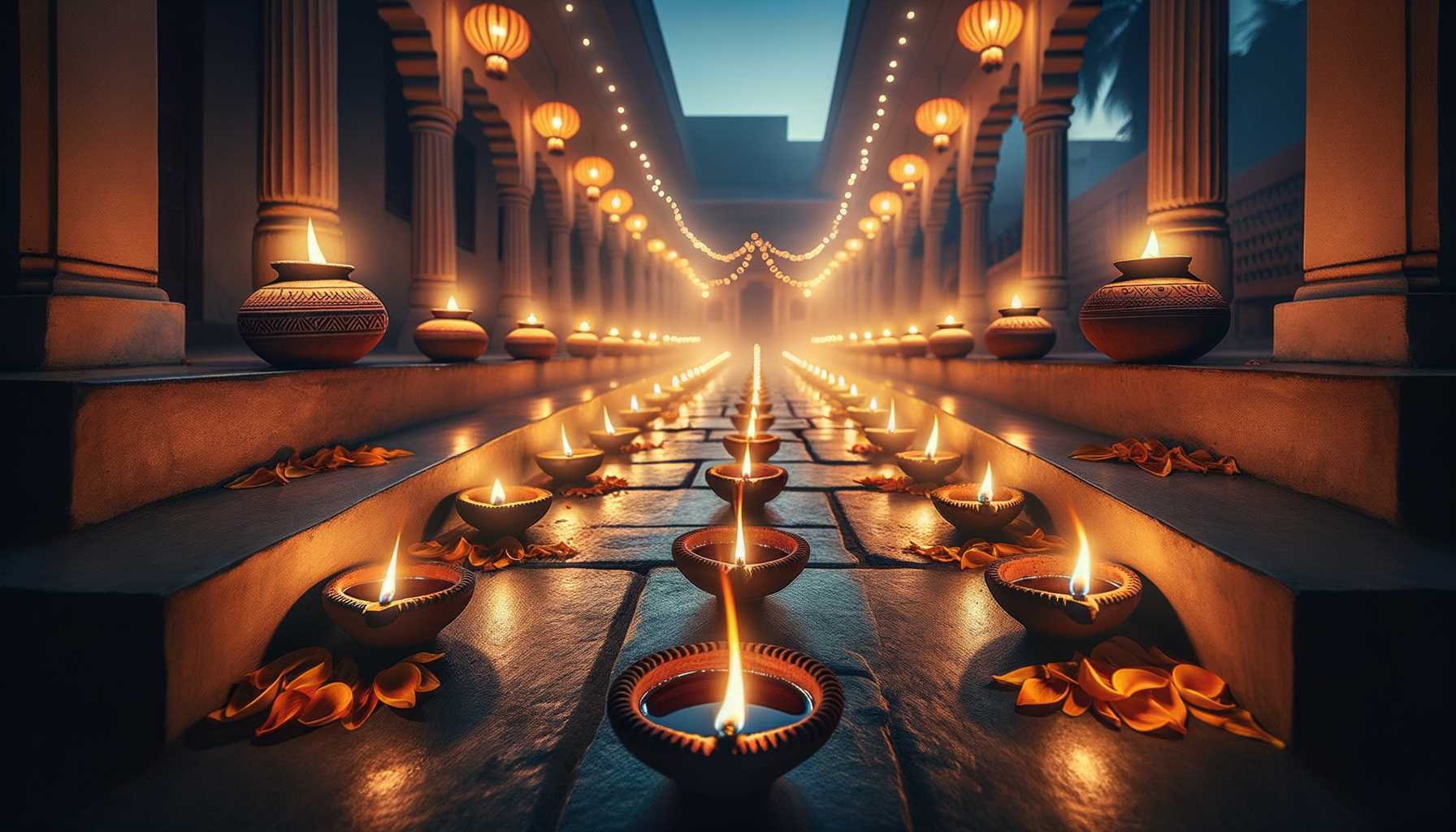
The suffix ‘Avali’ in Deepavali reveals a foundational key to the festival’s meaning. In Sanskrit, āvali denotes a row, line, or series, and when paired with dīpa (lamp), Deepavali becomes a vivid image: a deliberate lineup of lights. This “divine lineup” signifies not merely illumination, but ordered illuminationlight placed in sequence to shape a path, create orientation, and invite auspiciousness. Understanding this suffix clarifies why the Festival of Lights centers on arranging lamps in rows: it embodies alignment with dharma and the disciplined movement from darkness to clarity.
Linguistically, āvali appears across classical Sanskrit to indicate series and arrangement, pointing to intentionality rather than randomness. This precision matters. A single lamp dispels darkness locally; a row of lamps organizes space into a welcoming, protective, and sacred threshold. The etymology aligns with ritual practice: thresholds, courtyards, and pathways are edged with diyas to mark transition, safeguard dwellings, and frame community movement during Deepavali.
Ritually, the row of lamps functions as a moral and spiritual compass. Households line diyas along entrances and windows to honor Agni, evoke prosperity, and symbolically pave the way for auspicious presence. The linear arrangement suggests ethical orderingprioritizing satya (truth), dharma (right conduct), and dayā (compassion). Classical resonance emerges with the prayer “tamaso mā jyotir gamaya,” urging a guided passage from ignorance to light. In this reading, āvali encodes alignment: one light after another, one virtue reinforcing the next.
Philosophically, ‘Avali’ can be understood as an outward sign of inner integration. Many traditions interpret the row of lights as a contemplative aidaligning intention, speech, and action; or harmonizing the five senses and the mind. When families light five or more diyas, some recall the pañca-tattva or pañca-prāṇa, translating metaphysical concepts into visible practice. While interpretations vary, the shared insight persists: sequence matters, and sequence cultivates steadiness.
Across the dharmic family, the symbolism of āvali nurtures unity in diversity. In Jainism, Diwali commemorates the nirvāṇa of Bhagavan Mahavira, with lamps signifying the enduring light of kevala-jñāna. In Sikh tradition, Bandi Chhor Divas coincides with the season of lamps, celebrated with illuminated gurdwaras that affirm liberation and gratitude. In Nepal, communities observe Tihar, where Hindus and Buddhists alike adorn homes and streets with rows of lights, honoring both familial bonds and the sanctity of life. These observances differ in theology yet converge in practice, demonstrating civilizational continuity through the shared motif of arranged light.
Socially, the āvali of diyas fosters belonging. Many households recount how carefully spacing earthen lamps along a terrace or staircase becomes a quiet, intergenerational lesson in care, patience, and precision. Children learn to protect the tiny flames from wind; elders teach the steady hand needed to pour oil evenly. Neighbors exchange sweets beneath shimmering rows, and diaspora communities recreate the lineup of lights to sustain cultural memory across distances. The experience is at once intimate and collectiveordered light becoming ordered life.
Practically, the essence of āvali can be lived through measured choices. Eco-friendly clay diyas, sesame or ghee-based wicks, and mindful placement reduce waste and enhance the festival’s contemplative quality. Some households dedicate each lamp in the row to a valueśraddhā (faith), karuṇā (compassion), kṣamā (forbearance), dāna (generosity), and maitri (friendship)turning sequence into daily intention. Others extend the symbolism beyond décor: rows of kind acts, ordered moments of silence, and structured family rituals can carry the spirit of Deepavali throughout the year.
Ultimately, ‘Avali’ frames Deepavali as more than a celebration of brightness; it is a practice of alignment. The row teaches that light is most transformative when intentionally placedwithin homes, communities, and the inner life. By recognizing āvali as the festival’s organizing principle, dharmic traditions strengthen shared heritage while honoring distinct meanings. In this way, the Festival of Lights becomes a festival of ordered light, guiding collective movement toward clarity, harmony, and unity.
Inspired by this post on Hindu Blog.