अहोई अष्टमी का व्रत सन्तान की उन्नति, प्रगति और दीर्घायु के लिए होता है| यह व्रत कार्तिक कृष्ण पक्ष की अष्टमी को किया जाता है| दीपावली के ठीक एक हफ्ते पहले पड़ती है l अहोई अष्टमी का व्रत विधि व्रत करने वाली स्त्री को इस दिन उपवास रखना चाहिए| सायं काल दीवार पर अष्ट कोष्ठक की […]
Ahoi Ashtami is observed on Kartik Krishna Ashtami, typically one week before Diwali, with a focused intent on children’s prosperity, progress, and long life. Within the wider landscape of Hindu festivals and vrat-pujas, it is regarded as a disciplined practice of devotion, gratitude, and ethical self-restraint that aligns with the shared dharmic values of care for family, compassion for all beings, and commitment to truthful living.
Tradition records a clear observance pattern: a day-long fast, an evening puja, and the ritual conclusion after the sighting of the stars. Many households draw the aṣṭa-koṣṭhaka, or eight squares, on a clean wall and respectfully depict Ahoi Mata with symbolic motifs of nature and offspring. Offerings commonly include water, milk, simple sweets, and seasonal grains. The fast is customarily broken after star-sighting at dusk, underscoring the cosmic rhythm that guides the vrat’s timing.
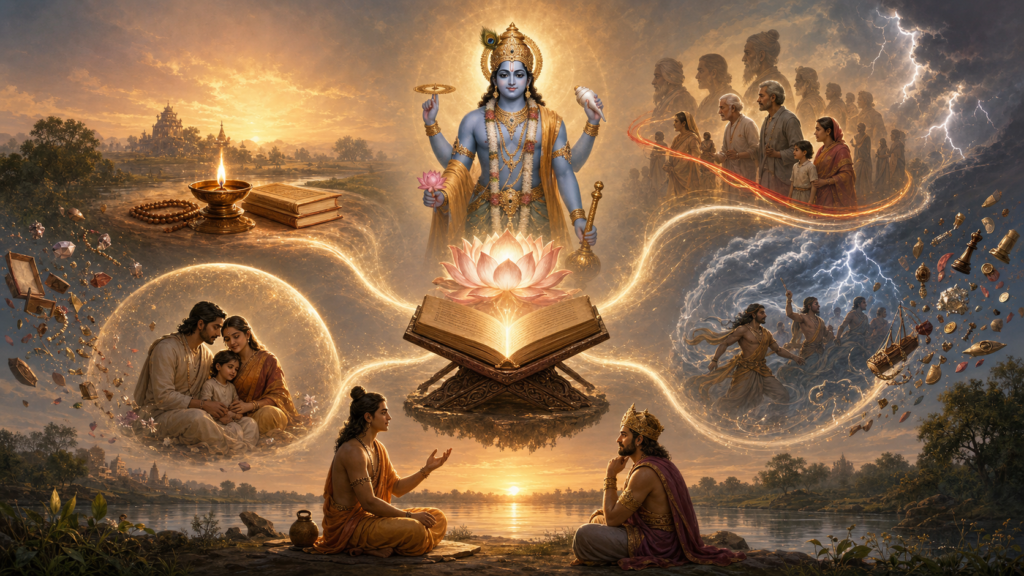
The Vrat Katha associated with Ahoi Ashtami emphasizes intention, remorse, and renewal. A mother, distressed by an unintended harm caused to a young creature during a routine task, experiences a period of personal sorrow and perceived misfortune affecting her children. In response, she undertakes the Ahoi vow with sincerity and compassionate resolve. Through observance marked by prayer, ethical living, and generosity, the narrative culminates in restored well-being and the flourishing of her children, highlighting the transformative power of conscious repentance and steadfast devotion.
In many regions, Ahoi Ashtami is honored as a quiet, home-centered puja that complements the social and spiritual arc of Diwali. While practices vary, the thematic core remains consistent: maternal dedication, family protection, and reverence for life. The cultural memory carried in this vrat fosters intergenerational continuity, strengthening bonds between elders and children and reinforcing shared ethical norms.
These meanings resonate broadly across dharmic traditionsHinduism, Buddhism, Jainism, and Sikhismwhere self-discipline, compassion, and the welfare of future generations are upheld as essential virtues. Even when ritual forms differ, the emphasis on cultivating inner responsibility and outer harmony remains a unifying thread. In that sense, Ahoi Ashtami serves not only as a Hindu festival but also as a cultural expression of values cherished across the dharmic family.
For contemporary families, the vrat offers a reflective framework: preparing a clean and calm space, maintaining a simple sattvic diet before and after the fast, prioritizing kindness in speech and action throughout the day, and directing the mind toward gratitude. These practices, allied with the evening puja and star-sighting, make the observance both spiritually meaningful and practically accessible.
Observed with care, Ahoi Ashtami aligns personal devotion with the cyclical calendar near Diwali, weaving together household rituals, community memory, and the aspiration for children’s prosperity. Framed in this way, the Ahoi Ashtami Vrat Katha becomes more than a story; it is a living guide to ethical intention, mindful action, and familial well-being.
Inspired by this post on Hindu Pad.