Mauni Amavasya, also known as Mauna Amavasya, is observed on the No Moon day of the Magha month (January–February) in the Hindu calendar. In 2026, Mauni Amavasya falls on January 18. Revered as one of the most auspicious days of the year, it aligns with the Magh Mela in Prayagraj (historically Prayag), when pilgrims undertake the sacred Magh Snan at the Triveni Sangam, the confluence of Ganga, Yamuna, and the mystical Saraswati.
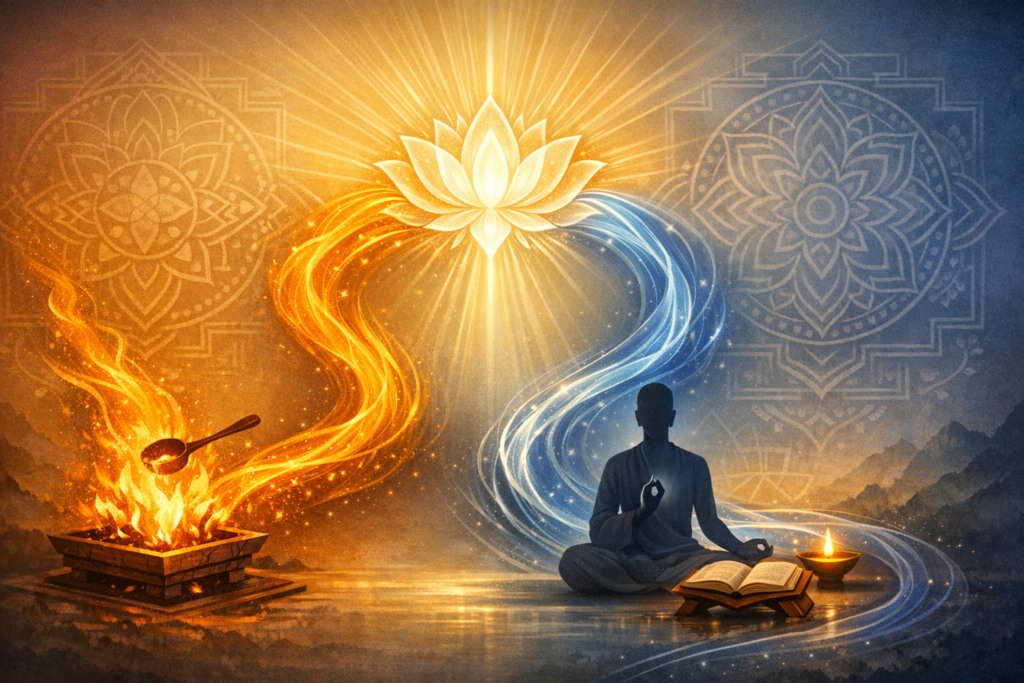
The observance emphasizes mauna—sacred silence—as a disciplined inward turn that refines attention and deepens contemplation. The practice resonates across dharmic traditions: as dhyana and japa within Hindu spirituality, as silence-supported mindfulness in Buddhism, as vrata-aligned introspection in Jainism, and as simran-infused inner stillness in Sikhism. The shared ethic is one of non-harm, clarity, service, and unity, making Mauni Amavasya a natural bridge across these living traditions.
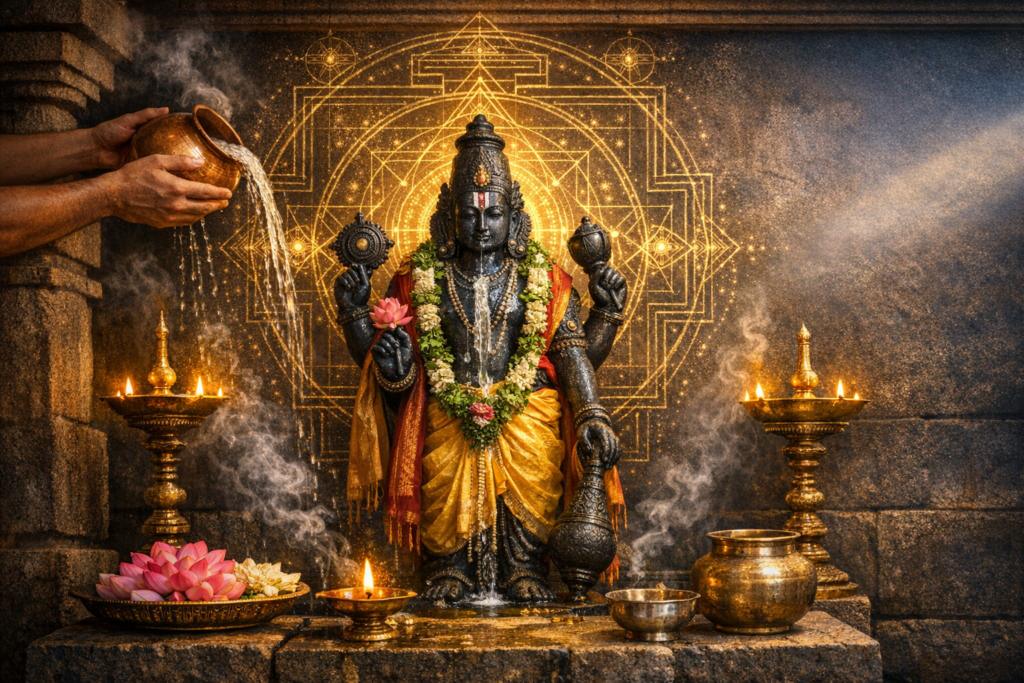
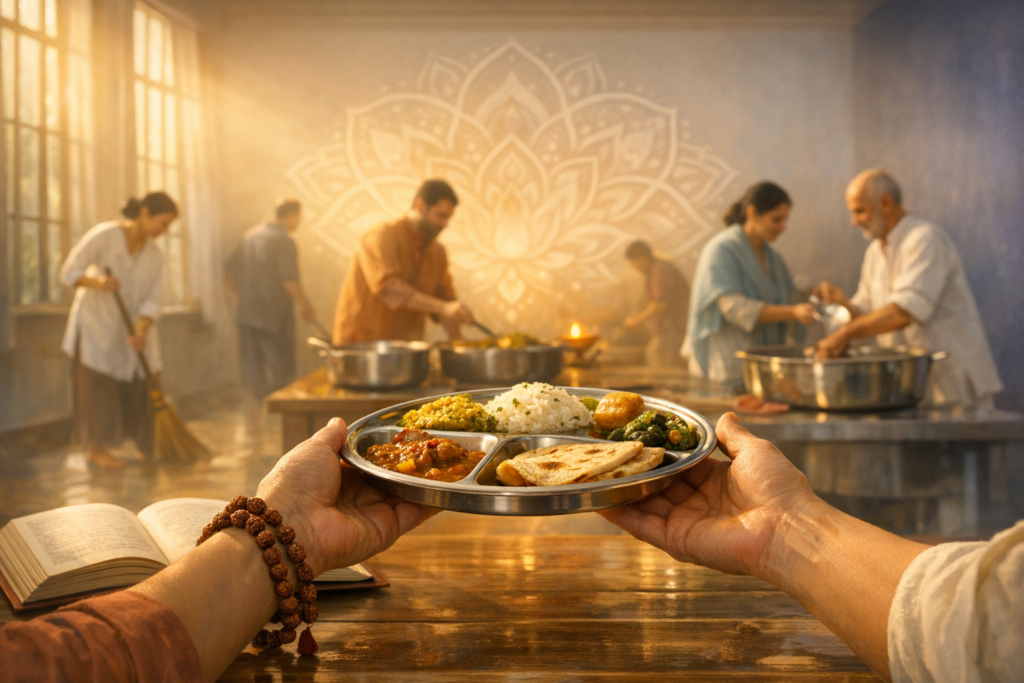
Pilgrims customarily bathe at sunrise, offer prayers, and undertake japa, dana (charity), and vrata (vows). Many observe partial or complete silence throughout the day to cultivate inner steadiness. Reading from scriptures, engaging in annadana, and performing simple home puja are widely practiced, with a focus on humility, gratitude, and collective well-being.
At Prayagraj, the Magh Mela becomes a vast spiritual gathering, where the Triveni Sangam is revered for its purificatory power. Accounts of the morning hours often note a profound calm: mist rising from the river, the resonance of conch shells, and the soft cadence of collective chanting. For many devotees, these moments of stillness and devotion are remembered as transformative.
While Triveni Sangam draws the largest congregations, Mauni Amavasya is observed throughout India and the diaspora at riverbanks and sacred ghats along the Ganga, Yamuna, Godavari, Narmada, Kaveri, and other tirthas. In South India, observances during Magha Masam follow regional traditions with the same core emphasis on restraint, reflection, and seva (service).
Those unable to travel often perform a home snana with a simple sankalpa, recitation of mantras, meditation, and mindful silence. Acts of charity—food distribution, support for pilgrims, or local community service—are encouraged as expressions of compassion aligned with the spirit of the day. Even brief periods of silence, undertaken with sincerity, can meaningfully steady the mind.
Mauni Amavasya 2026—on January 18—thus offers a timely invitation to combine sacred silence with thoughtful action. By honoring the shared values of introspection, non-violence, and service that permeate Hinduism, Buddhism, Jainism, and Sikhism, the observance strengthens interrelated bonds within the broader dharmic family while nurturing personal clarity and communal harmony.
Approached with reverence and simplicity, this No Moon day in Magha becomes both a personal discipline and a collective celebration—an opportunity to bathe, pray, serve, and listen deeply, so that silence itself becomes a guide toward wisdom and unity.
Inspired by this post on Hindu Pad.