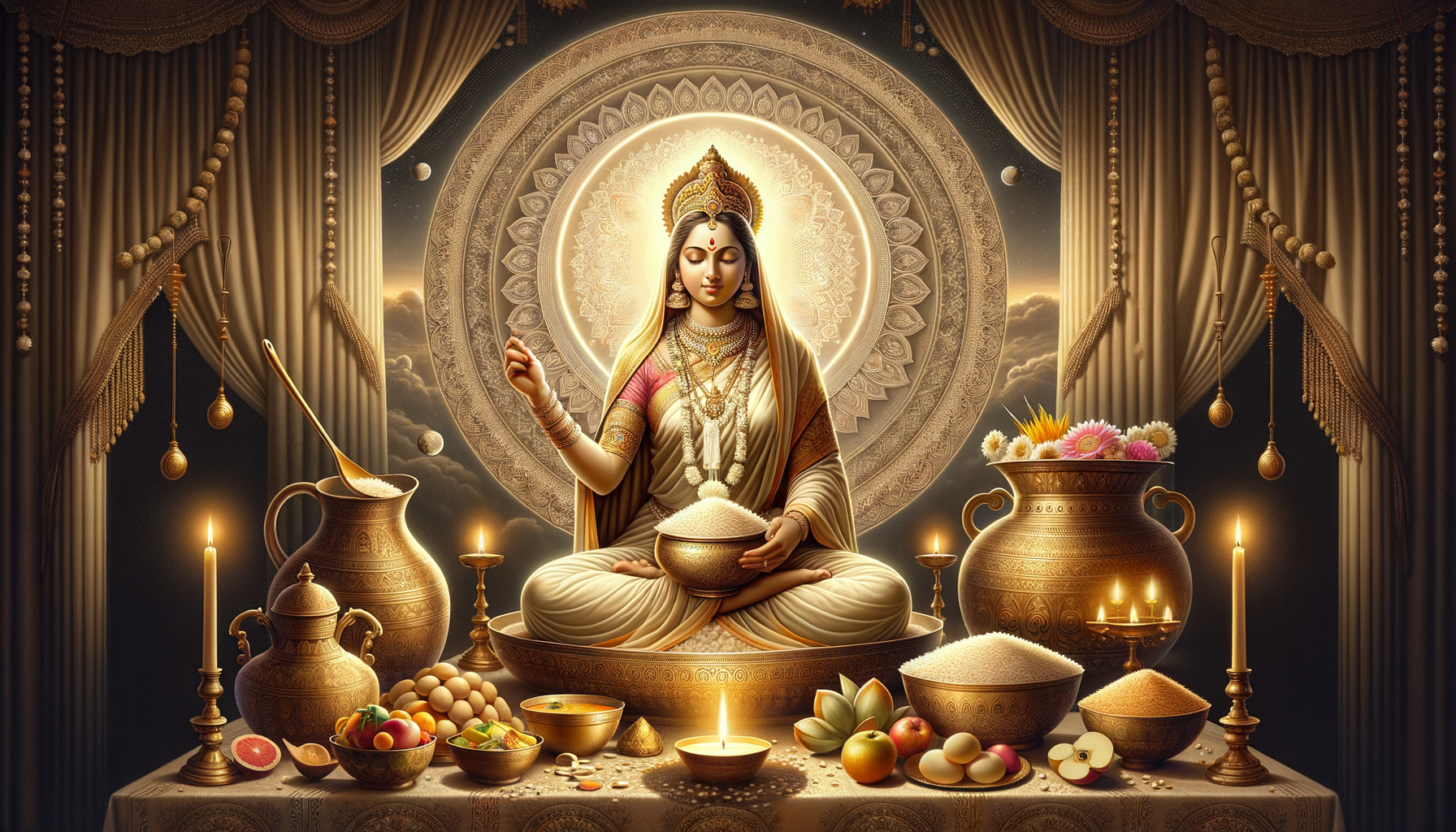
Annapurna Jayanti, dedicated to Goddess Annapurnathe benevolent embodiment of nourishment and the sanctity of foodis observed annually on the full moon (Purnima) of the Margashirsha month. In 2025, Annapurna Jayanti falls on December 4, aligning with Margashirsha Purnima in the Hindu calendar. Across many regions, devotees observe Annapurna Vrat and offer annadanam (food donation), affirming the timeless ethic that sharing food is both devotion and duty.
In theological understanding, Goddess Annapurna is revered as a compassionate manifestation of Pārvatī. Classical narratives emphasize that even ascetic wisdom depends on Shakti’s grace for sustenance, making nourishment an expression of divine presence rather than mere material provision. Homes and temples often sanctify the kitchen on this day, treating every meal as prasad and every grain as a symbol of gratitude.
Annapurna Mantra recitation remains central to the observance. Devotees chant with steady attention and a spirit of gratitude, invoking abundance, contentment, and the resolve to feed others before oneself. The mantra traditionally used is:
ह्रीं अन्नपूर्णायै नम:॥
Many households observe Annapurna Vrat by maintaining sattvic discipline, preparing simple meals, and offering freshly cooked food to the deity before partaking. Practices commonly include cleansing the cooking space, lighting a lamp near the hearth, visiting a nearby temple, and prioritizing annadanam. While the Jayanti spans Margashirsha Purnima, specific tithi timings vary by location; consulting a local Panchang ensures accuracy for sankalpa and puja.
The symbolism of Annapurna is rich and instructive. The pot (anna-kalasha) signifies inexhaustible abundance, while the ladle represents the responsibility to distribute equitably. The kitchen becomes a sacred space where reverence, hygiene, and care convert daily cooking into worship. In this light, mindful consumption, zero food waste, and ethical sourcing become expressions of dharma aligned with ecological responsibility.
Annapurna Jayanti also resonates with the shared ethical core of dharmic traditions. The Sikh practice of langar, the Buddhist ideal of dāna, and the Jain principles of ahiṁsa and aparigraha all affirm that feeding others nurtures both society and spirit. This convergence invites inter-traditional harmony, strengthening unity among Hinduism, Buddhism, Jainism, and Sikhism through the universal value of compassionate nourishment.
Devotees often recall formative memories associated with foodfamily kitchens fragrant with seasonal offerings, grandparents insisting that guests eat first, and the quiet joy that arises when serving a warm meal to someone in need. Such recollections reinforce a living tradition in which gratitude, care, and hospitality transform everyday life into a sacred rhythm.
Practical observances for 2025 include reciting the mantra 108 times with a calm breath, preparing a wholesome meal as naivedya (often rice, dal, vegetables, or kheer), and organizing or supporting annadanam in community kitchens. Volunteer service, mindful cooking, and gratitude before meals are accessible ways to embody the spirit of the festival, integrating devotion with daily conduct in the Hindu way of life.
Key reference for Annapurna Jayanti 2025: DateDecember 4; TithiMargashirsha Purnima; DeityGoddess Annapurna (a gracious form of Pārvatī); Core practicesAnnapurna Vrat, mantra japa, naivedya, and annadanam. Observing with sincerity and service-oriented intent elevates personal well-being and strengthens community bonds.
By honoring Goddess Annapurna on this auspicious Purnima, communities reaffirm that food is sacred, compassion is practical, and unity across dharmic traditions is both possible and necessary. May the vow to feed others first become a sustaining habit that carries the festival’s blessings well beyond the day itself.
Inspired by this post on Hindu Blog.