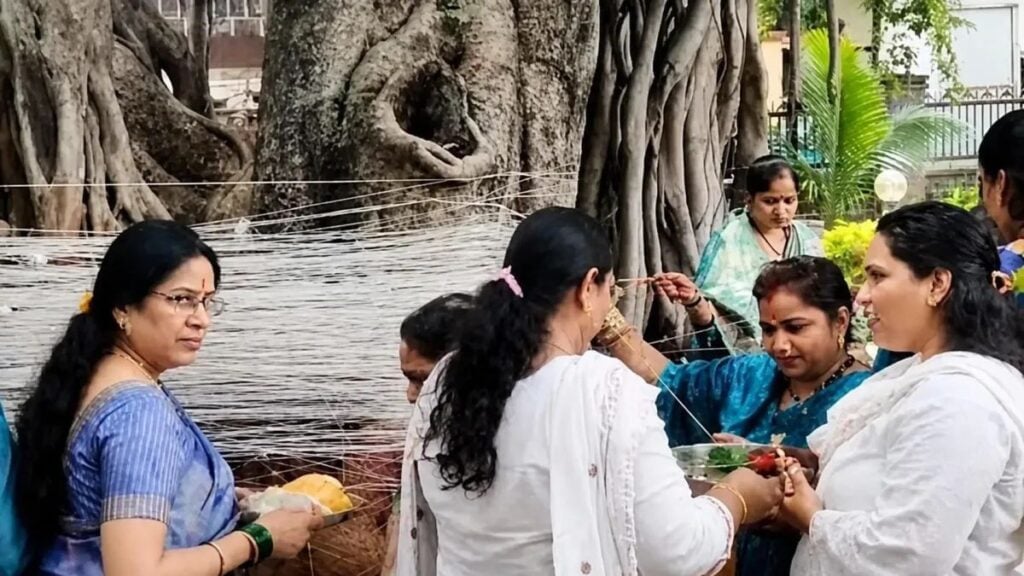
Across Maharashtra’s Sindhudurg district, an Adarsh Holikotsav was jointly organised by Hindu Janajagruti Samiti (HJS) and Sanatan Sanstha in Sawantwadi, Kudal, and Shiroda, drawing devout participation from local communities. The multi-local format ensured accessibility for families and elders, while reaffirming the festival’s place within living Cultural Heritage and Cultural Traditions. The guiding purpose was clear and timely: to revive the true dharmic spirit of the Hindu festival of Holi through devotion, safety, dignity, and community cohesion.
Within Sanatan Dharma, Holi signifies renewal, resilience, and the triumph of dharma over adharma. Its narrative arc, exemplified by the Prahlada tradition and Holika Dahan where customary, is not merely retold but reinterpreted as an ethical compass for contemporary society. The festival’s social grammar aligns with values shared across the broader dharmic family of Hinduism, Buddhism, Jainism, and Sikhism, including maitri, karuna, ahimsa, and seva, thereby nurturing unity without erasing diversity.
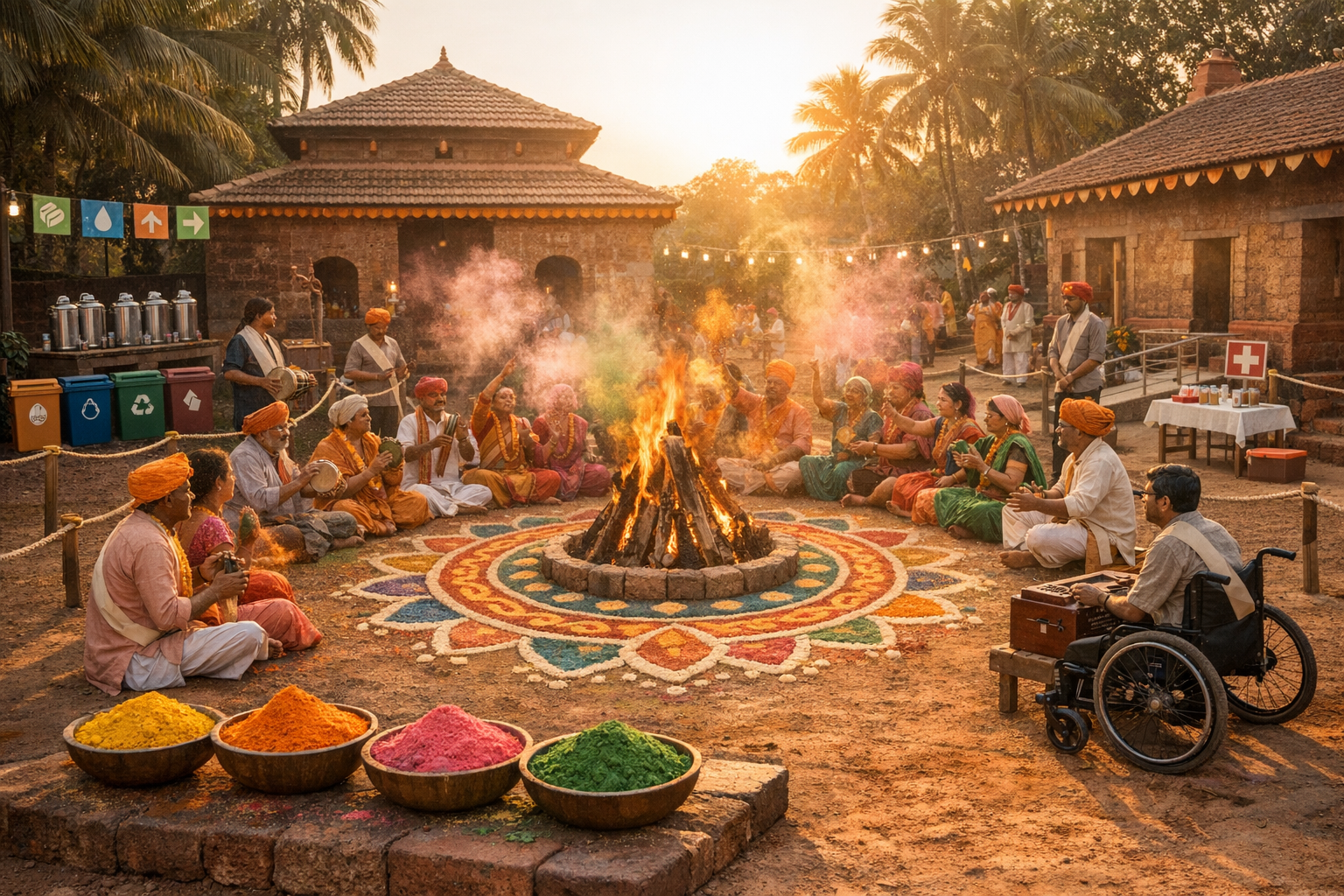
The Adarsh Holikotsav approach clarifies what an ideal Holi looks like in practice: devotion-centric, family-friendly, culturally rooted, eco-conscious, and safe. Rather than allowing celebration to drift toward spectacle, the model foregrounds sattva, reverence for tradition, and the welfare of participants. This normative framing serves as a blueprint that communities can adapt to local needs while retaining the festival’s timeless essence.
Hosting the celebration across Sawantwadi, Kudal, and Shiroda anchored the festival in the everyday life of Sindhudurg’s towns and villages. The distributed design enabled neighbourhood-level participation, supported intergenerational attendance, and reduced travel-related barriers. In effect, the festival became a platform for strengthening local identity while reinforcing regional cohesion across Maharashtra’s Konkan belt.
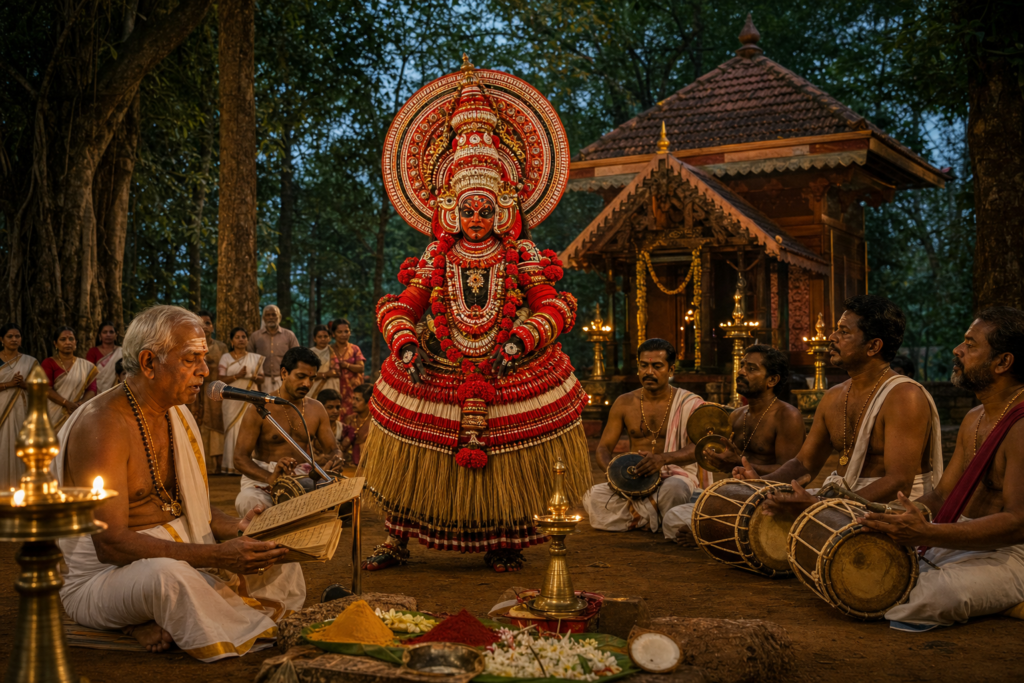
Ritual sanctity and cultural programming formed the heart of the proceedings. Where customary, Holika Dahan symbolically affirmed the victory of truth and devotion, while bhajan, kirtan, and community singing embedded spirituality into shared experience. Traditional arts and family-oriented activities ensured that celebration remained anchored in Cultural Heritage rather than transient trends, reinforcing respect for elders and inclusivity for children.
Environmental stewardship was a prominent principle. Public health advisories consistently note that low-quality synthetic colours may contain irritants or heavy metals; accordingly, the ideal model favours plant-based gulal and natural pigments derived from sources such as turmeric, marigold, and Butea monosperma. Water conservation, noise moderation, and source segregation of waste are treated as non-negotiable good practices, aligning joy with responsible custodianship of shared spaces.
Safety-by-design complements devotion. In an ideal Holikotsav framework, crowd flow planning, clear entry and exit routes, and volunteer marshals help minimise avoidable risks. Emphasis on hydration points, first-aid readiness, and accessibility for seniors and persons with disabilities contributes to an environment where families can participate with confidence.
Community education is integral to sustaining an ideal celebration over time. Pre-event advisories, school and neighbourhood outreach, and simple do’s and don’ts regarding colours, water use, and respectful conduct can significantly reduce harm while increasing collective satisfaction. Such orientation also normalises eco-friendly choices, turning individual preferences into shared norms.
Social inclusion sits at the centre of the Adarsh Holikotsav ethos. Women-friendly and child-friendly arrangements, attentive volunteer presence, and a clear code of conduct uphold dignity and safety for all. The celebration of Holi as a Hindu Festival is explicitly framed as a bridge to dharmic unity, honouring the values common to Hinduism, Buddhism, Jainism, and Sikhism without proselytisation or exclusion.
Intergenerational learning transforms a day of colour into a living classroom. Elders transmit stories and meanings, from Prahlada’s steadfastness to the ethics of forgiveness and renewal, while children experience culture through song, play, and service. The result is continuity rather than nostalgia, where heritage evolves without rupture.
Local cultural expressions enhance belonging. Folk arts, regional musical idioms, and traditional instruments create a familiar soundscape that invites participation rather than passive spectatorship. This emphasis on lived culture counters the drift toward commercial noise and elevates dignity in public celebration.
Water and waste stewardship underwrites sustainability. Sensible water use policies, biodegradable materials, and post-event cleanup reinforce responsibility to community and environment. Quiet hours and noise control respect the needs of seniors, infants, and wildlife, translating compassion into civic conduct.
Governance and coordination matter. Liaison with local administration where applicable, clear permissions, basic signage, and volunteer briefings create a coherent operational frame. Simple risk registers, communication protocols, and lost-and-found arrangements often make the difference between a good event and a truly exemplary one.
Early observations from such initiatives typically include higher perceived safety, increased participation by families and elders, and stronger post-event goodwill. Participants often report that devotion-forward programming and natural colours reduce anxiety, while the code of conduct helps everyone feel respected. These qualitative outcomes, while modest, indicate that an Adarsh Holikotsav approach enhances both experience and ethics.
The Sindhudurg celebrations coordinated by HJS and Sanatan Sanstha illustrate a replicable blueprint for communities across Maharashtra and beyond. By centring Sanatan Dharma values, cultural authenticity, environmental care, and participant safety, the model revives the true spirit of Holi while fostering unity across dharmic traditions. In Sawantwadi, Kudal, and Shiroda, Adarsh Holikotsav functioned not only as festivity but as civic pedagogy, demonstrating how joy, responsibility, and heritage can coexist in harmony.
Inspired by this post on Hindu Jagruti Samiti.