-
Protecting Young Minds: HJS urges strict student screen-time limits to Goa CM Sawant

Hindu Janajagruti Samiti (HJS) has urged Goa CM Dr Pramod Sawant to adopt strict, evidence-informed limits on student screen time amid rising concerns about digital addiction. The analysis explains what constitutes problematic digital use, why adolescents are especially vulnerable, and how excess screen exposure harms sleep, attention, eye health, and learning. It outlines a practical,…
-
Maharashtra’s ₹50 Lakh Grant to 308 Madrasas: A Bridge‑Building Step for Inclusive Education

The Maharashtra government’s approval of a ₹50 lakh grant for 308 madrasas across 21 districts signals a focused push toward inclusive, modern education. Although modest in size, the allocation can catalyze high-yield improvements such as foundational literacy and numeracy supports, teacher upskilling, and basic digital access. Evidence-based designmicro-trainings, diagnostic assessments, and open educational resourcescan convert…
-
Maryland School Board Shift: Two Hindu Students Reclaim the Sacred Swastika through Policy

Two Hindu students catalyzed a policy review at the Howard County Public School System (Maryland) by clearly distinguishing the sacred Swastika from the Nazi Hakenkreuz. Their evidence‑based testimony advanced historical accuracy, reduced the risk of stigmatizing dharmic traditions, and offered practical guidance for K–12 educators. The Board responded by tasking its Policy Committee with updating…
-
Purvabhadra (Poorattathi) 2026–2027 Forecast: Navigate Sade Sati, Growth Windows, Remedies

This Purvabhadra (Poorattathi) Nakshatra 2026–2027 forecast synthesizes classical jyotiṣa with real transit dynamicsSaturn in Pisces, Jupiter’s move from Gemini to Cancer, and the Rahu–Ketu shift from Aquarius–Leo to Capricorn–Cancer. Aquarius padas (1–3) complete Sade Sati’s final phase, balancing Rahu’s volatility with Jupiter’s early-2026 support, then consolidating under Jupiter-in-Cancer. Pisces pada (4) undergoes Janma Shani yet…
-
From Debate to Kinship: How Jadunath Sarkar and K.A. Nilakanta Sastri Shaped Indian Historiography

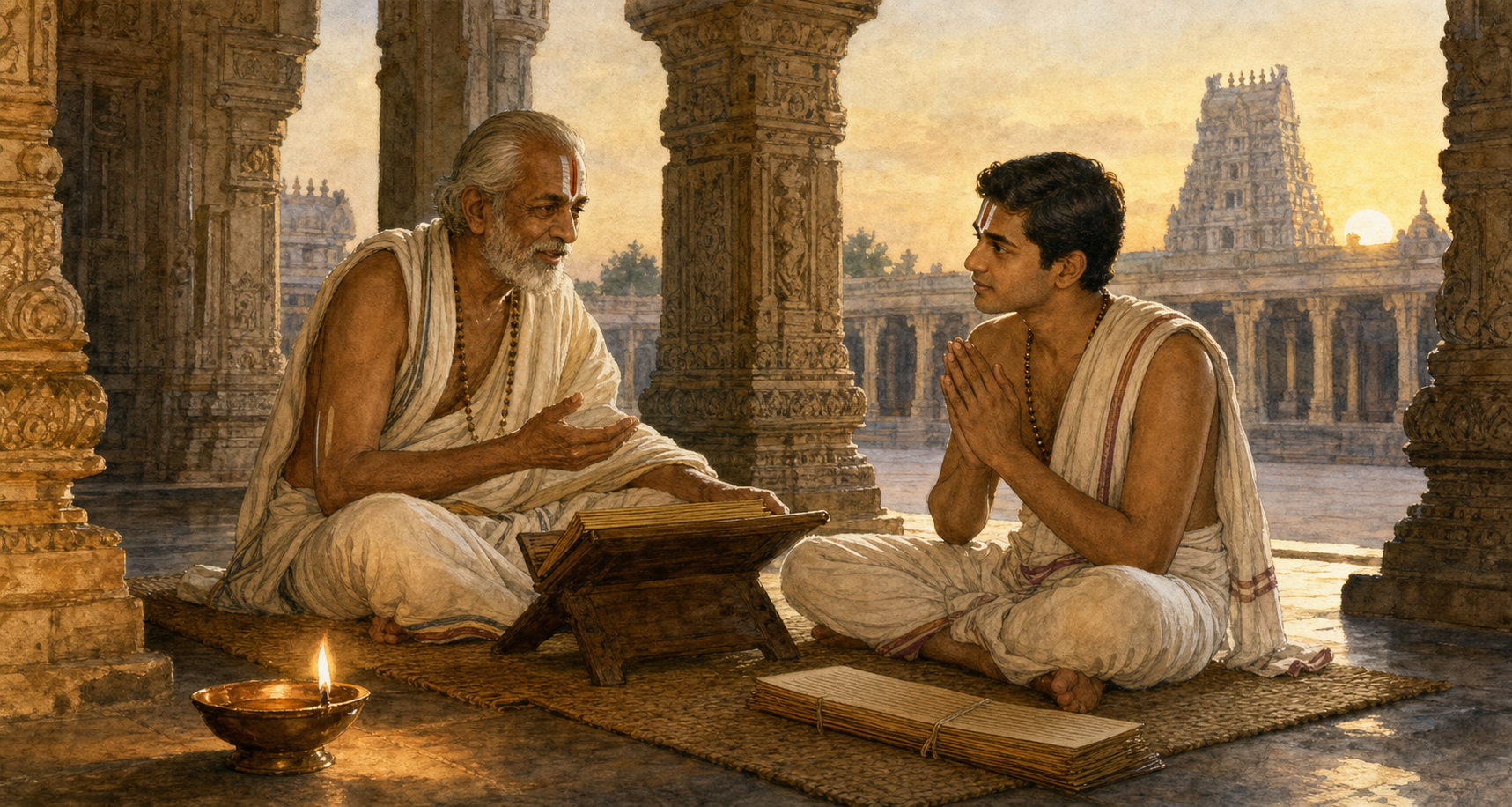
This essay reconstructs the formative encounter between Jadunath Sarkar and K.A. Nilakanta Sastri, situating it within the Modern Indian Renaissance and the wider debate over English versus vernacular mediums in historical pedagogy. It explains how Sarkar’s multilingual triangulation of Persian chronicles, Marathi bakhars, and regional records complemented Sastri’s epigraphic and philological reconstruction of South Indian…
-
Jammu University Syllabus Row: Protests Over Jinnah Chapter Ignite India’s History Debate

Protests at the University of Jammu over a Jinnah-related syllabus entry have intensified a national debate about how Indian universities should teach contested histories. This analysis clarifies the difference between inclusion and endorsement, situating Jinnah within a broader, evidence-based study of constitutional debates, the two-nation theory, and Partition. It outlines the legal-institutional pathways for curriculum…
-
Paada Shani for Vrishabha Rashi: Master Saturn’s Last 2.5 Years in Gemini

Paada Shani is the final 2.5-year phase of Shani Sadesati for Vrishabha Rashi, occurring when Saturn transits Gemini (the second house from the Moon). This period rigorously examines speech, family cohesion, and accumulated wealth, while rewarding discipline, truthfulness, and financial order. Technical interpretation highlights Saturn’s aspects from Gemini to Leo, Sagittarius, and Pisces, activating the…
-
Michel Danino: quiet giant of Indian history, NCERT reformer, facing Supreme Court censure

Michel Danino emerges here as a quiet giant of Indian historiographyunassuming yet formidable in method and integrity. His research spans the Sarasvati–Ghaggar–Hakra palaeochannels, Harappan urbanism, critiques of the Aryan Invasion Theory, and readings of the Puranas and epics, all undergirded by cross-disciplinary evidence. Professional roles at IIT Gandhinagar and leadership within NCERT’s textbook development reflect…
-
Chembur College hosts empowering, practical women’s safety and self‑defence by HJS

At a Women’s Day programme in Chembur, Mumbai, Hindu Janajagruti Samiti (HJS) conducted a campus women’s safety and self‑defence workshop that blended practical drills with legal and reporting guidance. The session framed self‑defence within shared dharmic ethicsahimsa, proportionate protection, and community courageuniting perspectives from Hinduism, Buddhism, Jainism, and Sikhism. Students practised situational awareness (using Cooper’s…
-
Not So Salient: Exposing Caste Stereotypes and Defending Hindu American Civil Rights

Harvard’s “The Brahminist Veto” casts Hindu Americans as a theocratic fringe, but the evidence points elsewhere: routine civic advocacy, due process in high-profile investigations, and a consistent demand for equal respect in academic settings. The record shows that caricatures of Hindu theologythrough misreadings of texts like Manusmriti and the Purusha Suktaignore scholarly consensus and historical…
-
Moral Injury and Betrayal Trauma: How Broken Trust Rewires the Nervous Systemand How to Heal

Moral injury is not simply fear-based trauma; it is an ethical wound formed when trusted people or systems violate core moral expectations. This long-form analysis explains how betrayal trauma reshapes the nervous system, why shame and withdrawal so often replace fear and anger, and how to distinguish trauma reenactment from trauma repair. Drawing on dharmic…
-
From Viral Backlash to Bridge‑Building: Holi at a US Preschool, Facts, Law, and Unity

A preschool Holi celebration in the United States sparked a viral debate framed as “Hindutva replacement,” obscuring what was fundamentally a neutral, child‑centered cultural lesson. This analysis separates culture from ideology, explains how US constitutional law permits teaching about religion while barring religious exercise, and maps practical steps schools can take to remain inclusive and…
-
Ghaziabad Police Halt Yati Narsinghanand’s March to Jantar Mantar: UGC Bill Protest Flashpoint

Ghaziabad Police halted a yatra led by Dasna Devi Mandir priest Yati Narsinghanand on 7 March 2026, citing the absence of permission for an intercity procession to Delhi’s Jantar Mantar during a protest against a proposed UGC Bill. The episode spotlights how India’s constitutional right to peaceful assembly operates through a permissions framework designed to…
-
Beyond Facts: Transformative Teaching through DharmaTimeless Hindu, Buddhist, Jain, Sikh Insights

Education is not the mere transfer of facts; in dharmic traditions it is a transformative process that unites knowledge, character, and contemplative depth. Drawing on Hindu, Buddhist, Jain, and Sikh insights, this analysis explains why śravaṇa–manana–nididhyāsana, anekāntavāda, and the triad of śabad–sangat–seva map onto evidence-based practices like active learning and mindfulness. It clarifies the parā/aparā…
-
In Yamanashi, a Namaste and Sanskrit shlokas move Yogi Adityanath, spotlighting India–Japan ties

A classroom exchange in Yamanashi, where a student greeted Uttar Pradesh Chief Minister Yogi Adityanath with a namaste and Sanskrit shlokas, became the most resonant image of an India–Japan outreach focused on trade, strategy, and investment. The moment showcased education diplomacy and soft power in action, translating policy intent into relational trust. It highlighted how…
-
The School of Life: Insights from HH Svayam Bhagavan Keshava Maharaja’s Marathon Podcast (Dec 2025)

In December 2025, HH Svayam Bhagavan Keshava Maharaja’s Marathon Podcast, The School of Life, presented a disciplined framework for living as a spiritual education. The approach integrates puruṣārthas with yogic psychology, translating Vedic philosophy and the Upanishads into daily, reproducible practices. Bhakti, karma yoga, jñāna, and dhyāna are balanced with ethics like satya, ahiṁsā, and…
-
Jalgaon Class 12 Attire Row: Protecting Dignity and Equal, Lawful Treatment for All Students

Reports from Jalgaon suggest that some Hindu candidates were asked to remove dupattas during Class 12 exams while students in burqas and hijabs were allowed to proceed, prompting a memorandum to the College Principal and District Collector. The issue highlights the need for a religion‑neutral, gender‑sensitive approach to exam hall dress codes that balances integrity…
-
Why Tagore Called the Mahabharata Indispensable: A Profound Guide to India’s Living Epic

Rabindranath Tagore’s claim that education in India is incomplete without the Mahabharata identifies the epic as a living curriculum in ethics, leadership, and spiritual inquiry. This analysis shows how the text integrates narrative with treatises such as the Bhagavad Gita, Shanti Parva, and Vidura-niti to teach rajadharma, apaddharma, and mokshadharma. Readers discover diplomacy in Udyoga…
-
Maharashtra Allows Burqa in Class 10–12 Exams: Ensuring Fair, Secure, and Inclusive Access

Maharashtra’s decision to allow Muslim girl students to wear the burqa during Class 10 and 12 board exams balances religious freedom with exam security. Situated against reports from a February 8 CTET sitting where some candidates were asked to remove mangalsutras, the policy highlights the need for uniform, clearly communicated rules. The analysis situates the…
-
San Jose State Assault Exposes Rising Hinduphobia: CYAN Demands Accountability, Safety

CYAN condemns the February 7 assault near MacQuarrie Hall at San Jose State University, in which a Sikh student was attacked and the slur “Hindu” was used, indicating targeted religious bias. The analysis situates the incident within California’s broader trends, including multiple temple vandalizations and state data showing rising anti-Hindu incidents. It outlines institutional obligations…