If you are trying to understand why an 11-year-old leading the United Kingdom’s women’s chess rankings matters, begin with the category of the achievement. Bodhana Sivanandan did not merely win a children’s prize. She reached the top of a national female ranking system built from results in serious rated competition.
That distinction makes her achievement remarkable, but it also makes it useful. Whether you are a parent, a young player, a coach, or a member of the British Hindu community, you can celebrate the milestone without turning it into mythology. The real lesson lies in disciplined practice, competitive opportunity, emotional steadiness, and a civilizational inheritance that began in Bharat but grew through exchange with the wider world.
This was an adult ranking achievement, not an age-group prize
At 11, Sivanandan moved ahead of Lan Yao to become the UK’s top-ranked female chess player. Her age explains why the result has attracted attention, but the ranking itself is not adjusted to make the field easier for a child. It reflects scored games against rated opposition.
Three distinctions prevent common misreadings. First, “top female” identifies leadership within the women’s ranking, not the ranking of every player in the country. Second, it is a national ranking milestone rather than an age-group title. Third, it records demonstrated competitive strength at a particular point in a live system; it is not a prediction that every future result will follow the same upward line.
Classical chess makes the feat especially significant. Longer games test more than quick tactical recognition. A player must manage time, calculate variations, judge quiet positions, defend inferior endings, and remain attentive after the excitement of the opening has passed. Doing this consistently enough to lead an established national list is different from producing one brilliant upset.
Key takeaways
- Sivanandan reached the top of the UK’s female chess rankings at 11, ahead of Lan Yao.
- The milestone reflects results in rated competition, not a symbolic award or a junior-only classification.
- A developing player’s rating can move quickly, but faster movement magnifies losses as well as gains; it does not manufacture sustained success.
- The most transferable lesson is a training method built around calculation, positional understanding, endgames, opening ideas, and emotional recovery.
- For Dharmic families, the soundest celebration joins pride in chess’s Bharatiya origins with respect for the many cultures that helped create the modern game.
Why rapid rating movement does not make the result less real
A chess rating is an estimate of playing strength based on results and the ratings of one’s opponents. In an Elo-based system, beating stronger opposition produces more gain than beating weaker opposition, while an unexpected loss costs more than an expected one. The number changes as new results enter the calculation.
Developing players generally have a higher K-factor, which makes each new result affect their rating more strongly. That mechanism helps a rating catch up when a junior is learning faster than an older, established player’s number would normally move. It is sometimes misunderstood as an advantage that hands young players easy rating points. It does not. Higher sensitivity works in both directions: strong results lift the rating faster, and weak results pull it down faster.
The English Chess Federation also maintains national ratings, while FIDE administers international ratings. Both operate on an Elo basis, but their lists need not look identical at every moment. The included events, player activity, recent performances, and publication cadence can affect who appears where. For that reason, leadership on a live list can change without invalidating the achievement of reaching it.
When you assess a young player’s progress, do not stare at the rating after every round. Look for a pattern across serious games: fewer one-move errors, better clock use, more accurate endgame conversion, and the ability to recover after a loss. The number is valuable because it condenses results. The games remain more useful because they show what must be trained next.
The training habits families can copy without copying a prodigy
You cannot reproduce another child’s talent, opportunities, coaching, or rate of development. You can reproduce the structure of sound chess study. A useful weekly cycle touches the four technical areas that increasingly decide games as competition becomes stronger: calculation, positional judgment, endgame technique, and opening understanding.
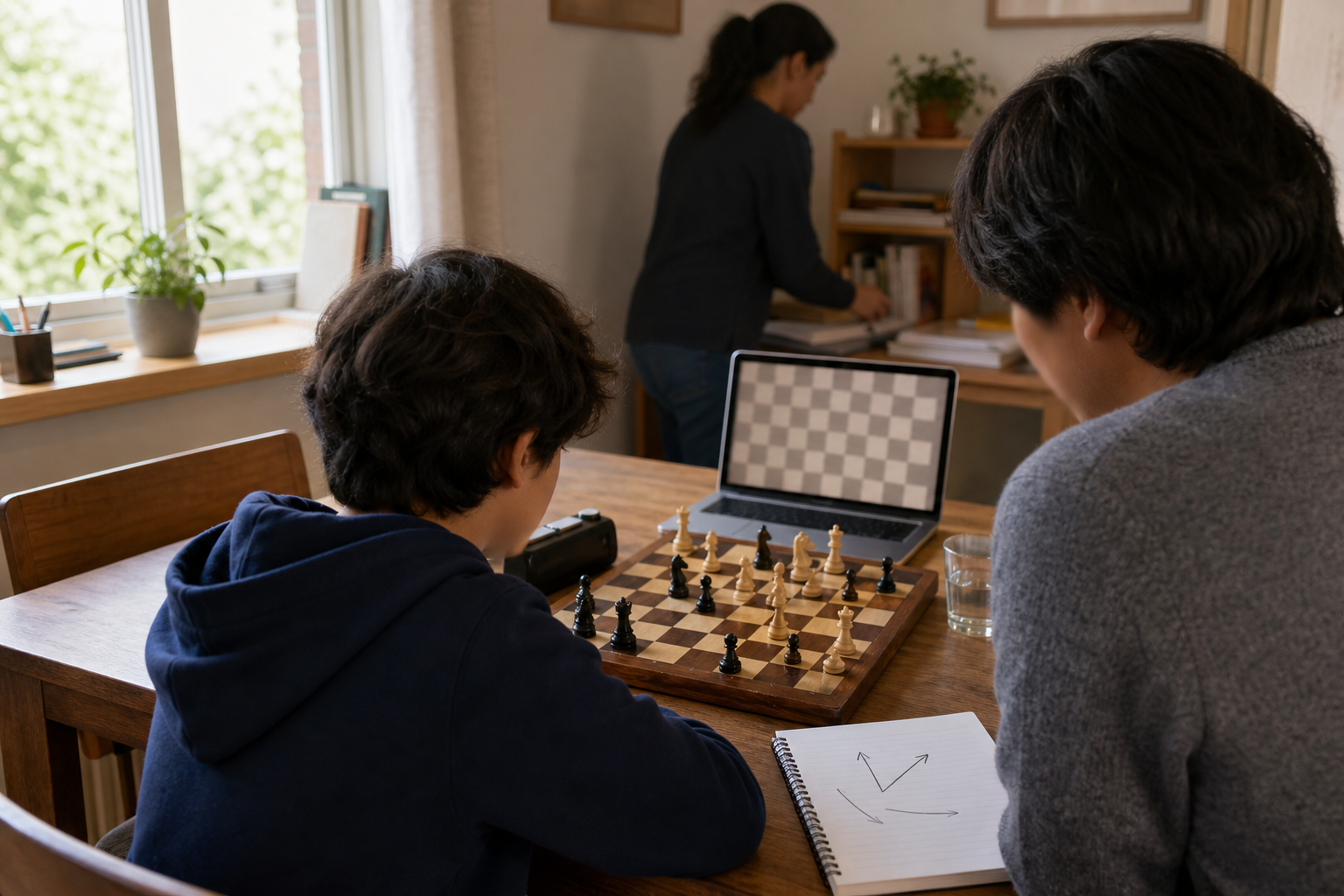
- Review the latest serious game without an engine. Replay it from memory where possible. Mark the moments when the player felt uncertain, spent too much time, or changed plans. This reveals the decision problem rather than merely the computer’s preferred move.
- Train a repeatable calculation process. Generate candidate moves before calculating. Examine forcing possibilities – checks, captures, and threats – but do not assume the first forcing move is correct. At the end of each line, evaluate the resulting position and perform a final blunder check.
- Study one positional theme through complete games. Focus on pawn structure, active pieces, weak squares, outposts, useful exchanges, and the correct pawn break. A complete model game shows how an opening idea survives into the middlegame and ending.
- Rotate essential endgames. Begin with king-and-pawn ideas such as opposition and triangulation, then add corresponding squares and standard rook endings, including the Lucena and Philidor positions. Recognition saves clock time, but the player should still practise playing the position to completion.
- Use openings to learn plans. Build a balanced repertoire around recurring structures and model games. Themes such as the minority attack in a Carlsbad structure, central breaks in French structures, or fights for space in open games remain useful even when an opponent departs from a memorised line.
- Consult the engine last. Stockfish can expose missed tactics and test whether a variation works. It cannot replace the human task of explaining why a move is playable, what plan follows it, and whether the child could find that plan over the board.
This order matters. Opening an engine immediately often turns analysis into a search for mistakes after the fact. Asking the player to explain the position first reveals how the mistake was produced: a missing candidate, an incorrect evaluation, time pressure, an unfamiliar pattern, or an emotional reaction to the previous move.
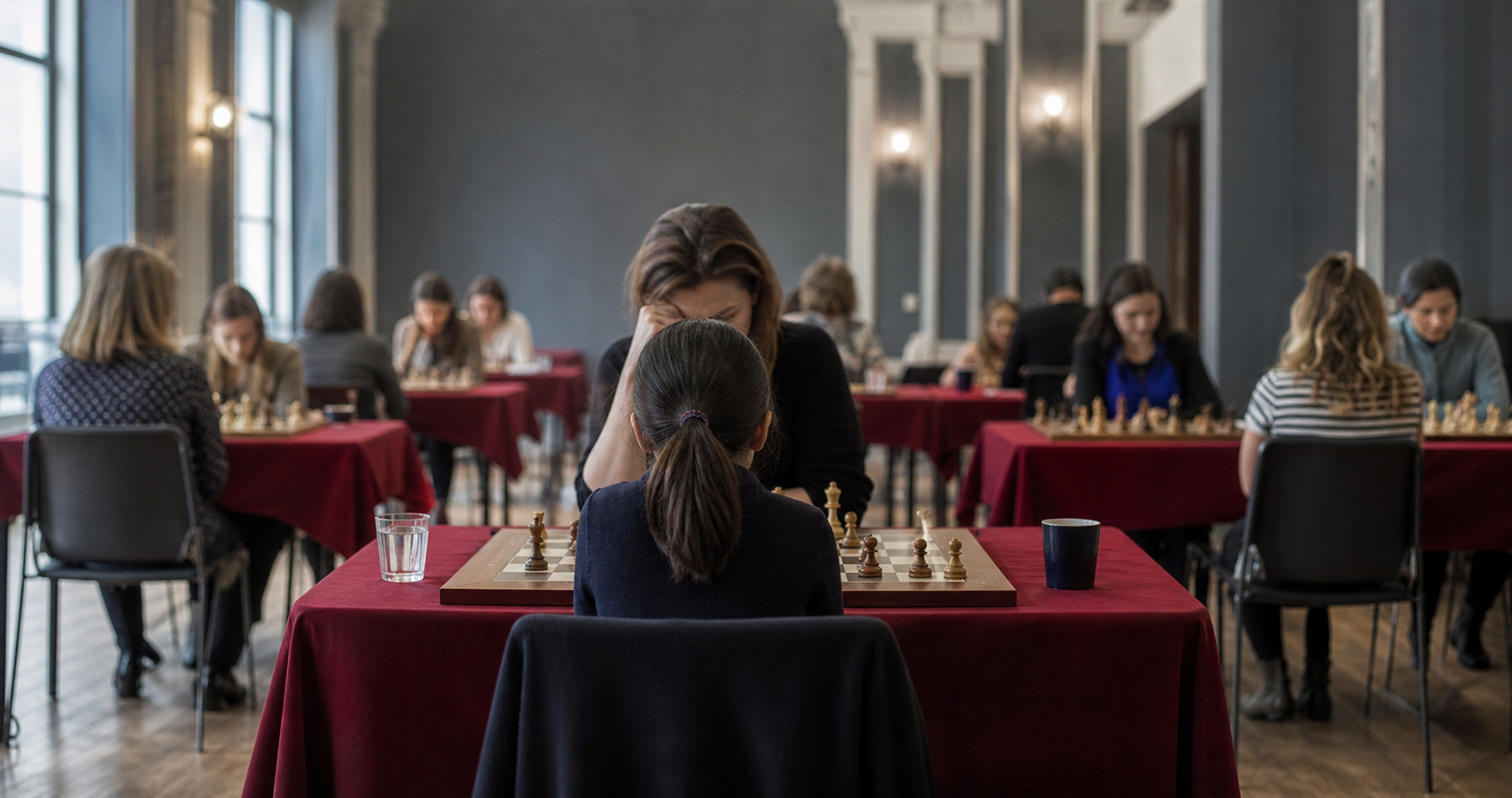
Tournament craft belongs in the training record as well. British players can develop through school clubs, county squads, weekend Swiss tournaments, the Four Nations Chess League, and international youth events. After each event, track recurring time trouble, opening positions that caused confusion, advantages that were not converted, and the quality of the next game after a loss. Those patterns tell a coach more than a collection of isolated engine scores.
The Dharmic meaning lies in discipline, not mythology
Modern chess is widely traced to chaturanga in ancient India. The game then developed through Persian shatranj, received further analysis and preservation across the Islamic world, and evolved in medieval Europe before becoming the internationally regulated sport known today.
The accurate claim is stronger than an exaggerated one. Bharat gave the world a foundational strategic game, but modern chess is not an unchanged artefact carried intact from antiquity. Its history is a chain of transmission, adaptation, and refinement. Acknowledging Persian, Islamic, and European contributions does not diminish India’s place at the beginning of that chain. It shows how a Bharatiya creation became part of humanity’s shared inheritance.
A Dharmic reading should also go beyond origin. Abhyasa, sustained practice, appears whenever a player returns to difficult positions instead of collecting only easy victories. Dhyana, focused attention, becomes practical when the mind stays with the board rather than the audience, rating, or last mistake. Viveka, discriminating judgment, is present in the choice between an attractive move and a sound one.
Buddhist mindfulness and equanimity help explain why a player must see the current position rather than continue fighting a position that no longer exists. Jain self-restraint is visible in the refusal to play an impulsive move simply because it feels active. Sikh chardi kala, resilient optimism in difficulty, offers the right attitude after a painful result: acknowledge it, learn from it, and begin the next game without carrying resentment to the board.
These are not claims that religious identity automatically produces chess strength. They are practices a player must embody through conduct. If you want to bring Dharma into a child’s chess education, ask concrete questions: Did you remain attentive? Did you examine the position honestly? Did you learn without blaming the opponent? Did you return to practice with steadiness? That is more meaningful than attaching a Sanskrit label to every success.
How adults can support talent without turning it into pressure
A prodigy’s rise can inspire families, but comparison is a poor coaching method. Most children will not follow an exceptional rating trajectory, and they should not have to do so for chess to be worthwhile. The useful response is to improve the environment around the child in front of you.
- Ask about decisions before results. “Where did the position become difficult?” produces reflection. “Why didn’t you win?” often produces defensiveness or a hunt for excuses.
- Praise work that can be repeated. Careful calculation, honest analysis, good clock management, and composure after a setback are under the player’s control. A rating jump is an outcome, not a daily instruction.
- Keep the technical standard equal. Girls and boys benefit from the same serious instruction in tactics, strategy, endings, and tournament preparation. Women’s titles and female-only events can support participation and confidence, while integrated training and suitable mentorship keep expectations high.
- Choose events for learning value. A dense tournament calendar can accelerate experience, but constant competition leaves little time to repair recurring weaknesses. Alternate serious play with analysis and training rather than treating every available event as compulsory.
- Protect academic balance and recovery. Exceptional juniors still need a sustainable workload. If preparation repeatedly displaces sleep, school responsibilities, or the child’s willingness to play, the schedule is no longer supporting long-term development.
- Do not market chess as a guaranteed grade booster. It directly exercises planning, logical reasoning, time management, working memory, and self-monitoring. Claims that these benefits automatically produce large gains in unrelated school subjects should be treated cautiously.
Visibility matters for British girls who may otherwise assume that elite chess belongs to someone else. Sivanandan gives them a nearby example of technical excellence. The healthiest way to honour that example is not to make her responsible for every other child’s ambition, or to burden her with representing an entire community. Celebrate what she has achieved, then give the next young player good coaching, serious opposition, room to recover, and permission to develop at her own pace.
If this milestone has prompted a child in your family to take chess seriously, begin with one game rather than a grand plan. Replay it without an engine, identify the decision that caused the most difficulty, and build the next study session around that weakness. Pride becomes useful when it turns into patient practice.