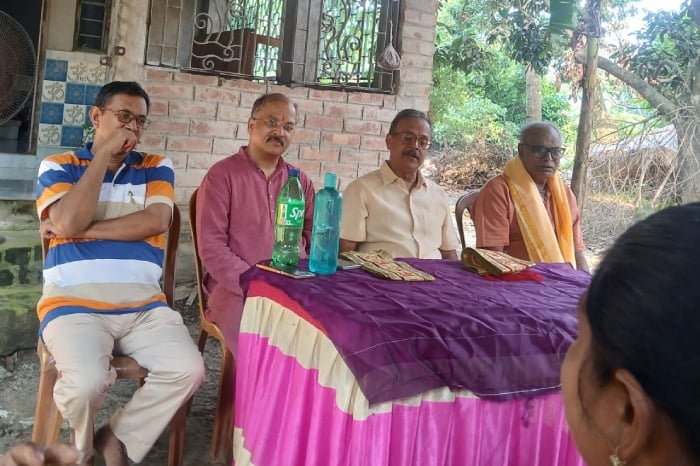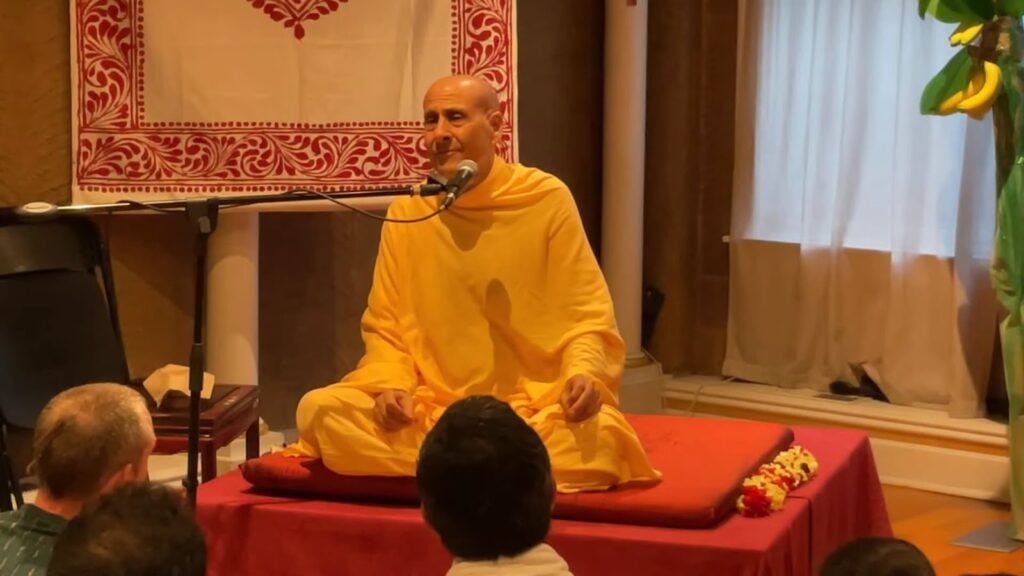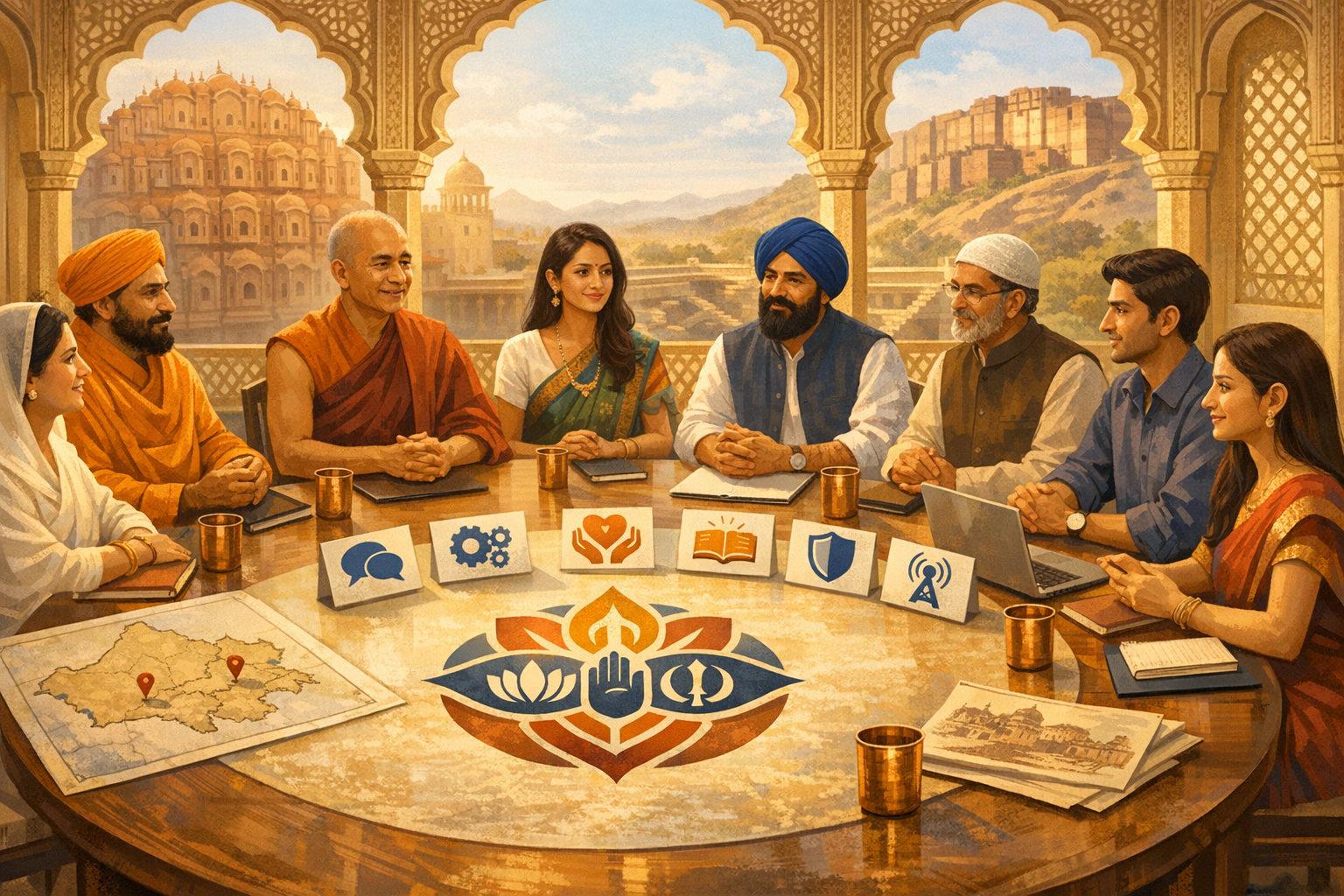
Under the ‘Hindu Rashtra Sampark Abhiyan’, Sadguru Dr. Charudatta Pingale, National Guide of Hindu Janajagruti Samiti (HJS), engaged with office-bearers of multiple pro-Hindu civil-society organisations in Jaipur and Jodhpur, with the core intent of strengthening Hindu unity and building durable coordination across allied dharmic communities.
The term Sampark (outreach) captures a structured approach to relationship-building that prioritizes sustained dialogue, shared problem-solving, and transparent coordination. In this context, the Abhiyan functions as a civic platform that convenes temple bodies, seva groups, youth associations, scholars, and legal-aid collectives to align efforts around community well-being, cultural heritage, and constitutional freedoms.
Framed through the civilisational ethos of dharma and guided by the ideal of a Constitutional Hindu Rashtra, the outreach emphasizes unity in diversity rather than uniformity. It affirms plural pathways within the broader dharmic familyHindu, Buddhist, Jain, and Sikhgrounded in common values such as ahimsa, seva, satya, karuna, and Sarbat da Bhala, while honouring local customs and regional identities.
Rajasthan offers a strategically significant landscape for such coordination. As a historic conduit of trade, ideas, and pilgrim circuits, and as home to vibrant cultural hubs like Jaipur and Jodhpur, the state’s civic networks are well placed to catalyse collaboration in heritage conservation, community safety, environmental stewardship, and youth leadership.
Across meetings of this nature, the objectives cohere around five practical outcomes: (1) deeper trust among organisations, (2) a shared calendar for high-impact seva, (3) rapid coordination during festivals and emergencies, (4) capacity building in legal-literacy and digital communications, and (5) evidence-based advocacy that supports constitutional rights, equal dignity, and social harmony.
A six-pillar working model helps convert intent into action: Samvad (respectful dialogue), Samanvay (operational coordination), Seva (service delivery), Sanskara (values education and cultural literacy), Suraksha (lawful safety protocols and disaster readiness), and Sanchar (responsible communications and media engagement). Each pillar is designed to be modular so that diverse groups can contribute according to their strengths.
Stakeholder mapping typically includes temple trusts and dharmashalas; women-led and youth-led seva organisations; heritage architects and conservators; school and college forums; legal and mediation cells; neighbourhood and rural panchayat representatives; and diaspora liaisons. Such breadth ensures that urban and rural priorities are addressed together, reducing duplication and encouraging mutual aid.
Coordination instruments that support this mapping include a shared directory of verified contacts, standard operating procedures for festival management, a quarterly joint review of programmes, and lightweight memoranda of understanding to clarify roles, data-sharing norms, and accountability. Emphasis remains on consensus and subsidiaritydecisions are made closest to the communities affected.
Programmatic themes converge on practical civic needs: inclusive education and scholarships; health camps and blood-donation drives; river and stepwell rejuvenation; protection and documentation of murtis and mandapas; livelihood skilling aligned with local crafts; and dignified assistance to vulnerable families. These initiatives translate cultural pride into measurable social benefit.
Digital capacity is treated as a public good. Training modules cover secure group coordination, fact-checking, countering misinformation without hostility, and storytelling that highlights inter-community cooperation. By privileging accuracy and empathy, the communications pillar supports social cohesion while extending the reach of heritage and seva projects.
Youth and women leadership are central to long-term resilience. Mentored cohorts can lead hackathons for heritage documentation, conduct community surveys, design eco-friendly festival toolkits, and produce multilingual explainer content on dharmic ideas such as Anekantavada and Vasudhaiva Kutumbakam. Structured pathways from volunteerism to leadership prevent burnout and institutionalise knowledge.
Monitoring and evaluation strengthen credibility. Baseline assessments of participation, beneficiary satisfaction, and incident response times are followed by quarterly audits and learning reviews. Public dashboards, where feasible, increase transparency, and cross-city peer review between Jaipur and Jodhpur encourages healthy benchmarking.
Legal-ethical alignment is foundational. Engagement is framed by India’s constitutional guarantees of freedom of conscience, practice, and propagation of religion, alongside the rights of denominations to manage their own affairs. Programmes explicitly commit to non-violence, due process, and respect for all faith communities, reinforcing that unity cannot be built by eroding the dignity of others.
Conflict sensitivity and risk mitigation are integrated from the outset. Facilitation norms encourage careful listening, avoidance of incendiary rhetoric, and prompt clarification of rumours. Early-warning mechanisms, liaison with local administration, and de-escalation protocols help protect both civil liberties and public order.
Jaipur offers dense institutional networksarchives, museums, universities, and living templessuited to research partnerships and public education. Jodhpur contributes strong heritage custodianship, artisanal knowledge, and regional outreach into western Rajasthan. Linking these complementary strengths through the Abhiyan builds a corridor of cooperation that benefits the wider state.
Meetings under a Sampark format ordinarily include small roundtables, issue-focused breakouts, and time-bounded action planning. Practical artefactschecklists for festival logistics, legal-helpline rosters, and shared event templatesensure that discussions culminate in executable tasks rather than aspirational statements alone.
At the human level, sustained dialogue often transforms abstract calls for Hindu unity into everyday solidarity. When representatives swap lessons from flood relief, school mentoring, or heritage clean-ups, scepticism gives way to trust. That trust, in turn, lowers the cost of coordination and raises the quality of response when communities most need it.
The outreach also nurtures dharmic concord beyond organisational silos. Shared ethical vocabularyahimsa, daya, sahanubhuti, and sevahelps Hindu, Buddhist, Jain, and Sikh participants recognise familiar ideals in one another’s practice. Such recognition is the bedrock of pluralism and a guardrail against polarisation.
Looking ahead, a lightweight charter of cooperation, jointly maintained mailing lists, rotating convenorship, and annual Jaipur–Jodhpur reviews can institutionalise gains while remaining flexible. Documented playbooks allow replication across other districts in Rajasthan and, eventually, across India’s diverse regions.
By convening leaders under the ‘Hindu Rashtra Sampark Abhiyan’ in Jaipur and Jodhpur, Sadguru Dr. Charudatta Pingale and HJS have advanced a practical, plural, and lawful pathway to social harmony. The emphasis on Samvad, Samanvay, and Sevaanchored in constitutional values and the spirit of Vasudhaiva Kutumbakamoffers a replicable template for dharmic unity that serves society at large.
Inspired by this post on Hindu Jagruti Samiti.