
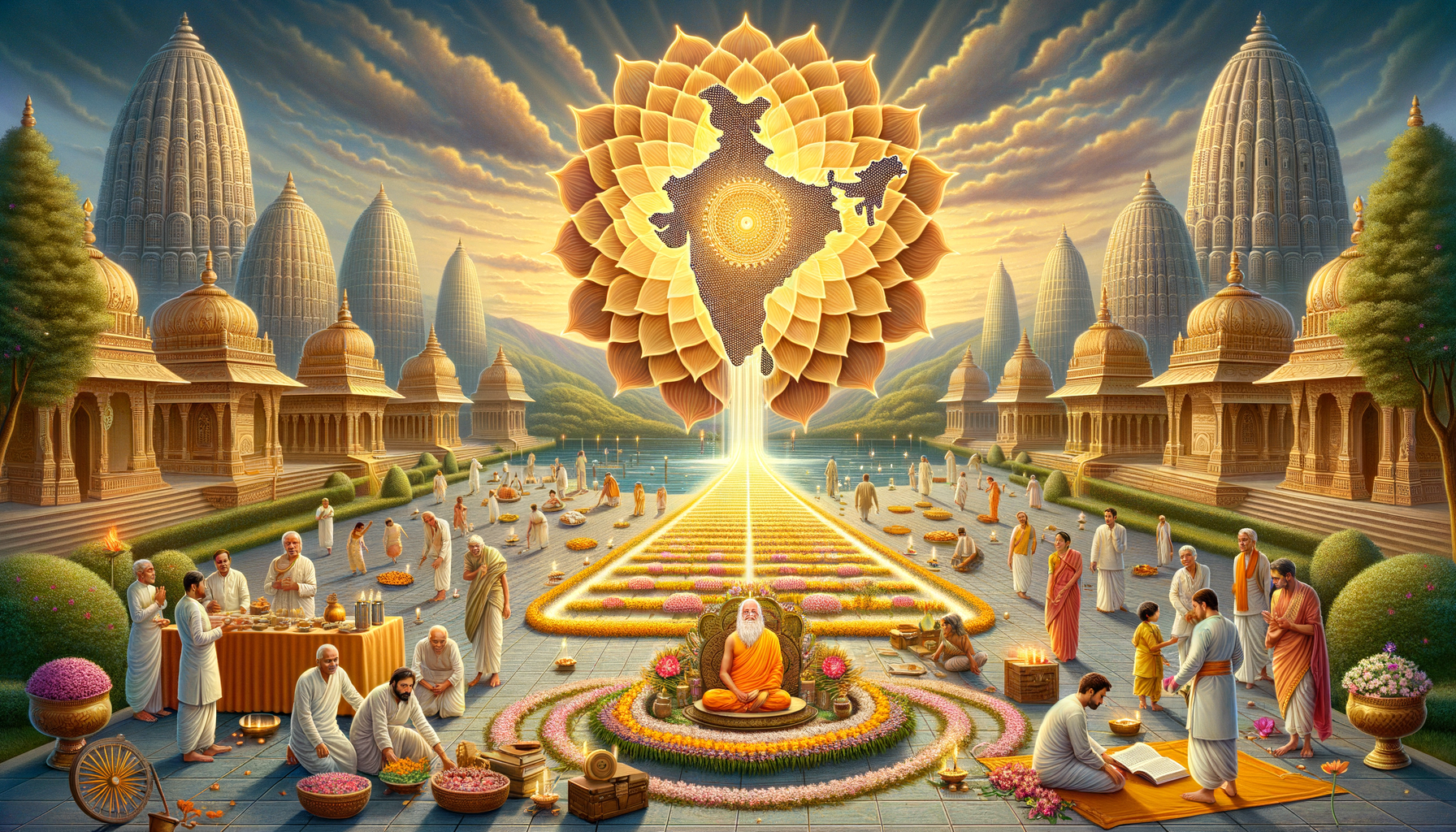
The years 2026 and 2027 mark a profound milestone: 60 years since the founding of the International Society for Krishna Consciousness (ISKCON) and 50 years since the disappearance of His Divine Grace A. C. Bhaktivedanta Swami Prabhupāda. This twin commemoration presents a rare and meaningful opportunity for remembrance, collective reflection, and renewed commitment to service across India.
The ICC 60–50 Committee (India) is positioned to guide purpose, direction, and national engagement for these observances. Its vision emphasizes honoring Prabhupāda’s legacy with integrity while inspiring constructive action that strengthens communities, deepens spiritual practices, and celebrates India’s rich cultural heritage.
The strategic focus aligns with inclusive and practical priorities: spiritual cultivation and accessible education; preservation and presentation of cultural heritage; community service (seva) that addresses real needs; youth engagement and leadership development; and a harmonious ethos that affirms unity in spiritual diversity across Hindu, Buddhist, Jain, and Sikh traditions. This approach centers on dignity, compassion, and shared dharmic values.
National engagement is envisioned through collaborative partnerships with temples, gurudwaras, monasteries, community organizations, universities, and cultural institutions across India’s regions and languages. Programming is designed to be locally rooted and nationally coherent, ensuring broad participation, linguistic inclusion, and respectful representation of India’s civilizational pluralism.
Illustrative initiatives include commemorative kirtana and study forums, curated exhibitions on Prabhupāda’s contributions, publication and archival projects, academic dialogues on India’s civilizational thought, and service-led campaigns that foreground environmental stewardship, education, and public health. Each effort encourages reflective participation, measurable impact, and sustainable follow-through beyond the commemorative window.
There is a widely felt sense of gratitude for Prabhupāda’s teachings, which continue to guide ethical living and spiritual inquiry. These observances invite individuals and communities to translate remembrance into actionstrengthening daily sādhanā, nurturing respectful dialogue, and expanding service that uplifts all, without sectarian boundaries.
Seen through this lens, 2026–2027 becomes a bridge between memory and mission. By uniting hearts through shared dharmic ideals and public-spirited engagement, the ICC 60–50 Committee (India) seeks to transform commemoration into a living legacyone that advances social cohesion, cultural confidence, and national integration grounded in timeless wisdom.
Inspired by this post on Dandavats.










