
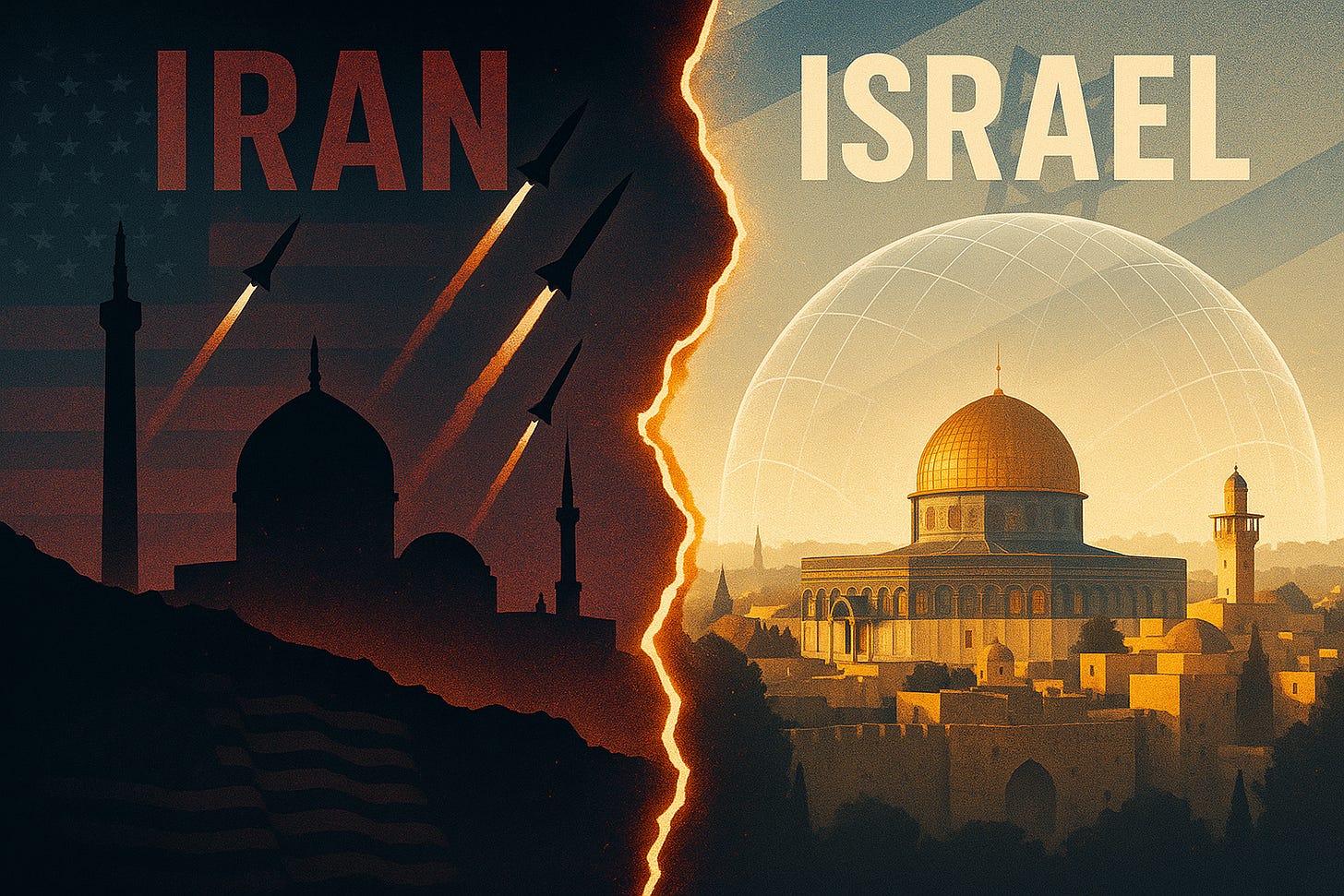
Iran’s nuclear trajectory sits at the heart of a complex regional security landscape. Israel has pledged to prevent Tehran from acquiring nuclear weapons and has actedovertly and covertlyto disrupt related capabilities. The United States has similarly sought to constrain Iran’s weapons potential, though its approaches have shifted across administrations. Understanding the motivations, constraints, and choices of key actorsIsrael, the United States, Iran, and Indiahelps clarify both the risks and the pathways toward de-escalation grounded in international law and verifiable safeguards.
Israel’s concerns are rooted in what it assesses as an existential threat. Statements by Iranian leaders hostile to Israel, coupled with the activities of Iran-aligned non-state actors, shape Israel’s risk calculus. Hamas has operated from Gaza using extensive tunnel networks and has conducted cross-border attacks, including the events of Oct 7, 2023. Hezbollah, positioned along Israel’s northern frontier, maintains significant rocket and missile capabilities. The Houthis in Yemen have launched long-range projectiles, and regional militias in Iraq and Syria have targeted Israeli and U.S. interests. In such a scenario, Israeli planners view any prospect of weaponized nuclear capabilityor even ambiguous nuclear latencyas dangerously destabilizing.
These dynamics heighten fears not only of strategic missiles but also of asymmetric risks, including potential dirty-bomb scenarios or swarming attacks using mixed conventional and advanced systems. Consequently, Israeli policy emphasizes deterrence, pre-emption when necessary, and persistent disruption of proliferation networks. Many in the region, across diverse faiths and communities, empathize with the desire for safety and dignity for all civilianssentiments aligned with dharmic values of ahimsa (non-violence) and the protection of life.
U.S. policy toward Iran has evolved over decades in response to shifting geopolitical conditions. Before 1979, Washington cooperated with the Shah’s Iran in a regional balance against the USSR. After the Islamic Revolution, relations deteriorated; the Iran–Iraq War and the Iran–Contra affair complicated diplomatic channels. From the 1990s into the early 2000s, sanctions defined the baseline of U.S. strategy. The Obama administration pursued the JCPOA framework, pairing nuclear constraints and inspections with sanctions relief to cap enrichment and extend breakout timelines. The Trump administration withdrew from the deal and re-imposed stringent sanctions to increase pressure. Subsequent efforts under the Biden administration sought calibrated engagement and renewed constraints while contending with concerns about advanced enrichment and missile development. Across administrations, the constant has been a U.S. interest in non-proliferation and regional stability, even as tools and tactics have oscillated.
India’s position reflects strategic autonomy, economic pragmatism, and a consistent preference for de-escalation. India has deep civilizational ties with the Iranian people and maintains trade interests, including energy security and connectivity projects such as the Chabahar port. Over time, New Delhi has had to navigate international sanctions, regional conflicts, and great-power pressures. While strengthening relations with Israel, the United States, and Gulf partners, India also engages Iran to support Afghanistan’s access, maritime connectivity, and broader regional stability. This balanced approach aligns with dharmic traditionsHindu, Buddhist, Jain, and Sikhthat prioritize dialogue, dignity, and the minimization of harm.
The humanitarian dimension remains central. The majority of Iranians are focused on development, prosperity, and dignityaspirations shared universally. It is neither ethically coherent nor strategically prudent to impose governance outcomes externally. Instead, policies that privilege verifiable nuclear limits, credible inspections, and regional confidence-building can protect civilians, reduce miscalculation, and create space for domestic agency. Limiting the objective to curbing nuclear and long-range strike capabilitiesrather than prescribing regime outcomeshelps uphold international norms while respecting the Iranian people’s right to shape their future.
The debate over civilian nuclear energy is legitimate and overdue for transparent, global discussion. The Non-Proliferation Treaty (NPT) recognizes the right to peaceful nuclear use under safeguards. Questions remain: Who determines compliance thresholds? How can inspections be strengthened without weaponizing access? What balance between civilian energy needs, climate goals, and proliferation risks best serves humanity? Open, rules-based deliberationgrounded in IAEA oversight, robust monitoring technology, and equitable standardsis preferable to clandestine bargaining that erodes trust.
A practical path forward includes several elements: reaffirmation of non-proliferation norms; verifiable limits on enrichment and missile ranges; strengthened IAEA access; cooperative maritime security to reduce proxy escalation; and regional dialogue that includes all stakeholders with guarantees for civilian protection. These measures can coexist with lawful trade and connectivity, including initiatives that advance shared prosperity across West Asia and South Asia.
Ultimately, sustainable peace requires more than deterrence. It calls for a moral framework that centers human dignity and rejects dehumanizing narratives. The dharmic emphasis on ahimsa, truthful deliberation, and compassion offers a constructive ethos: protect life, reduce suffering, and resolve disputes through transparent dialogue and fair rules. Applied consistently, these principles can help transform a crisis defined by fear into an opportunity for verified security and shared development.
Inspired by this post on RightViews.











