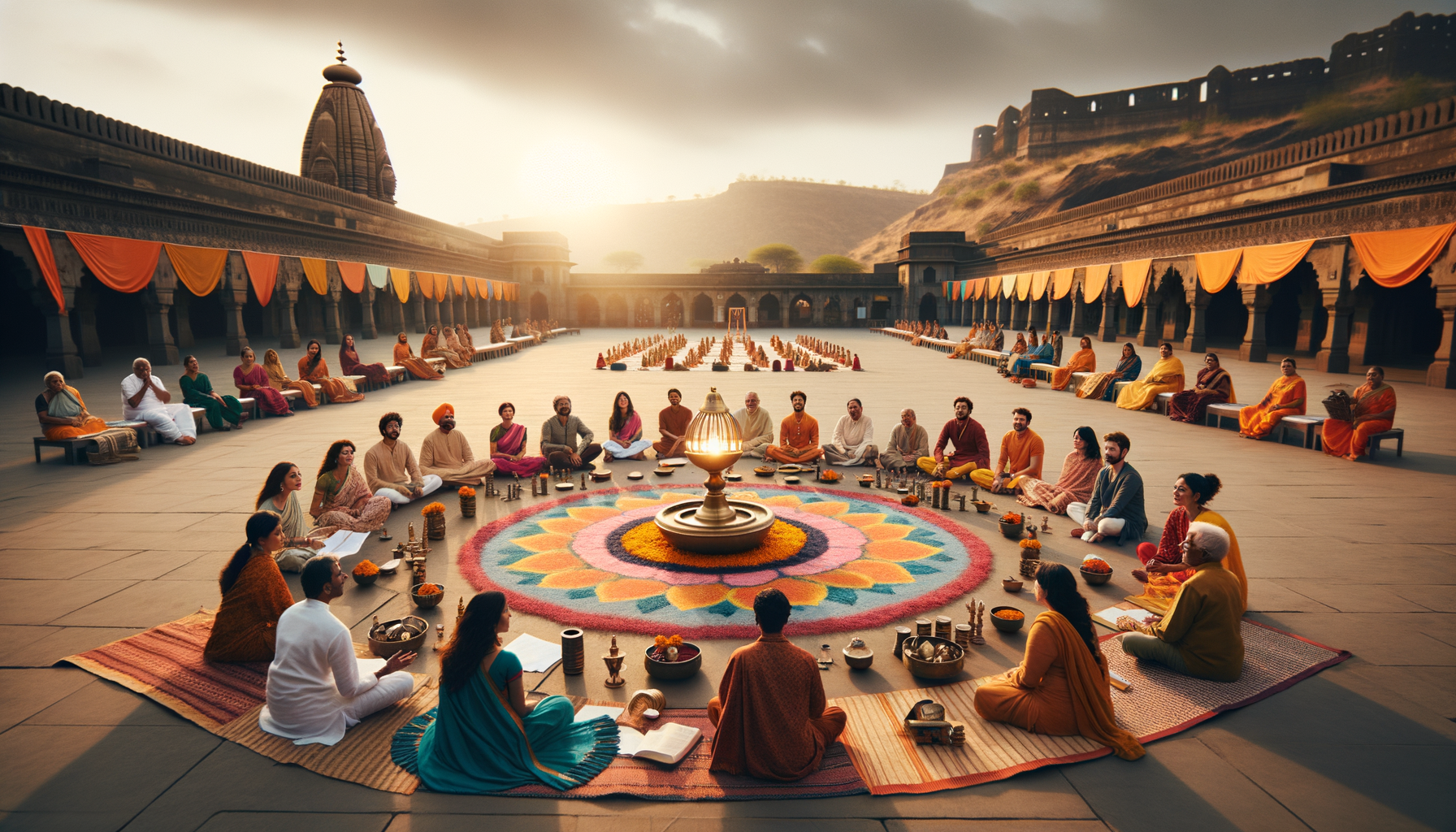
Hindu Janajagruti Samiti organised Hindu Rashtra-Jagruti Sabhas at three locations across Pune district Uravade (Taluka Mulshi), Talegaon Dabhade (Taluka Maval), and Peth (Taluka Haveli). Each gathering drew an enthusiastic response from devout Hindus and community well-wishers, reflecting a shared commitment to cultural heritage, ethical citizenship, and dharmic solidarity.
Held across Mulshi, Maval, and Haveli talukas, the sabhas ensured broad accessibility within Pune district and underscored the region’s vibrant civic culture. Families, youth, and elders engaged actively, signalling both continuity and renewal in community participation. The multi-location approach allowed attendees from diverse neighborhoods to connect with a shared purpose while experiencing a sense of belonging rooted in place.
Participants consistently expressed a unifying sentiment: safeguarding dharmic values thrives when communities come together in a spirit of inclusion and mutual respect. While the sabhas were convened by Hindu Janajagruti Samiti, many attendees emphasized the shared ethical foundations across Hinduism, Buddhism, Jainism, and Sikhismtruthfulness, non-violence, seva (service), and responsibility toward society. This dharmic unity served as a practical bridge for cooperation, dialogue, and social harmony.
Speakers and volunteers highlighted the importance of cultural awareness, constitutional harmony, and peaceful coexistence. Emphasis on youth engagement and intergenerational learning resonated strongly, with several attendees sharing personal recollections of similar community gatherings that strengthened civic confidence and moral clarity. The sabhas thus functioned as both reflective spaces and action-oriented forums for community engagement in Maharashtra.
Beyond the immediate enthusiasm, the events offered a constructive model for community-building: cultivating pride in cultural heritage while fostering inclusivity among dharmic traditions. In practical terms, this meant encouraging collaborative service projects, respectful dialogue, and a commitment to the shared public goodprinciples that align with India’s plural ethos and support long-term social cohesion in Pune district.
As the response in Uravade, Talegaon Dabhade, and Peth indicates, sustained, place-based gatherings can strengthen both local identity and broader unity. The Hindu Rashtra-Jagruti Sabhas, centred on dharma and civic responsibility, point toward a hopeful trajectory: communities that are confident in their heritage and equally committed to inclusive, peaceful, and constructive engagement across the dharmic spectrum.
Inspired by this post on Hindu Jagruti Samiti.