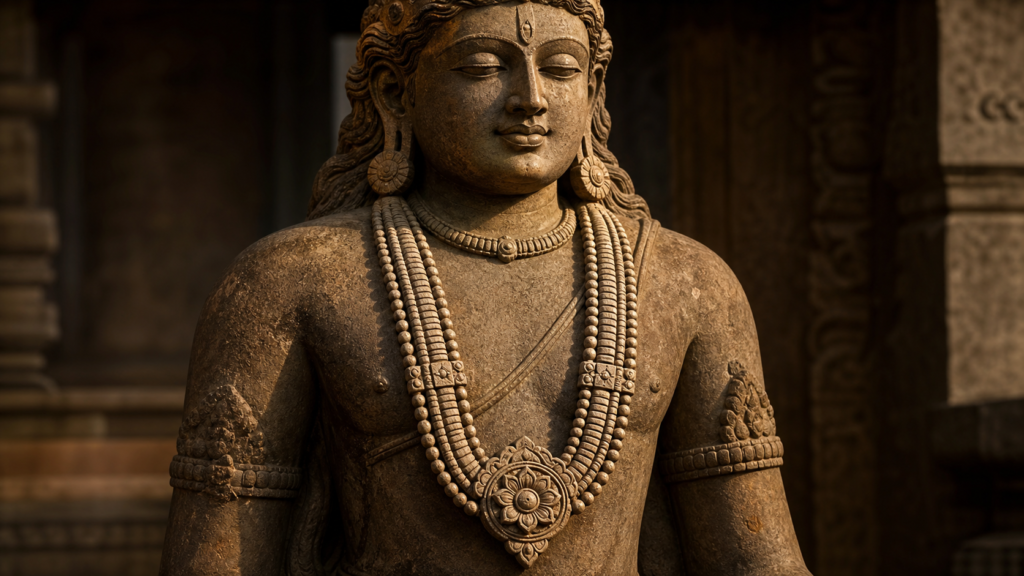
Chamunda, a formidable manifestation of Shakti, is traditionally aligned with the southwest (Nairritya) direction and is often invoked as a guardian against moral decline and destructive forces. In Hindu iconography, her gaunt, bony form and sunken abdomen are not signs of weakness but stark metaphors for time’s relentless capacity to consume impurity and decay. This symbolism, coupled with the scorpion motif in certain regional traditions, frames Chamunda as an uncompromising protector who confronts depravity at its source.
The scorpion, sharp and vigilant, signifies hidden dangers and swift, precision defense. In the context of Chamunda’s protective ethos, it becomes a sign of ethical alertnessan emblem reminding devotees that dangers to integrity are often subtle and internal. The scorpion’s sting, when read symbolically, suggests the decisive action required to neutralize tendencies toward excess, corruption, or decay before they spread.
Chamunda’s association with the southwest complements the wider sacred geography found in Hindu practice, where directions encode psychological and spiritual tasks. The southwest, linked with the weight of time and endings, invites reflection on entropy and responsibility. Within the Ashta Matrika tradition, Chamunda’s placement reinforces her role as a boundary-keeper: she stands at a liminal edge, where decline must be arrested and inner resolve fortified.
Devotees often describe their engagement with Chamunda as a discipline of clarity. Her cremation-ground imagery, skull garlands, and fierce demeanor are pedagogical: they strip away comforting illusions to expose what must be confrontedfear, indulgence, or despair. In moments of ethical testing, remembrance of Chamunda’s vigilance inspires calm courage, helping practitioners choose restraint over impulse and integrity over convenience.
Across dharmic traditionsHinduism, Buddhism, Jainism, and Sikhismthere is a shared commitment to inner purification and the protection of ethical order. While symbols and practices differ, the common thread is unmistakable: self-mastery, compassion, and the disciplined overcoming of inner poisons. Read in this light, Chamunda’s fierce protection harmonizes with a broader civilizational ethos that prizes responsibility, non-harm, and the safeguarding of collective well-being.
Practically, contemplation on Chamunda’s imagery and recitation from the Devi Mahatmya are frequently used to anchor intention and steady attention. Meditative focus on the southwest can serve as a reflective exercise, prompting honest self-review at day’s end: Where did integrity waver? Where did watchfulness prevail? Such ritualized awareness transforms symbolism into daily ethical practice.
Chamunda’s scorpion and the southwest direction together articulate a sober, empowering message: protection begins with recognition. By acknowledging vulnerability to decaypersonal or socialdevotees cultivate vigilance, humility, and timely action. In this way, Chamunda is less a distant deity and more a living disciplinea guardian presence that equips practitioners to face the world’s challenges with steadiness, discernment, and compassionate strength.
Inspired by this post on Hindu Blog.