America’s founders designed a secular republic with Europe’s religious wars as a cautionary tale. The Thirty Years’ War, a cataclysm of sectarian conflict between Christian denominations, imprinted the dangers of fusing state power with a single creed. That historical memory still matters, as contemporary episodes of intra-Christian violence and online justifications for it reveal how quickly theological disputes can spill into public life.
The persistence of sectarian rhetoric has long complicated America’s promise of religious pluralism. Various Christian constituencies, especially within the evangelical movement, have periodically sought privileged standing in public institutions. From informal access to political leaders to sustained campaigns around education and public symbols, these efforts now re-emerge with new energy under the banner of Christian nationalism.
Empires often tell sacred stories about themselves, and the United States has alternated between pluralist aspirations and impulses toward religious monopoly. That tension surfaced in recent years in ways that felt personal to many Hindu, Sikh, Buddhist, and Jain Americans. When public figures celebrated Hindu traditionswhether a Diwali ceremony in the Oval Office or a personal reference to Lord Hanumansegments of the Christian right reacted by labelling such practices “pagan” or “anti-Christian,” even as they demanded broader religious expression for themselves.
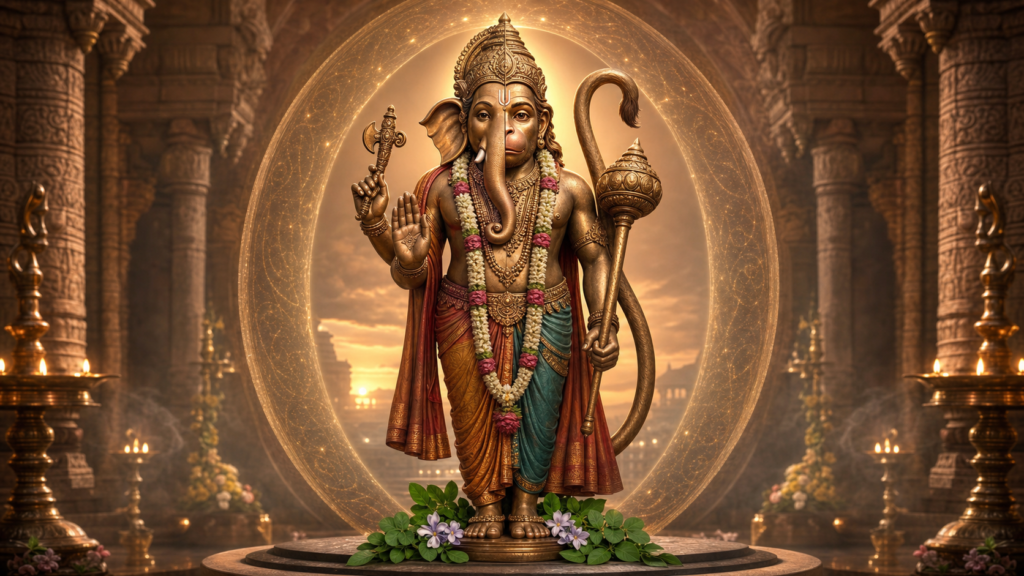
Consider the cultural resonance of a passage from Barack Obama’s memoir, recalling a childhood encounter in Indonesia: “There standing astride the road was a towering giant at least ten stories tall with the body of a man and the face of an ape. That’s Hanuman, Lolo said as we circled the statue, the monkey-god. I turned around in my seat, mesmerized by the solitary figure, so dark against the sun, poised to leap into the sky as puny traffic swirled around its feet. He’s a great warrior,” Lolo said firmly, “strong as a hundred men. When he fights the demons, he’s never defeated.” For many dharmic practitioners, such acknowledgments signal dignity and shared values; for some critics, they become pretexts for derision.
Hindu public figures in American politics have also faced targeted scrutiny. Their faithrather than their policy viewstoo often becomes the headline, reinforcing a narrative that non-Abrahamic traditions are foreign to the American story. These reactions underscore why constitutional neutrality toward all religions remains essential.
The record is complex. In 1976, Donald Trump offered logistical support to the Jagannath Rathayatra carts in New York City; decades later he hosted Diwali at the White House. Yet several prominent Christian nationalists denounced the celebration as “pagan,” illustrating a double standard that invites Christian symbolism into public spaces while casting Hindu traditions as suspect. Such reactions heighten unease across dharmic communities and highlight the importance of consistent principles of religious freedom.
Policy signals reinforce the cultural mood. Roughly 80% of White Evangelicals supported Trump in 2016 and 2020, and many leaders framed him as a defender of “Christian heritage.” Efforts to mandate Ten Commandments displays in classrooms, expand Bible instruction in public schools, and relax restrictions on political activity by clergy have accelerated in GOP-led states. Supporters view these steps as restoring moral order; critics warn they marginalize those outside the Christian fold.
Within this climate, dharmic traditions are frequently stereotyped. Hinduismhome to the Rig Veda, the Upanishads, and millennia of philosophical diversitycan be reductively portrayed as idolatry by polemicists who conflate plurality with error. Pastors aligned with Christian nationalist rhetoric have called Hinduism “demonic” or treated practices such as yoga as spiritually dangerous, lending theological antagonism a political platform.
The antagonism is not novel. Early Christian campaigns shuttered Roman temples; medieval Europe suppressed local spiritualities as “witchcraft”; and Indigenous American traditions were attacked as “heathen.” In South Asia, the Portuguese Inquisition in Goa criminalized Hindu practices, and Mughal-era policies under rulers such as Aurangzeb included temple destructions, jizya taxation, and executions of saints. Partition in 1947 then unleashed mass violence and displacement. These histories are lived memories for many dharmic families and inform contemporary perceptions of vulnerability.
In the United States, hate incidents against Hindus have risen in recent years. Federal statistics show an uptick from a low baseline, while reports from state agencies and community organizations document temple vandalism in Texas, California, and New Yorkincluding graffiti invoking Nazi imagery misapplied against a community that preserved the ancient swastika as a symbol of well-being. Public debates around school curricula have at times caricatured Hinduism through colonial tropes, further normalizing bias.
Academia plays a consequential role in shaping narratives. Some university-based scholars have been criticized by Hindu organizations for dismissing Hinduphobia, mocking deities on social media, or framing Hinduism primarily through the lens of caste and oppression. Critics argue that such approaches downplay persecution across centuriesfrom medieval devastations to the Goa Inquisition and the traumas of Partitionand thus minimize the resilience of dharmic communities. Universities can and should address these concerns with the same rigor applied to other histories of atrocity.
The geopolitics of South Asia add another layer. During the 1971 Bangladesh war, Washington’s tilt toward Pakistaneven amid mass atrocitiesleft deep scars among Indian and Hindu observers. Subsequent decades have seen continued U.S.-Pakistan engagement despite terrorist safe havens and cross-border violence affecting Indian civilians, many of them Hindu. These policies are often read by dharmic diasporas as strategic realpolitik that insufficiently weighs the security and dignity of Hindus.
None of this warrants hostility toward Christians or Muslims as communities; the vast majority of believers of all faiths in America live, work, and collaborate in peace. The issue is ideological: when a political movement elevates one religion as normative and labels others as demonic or foreign, pluralism erodes. That erosion disproportionately impacts small minoritiesHindus constitute less than 1% of the U.S. populationand invites exclusion, stereotyping, and sometimes violence.
Dharmic unity offers a constructive answer. Hindu, Buddhist, Jain, and Sikh Americans share values of nonviolence, interfaith respect, and freedom of conscience. Coordinated, peaceful civic engagementknow-your-rights education, interfaith service projects, rapid response to hate incidents, and disciplined advocacycan make institutions more accountable. Temples and gurdwaras, viharas and derasaras can become hubs for community education, interfaith dialogue, and historical literacy that affirms the dignity of all traditions.
Public storytelling is vital. Dharmic communities can invest in scholarship, journalism, documentary film, and curricula that present balanced historiesacknowledging both periods of persecution and long-standing contributions to science, philosophy, and the arts. Clarifying contested terms, such as “Hindutva,” in culturally grounded, nonpartisan ways helps prevent the conflation of faith identities with political extremism and encourages nuanced debate.
Policy conversations should return to first principles. The separation of church and state exists to protect everyoneChristians includedfrom sectarian conflict. Calls to place a single scripture or theology at the heart of public education risk turning neighbors into outsiders. By contrast, principled neutrality ensures that a menorah, a diya, a cross, and a khanda are all equally welcome in the American mosaicat home, in private schools and houses of worship, and in community spaces governed by inclusive norms.
Diwali in the Oval Office should symbolize precisely that inclusivity: light, knowledge, and the triumph of good over injustice. When such moments provoke backlash, they reveal how fragile pluralism can beand how necessary it is to safeguard it. America can honor all beliefs equally if civic institutions, universities, media, and faith leaders commit to a consistent standard: defend the rights of every community, reject dehumanizing rhetoric, and teach history with clarity and compassion.
The choice is stark yet hopeful. A nation that recommits to pluralism strengthens not only its minorities but the fabric of freedom itself. In that shared horizon, dharmic traditions stand readyas partners among equalsto help America keep the light.
Inspired by this post on Hindu Human Rights Blog.