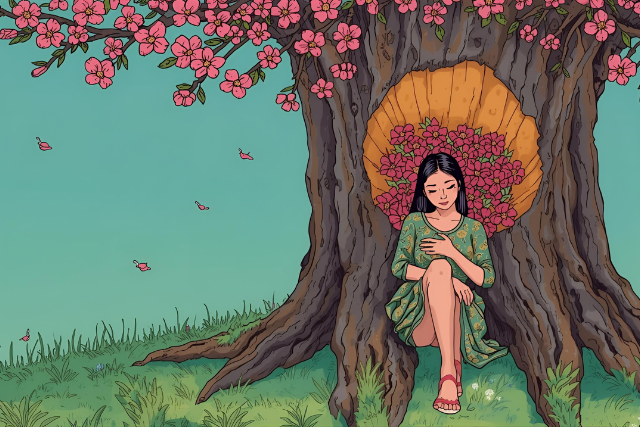
“The deeper that sorrow carves into your being, the more joy you can contain.” ~Kahlil Gibran
Few discussions of self-worth address the quiet ache that follows decisive growth. After establishing healthy boundaries, clarifying needs, and choosing not to settle, many individuals encounter a distinct loneliness—an emotional hangover that arrives precisely when clarity emerges. This experience is common in personal growth, relationships, and healing journeys, yet it remains largely unspoken.
The ache is not simply sadness; it is the ache of wakefulness. It is the somatic recognition that one can no longer conform to misaligned dynamics. When people-pleasing, over-giving, and “maybe this is enough” patterns are released, the nervous system often transitions from familiar chaos to an unfamiliar stillness. That stillness can feel spacious and bare.
Consider the early aftermath of walking away from a connection that was kind yet not truly resonant. The first response may be empowerment: a grounded sense of inner strength for honoring intuition. Days later, however, a subtler sensation can surface—an ache for company, closeness, and the temporary comfort of being chosen, even when the fit was not right. This is the paradox of healing: insight ushers in integrity, and integrity sometimes reduces immediate companionship.
This liminal phase—the space between no longer and not yet—often carries grief. There is grief for the illusions once held, for the reliability of former identities and dynamics, and for the old thresholds of “enough.” Such grief is a natural outcome of raised standards. It is not failure; it is evidence of integration.
In this in-between, the outer world does not always mirror inner clarity. A date may be kind and curious yet not feel like resonance. Rooms once easy to blend into may now feel subtly misaligned. The distance from the past widens before the future becomes tangible. This is a predictable sequence in personal growth and relationship realignment.
The goal of authentic connection remains intact, but the path recalibrates. Healing draws people closer to connection of a different quality—the kind that matches the version of self that chose growth. That alignment typically takes time, not because connection is absent but because what is being invited is truer, steadier, and more mutual.
During this period, inner experience can fluctuate. One day brings pride in boundaries; the next introduces questions. Morning feels rooted in self-respect; evening evokes loneliness. These oscillations are not backsliding. They mark the nervous system learning safety in clarity and the mind integrating new relational templates.
Reconstruction is inherently disorienting. Like any renovation, it generates dust and debris even as it builds something real and lasting. Over time, the ache begins to change texture. What once registered as emptiness gradually reveals itself as spaciousness. Quiet becomes trustworthy, and worth is no longer a negotiation.
This turning point reframes waiting as preparation, not punishment. It distinguishes being alone from being lonely and reduces the urge to shrink needs for proximity. Paradoxically, loneliness can signal healing: the refusal to fill the void with misaligned attention demonstrates self-compassion and emotional resilience.
When doubt appears—when the mind suggests settling, minimizing needs, or abandoning the process—one helpful practice is to repeat a stabilizing affirmation: “I trust that it’s worth waiting for the love I deserve, and that it’s possible for me.” Integrating this statement into breath, journaling, or daily reflection supports cognitive and emotional coherence.
There is no fixed timeline for alignment. It can feel as if a precise request has been placed with the universe and the delivery is delayed. Yet asking for connection that is deep, mutual, and present is a request for true, not fast. True takes time.
Dharmic traditions offer a unifying lens for this season of sacred discomfort. Hindu teachings on tapas and vairāgya, Buddhist reflections on dukkha and anicca, Jain emphasis on ahimsa and inner discipline, and Sikh practices of simran and sehaj all cultivate steadiness, compassion, and discernment in liminal spaces. Each tradition—distinct yet harmonious—affirms that clarity, patience, and mindful presence deepen self-worth while strengthening relationships with the wider world.
From this perspective, loneliness on the far side of healing is not a sign of error. It indicates refusal to mask pain, to abandon boundaries, or to barter values for short-term relief. This honesty is rare and powerful. The ache refines perception, preparing one to recognize connection that honors current truth rather than past habits.
With time, calm arrives more often. The ache softens; quiet joy appears in ordinary moments. Music resonates more deeply. Small gestures feel significant. Life develops a subtle shimmer as capacity expands. Sorrow has carved space, just as Gibran observed, and that space now holds more joy, love, and genuine connection.
Ultimately, this carving becomes the foundation for relationships that do not require shrinking, dimming, or settling. As anxiety about finding someone else loosens, an essential truth emerges: the greatest love often begins with one’s own steady regard. From that ground, aligned connection becomes not only possible but recognizable.
Inspired by this post on Tiny Buddha.