Mumbai is home to numerous temples that serve as sacred spaces and enduring cultural landmarks. This curated overview presents ten famous temples in Mumbai, emphasizing their historical context, spiritual significance, and living traditions. Together, they illustrate the city’s rich tapestry of Hindu devotion while resonating with the broader unity of dharmic traditions.
1) Shree Siddhivinayak Ganapati Mandir, Prabhadevi (Address: SK Bole Marg, Prabhadevi, Mumbai, Maharashtra 400028). Dedicated to Lord Ganesha, this temple is widely regarded for fulfilling devotees’ vows and is among the most visited Hindu temples in Mumbai. Established in 1801, it exemplifies living bhakti and meticulous temple architecture, drawing pilgrims daily and especially during Ganesh Chaturthi.
2) Mumba Devi Temple, Bhuleshwar (Address: Mumba Devi Marg, Zaveri Bazaar, Bhuleshwar, Mumbai, Maharashtra 400002). The presiding deity gives Mumbai its name, making this shrine central to the city’s identity. The temple’s bustling precincts connect commerce and culture, reflecting how faith traditions and urban life coexist in a dynamic equilibrium.
3) Babulnath Temple, Girgaum (Address: Babulnath Road, Charni Road East, Mumbai, Maharashtra 400004). An elevated Shiva temple with a serene atmosphere, Babulnath offers panoramic views near Girgaum Chowpatty. The site’s 19th-century reconstruction sits atop older tradition, and the ascent via steps invites reflective pilgrimage.
4) Mahalaxmi Temple, Mahalaxmi (Address: Bhulabhai Desai Road, Mahalaxmi, Mumbai, Maharashtra 400026). Dedicated to Mahalakshmi, Mahakali, and Mahasaraswati, this seafront temple is especially vibrant during Navaratri. The shrine underscores the continuity of Śakti worship in urban contexts and the resilience of cultural heritage along Mumbai’s historic coastline.
5) Walkeshwar Temple and Banganga Tank, Malabar Hill (Address: Walkeshwar Road/Banganga, Malabar Hill, Mumbai, Maharashtra 400006). Associated with legends of Lord Rama, the precinct reflects medieval-era patronage and subsequent restorations. The stone steps, ghats, and shrines create a contemplative space where ritual practice aligns with historical memory.
6) ISKCON Sri Sri Radha Rasabihari Temple, Juhu (Address: Hare Krishna Land, Juhu, Mumbai, Maharashtra 400049). As a major bhakti center, the temple integrates kirtan, scripture discourse, and community service. Visitors often note the synthesis of devotional aesthetics, temple architecture, and an open invitation to spiritual learning.
7) ISKCON Sri Sri Radha Gopinath Mandir, Chowpatty (Address: 7, K.M. Munshi Marg, Girgaum Chowpatty, Mumbai, Maharashtra 400007). Known for meditative ambience and structured study programs, this temple highlights the depth of Vaishnava philosophy. The setting near the seafront allows reflective practice alongside the rhythms of city life.
8) Shri Swaminarayan Mandir, Bhuleshwar (Address: 196, Kalbadevi Road, Bhuleshwar, Mumbai, Maharashtra 400002). Among Mumbai’s oldest Swaminarayan temples, the mandir showcases distinctive iconography and disciplined worship. Its devotional routines exemplify community cohesion and continuity of Sampradaya traditions within the urban core.
9) Prabhadevi Temple, Prabhadevi (Address: Keluskar Road N, Prabhadevi, Mumbai, Maharashtra 400025). This venerable shrine to Goddess Prabhadevi lends the locality its name. The temple’s intimate scale and steady flow of devotees demonstrate how neighborhood temples sustain everyday spirituality.
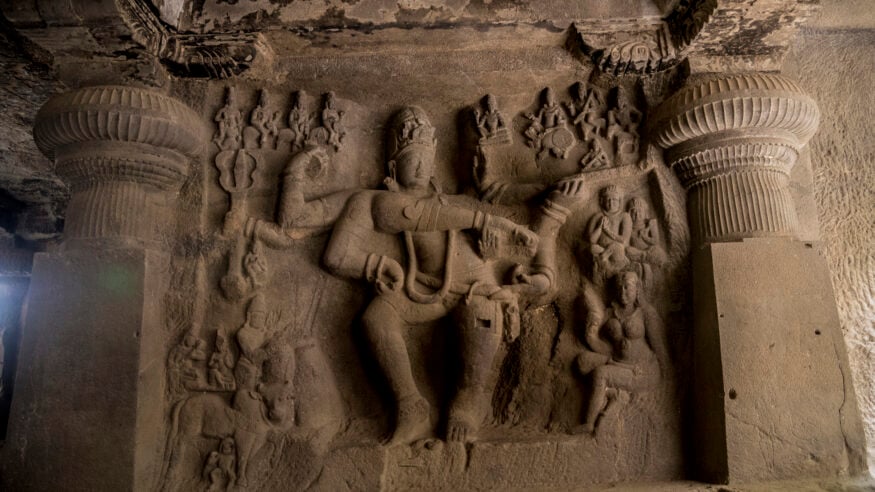
10) Jogeshwari Caves (Shiva Temple), Jogeshwari (Address: Caves Road, Jogeshwari East, Mumbai, Maharashtra 400060). Among the region’s earliest rock-cut Hindu cave temples (circa 6th century), the site preserves Shaiva iconography and early sacred architecture. It offers invaluable insights for students of Indian art history and those exploring ancient temples in Mumbai.
Together, these temples chart a continuumfrom rock-cut antiquity to modern bhakti movementsshowcasing Mumbai’s layered religious history. Visitors frequently observe that each space invites a distinct inner disposition: the quiet contemplation of Walkeshwar, the jubilant crowds of Siddhivinayak, the iconographic focus of the Swaminarayan tradition, and the musical devotion of ISKCON. Such diversity within Hindu traditions reflects a broader dharmic ethos that harmonizes varied paths of worship.
As a living cultural landscape, Mumbai also embraces Jain and Buddhist heritage in its wider metropolitan region, reflecting unity across dharmic traditions. This shared reverence for non-violence, knowledge, and spiritual discipline encourages mutual respect and cultural dialogue, reinforcing the city’s inclusive character.
Practical notes for pilgrimage planning: festival days such as Ganesh Chaturthi (Siddhivinayak) and Navaratri (Mahalaxmi) draw large crowds; early morning or weekday visits often allow smoother darshan. Modest attire, attention to local customs, and adherence to queue systems help preserve sanctity. Checking current timings and special puja schedules before travel is advisable.
For researchers, students, and culture enthusiasts, these sacred sites provide a living archive of Hindu architecture, ritual practice, and urban religious history. For devotees and travelers, they offer pathways to devotion, reflection, and communityaffirming a shared heritage that continues to evolve with the city.
Inspired by this post on Hindu Pad.