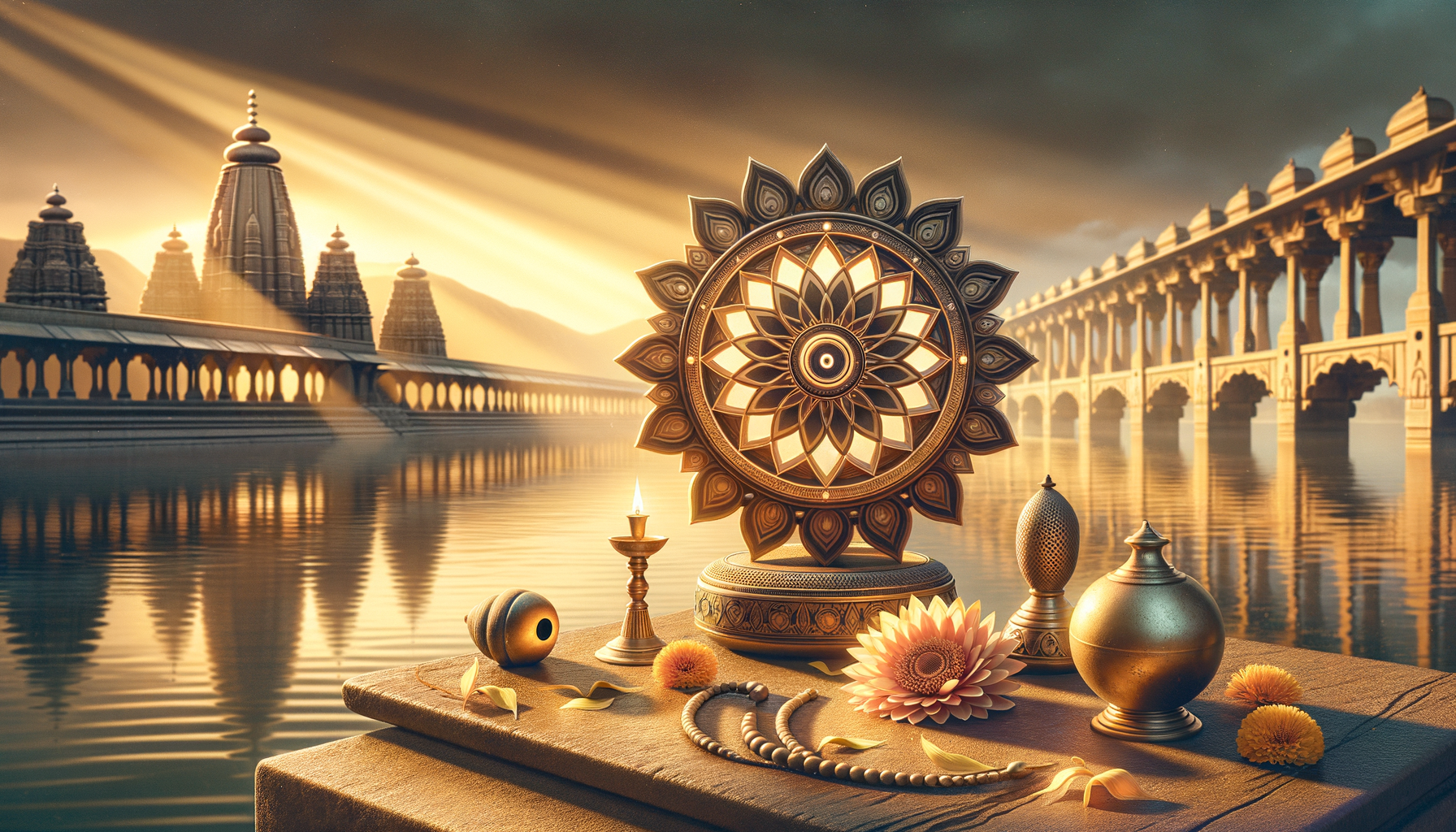
Situated on the serene banks of the Cauvery River near Ganjam in Mandya, Karnataka, the Sri Nimishamba Temple is recognized as a vital spiritual center within the wider dharmic landscape. Dedicated to Sri Nimishamba Devia fierce yet compassionate form of the Universal Motherthe temple draws pilgrims seeking divine intervention and inner peace. Local tradition holds that the Devi responds to sincere prayers within a nimisha (a minute), underscoring her immediacy and maternal grace.
The idol form of Sri Nimishamba Devi communicates a balanced theology of protection and benevolence. While embodying the raudra (fierce) energy that removes obstacles and negativity, her compassionate aspect reassures devotees through the promise of refuge and upliftment. The iconographyoften evoking gestures of assurance and blessingfunctions not only as visual theology, but also as a contemplative aid: it gives form to abstract spiritual truths about dharma, courage, and compassionate action.
Central to the temple’s sanctity is the Sri Chakra, the sacred geometric yantra revered across Shakta traditions. Composed of interlocking triangles around a central bindu, the Sri Chakra symbolizes the dynamic union of Shiva and Shakti, the unfolding of cosmic creation, and the return to stillness at the heart of consciousness. The concentric avaranas (enclosures), lotus petals, and the bhupura (earth-square with four gateways) collectively serve as a map of spiritual ascentfrom gross to subtleguiding the practitioner inward toward unity.
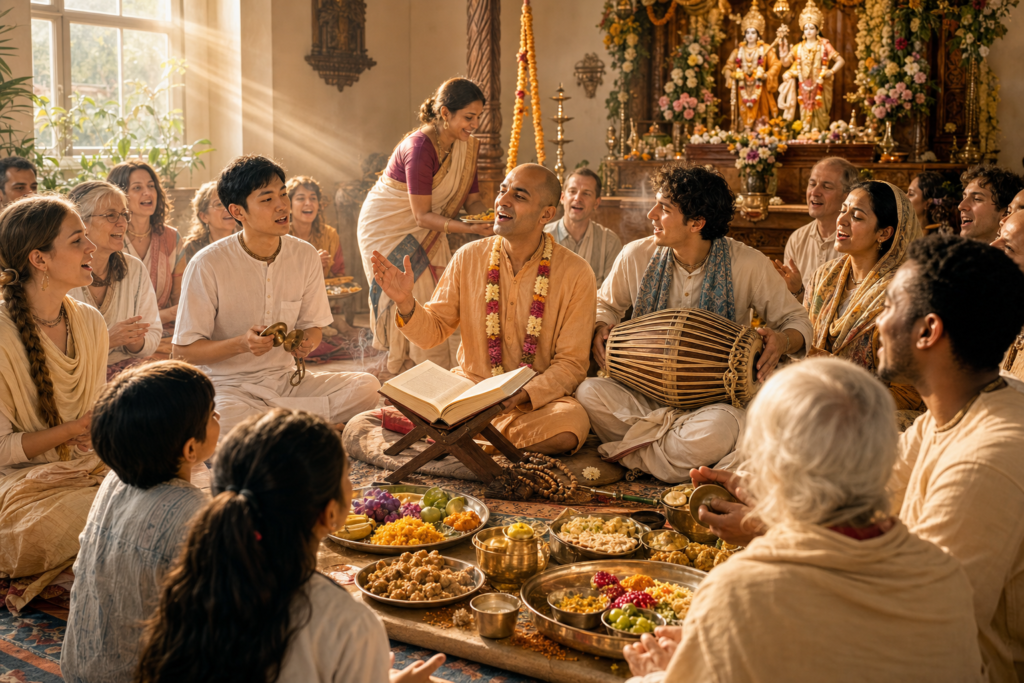
Ritual practice at the temple often centers on Sri Chakra worship, integrating mantra recitationsuch as Lalita Sahasranamaoffering (naivedya), light (deepa), and sound (bell, conch) into a cohesive sadhana. Navavarana puja, where performed, honors each enclosure of the Sri Chakra, acknowledging the layered journey from multiplicity to the bindu of non-dual awareness. For many visitors, the ritual rhythm fosters meditative focus, emotional equilibrium, and a felt sense of protection and clarity.
The symbolism of Sri Chakra is not merely metaphysical; it offers a practical framework for inner transformation. By contemplating the yantra’s precise geometry, practitioners cultivate one-pointedness, while the bindu becomes a cue for stillness and insight. This integrative approach resonates broadly across dharmic traditions: Buddhists may recognize parallels with mandala contemplation; Jains may appreciate the disciplined inwardness and ethical refinement; Sikhs may find consonance with the focus and remembrance vital to Naam. Such convergences highlight shared contemplative valuesattention, compassion, and truth-seekingfostering unity among Hinduism, Buddhism, Jainism, and Sikhism.
As a living temple within India’s rich Cultural Heritage, Sri Nimishamba Temple offers both historical continuity and contemporary relevance. The riverside setting near Mandya nurtures a reflective atmosphere where sacred form, mantra, and geometry reinforce one another. Visitors commonly report that the Devi’s presence, coupled with Sri Chakra worship, supports resilience in daily life, clarity in decision-making, and the cultivation of peace. In this way, the temple functions as a bridge between tradition and modernity, inviting all who arrive to experience the Universal Mother’s grace through disciplined, compassionate practice.