
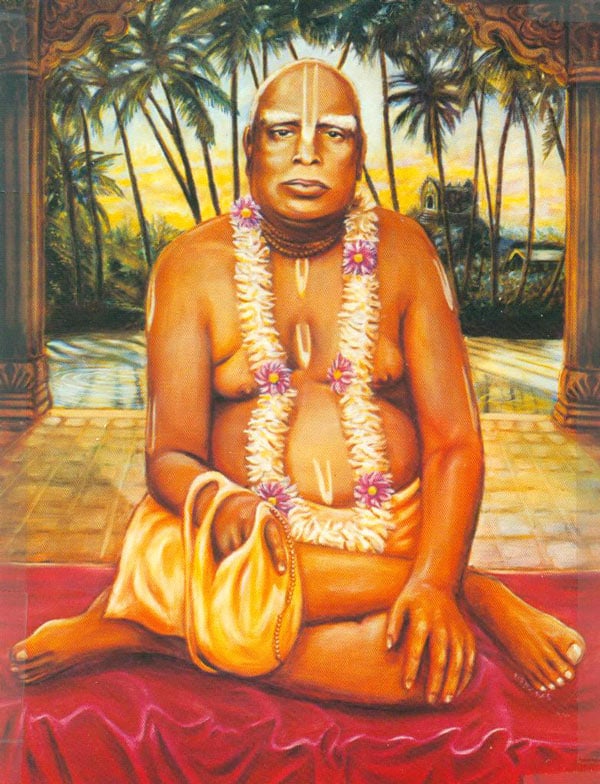
Source and perspective. This remembrance develops the themes of a lecture given by HH Tamal Krishna Goswami on 11th July 1991 in Dallas. The discourse commemorated the disappearance of Srila Bhaktivinoda Thakura and Srila Gadadhara Pandit while examining the intellectual, devotional, and organizational foundations that enabled Gaudiya Vaishnavism to reach a global audience. Its central argument is that the modern Krishna consciousness movement cannot be understood merely as a twentieth-century institution. It rests upon a much longer process of theological preservation, sacred-geographical research, literary production, congregational organization, and disciplined spiritual practice.
A shared day of remembrance. Gaudiya Vaishnava calendars commemorate Srila Bhaktivinoda Thakura on the same disappearance observance as Srila Gadadhara Pandit, the intimate associate of Sri Chaitanya Mahaprabhu. Bhaktivinoda Thakura worshipped Gaura Gadadhara, and the convergence of the two commemorations is therefore regarded within the tradition as spiritually meaningful. It joins the servant with the form of divinity he cherished and places his historical mission within the devotional current inaugurated by Sri Chaitanya Mahaprabhu and his associates.
What disappearance means. In Vaishnava usage, disappearance is not simply a euphemism for death. It expresses the conviction that a spiritually perfected person does not cease to exist when no longer physically visible. The person remains present through teachings, sacred memory, institutions, disciples, songs, and living practices. A disappearance observance consequently combines grief with gratitude. It recalls the vulnerability of embodied life while asking whether later generations are faithfully carrying forward the responsibilities entrusted to them.
History and theology in proper relation. An academically responsible account distinguishes different kinds of claims without dismissing any of them. Dates, publications, official service, correspondence, institutions, and geographical investigations belong to the historical record. Statements that Srila Bhaktivinoda Thakura is an eternal associate of Sri Sri Radha Krishna, that he descended to broadcast Chaitanya Mahaprabhu’s teachings, or that divine providence arranged particular events are theological affirmations made from within Gaudiya Vaishnava faith. The distinction clarifies how the tradition understands him: simultaneously as a documented nineteenth-century intellectual and as a participant in an eternal sacred mission.
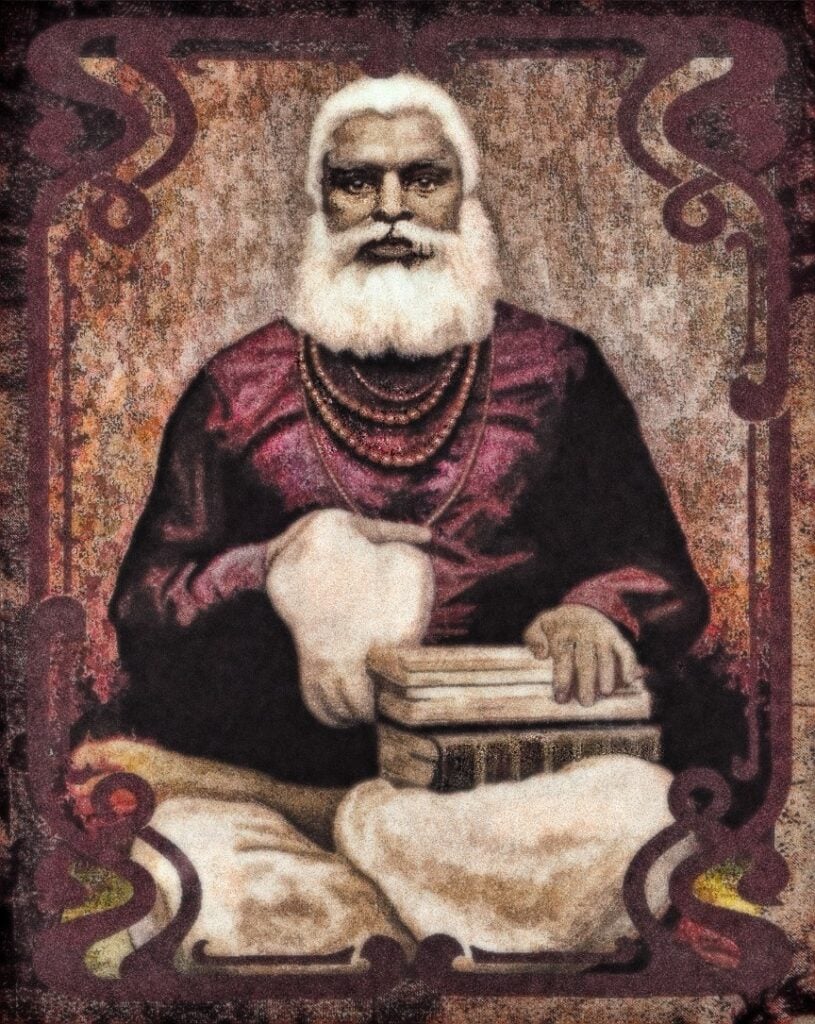
A scholar, public servant, and practitioner. Born Kedarnath Datta in 1838, Srila Bhaktivinoda Thakura lived during a period of extraordinary political and cultural change in Bengal. He served as a government official, maintained family responsibilities, studied widely, wrote prolifically, and pursued an increasingly deep devotional life. His disappearance in 1914 closed a visible career that had connected household spirituality, public administration, literary scholarship, pilgrimage, congregational teaching, and personal contemplation. This combination is essential to his legacy because it demonstrates that sustained spiritual discipline need not be separated from intellectual rigor or social responsibility.
The challenge of colonial modernity. Nineteenth-century Bengal was shaped by British rule, missionary criticism, new educational institutions, print culture, social reform movements, and intense debates about religious authority. Hindu traditions were frequently interpreted through colonial categories that treated them either as irrational survivals or as material to be reconstructed according to European expectations. At the same time, inherited communities faced internal problems of fragmented authority, weak education, and practices presented in the name of devotion without adequate scriptural grounding. Bhaktivinoda Thakura responded by neither abandoning tradition nor retreating from modern intellectual life. He used contemporary tools to articulate a deeply rooted Vaishnava theology.
Education directed toward discernment. Bhaktivinoda Thakura’s broad education exposed him to Bengali and Sanskrit literature, English-language learning, modern philosophical discussion, and comparative religious thought. That breadth did not produce an indiscriminate mixture of doctrines. It sharpened his evaluation of their underlying claims about the self, God, knowledge, ethics, and liberation. After studying the teachings of Lord Chaitanya, he concluded that they offered the most complete account of transcendental knowledge and divine love. The conclusion was confessional, but the route toward it involved comparison, argument, textual study, and sustained reflection rather than inherited identity alone.
Revival rather than invention. Srila Bhaktivinoda Thakura did not present himself as the creator of a new religious system. His work sought to recover, clarify, and extend the mission of Sri Chaitanya Mahaprabhu. Revival in this context meant several related tasks: identifying authoritative sources, explaining doctrine in language accessible to contemporary readers, distinguishing pure devotional service from exploitation or sentimentality, restoring awareness of sacred places, training practitioners, and constructing networks through which the holy names of Lord Krishna could be shared. The modern form of the mission was innovative, but its theological center remained continuous with the Gaudiya Vaishnava parampara.
Following the organizational intelligence of the Goswamis. Tamal Krishna Goswami compared Bhaktivinoda Thakura’s work with that of Srila Jiva Goswami and the six Goswamis of Vrindavan. After the visible departure of Sri Chaitanya Mahaprabhu, the Goswamis systematized his teachings, established philosophical conclusions through careful study of Vedic literature, developed institutions of worship, and identified places associated with Krishna’s divine pastimes in Vrindavan Vraja Dhama. Bhaktivinoda Thakura performed an analogous service for Navadvipa. The comparison concerns method as much as sanctity: textual scholarship, geographical recovery, theological synthesis, practical organization, and personal renunciation were made mutually supportive.
Recovering the birthplace of Sri Chaitanya Mahaprabhu. By Bhaktivinoda Thakura’s time, disagreement surrounded the precise location of Chaitanya Mahaprabhu’s appearance. Changes in the Ganges river system, shifting settlements, and competing local traditions had complicated the question. Gaudiya accounts describe Bhaktivinoda Thakura examining older geographical information, local testimony, scriptural descriptions, and historical indications in order to identify the site at Mayapur. His research was not an antiquarian exercise. The birthplace served as the spatial center of a theological history, and recovering it made that history tangible for pilgrims and future institutions.
Confirmation through Jagaanatha das Babaji. The original account names Bhaktivinoda Thakura’s revered elder as Jagaanatha das Babaji, commonly rendered Jagannatha das Babaji. When the aged saint was brought to the proposed birthplace, Gaudiya tradition records that he manifested extraordinary joy and confirmed the location. Historical investigation and saintly recognition thus function together in the community’s memory. Documentary and geographical evidence addressed the public question of place, while the response of an esteemed practitioner supplied devotional confirmation. Neither dimension is fully interchangeable with the other, but together they explain why the identification became authoritative within the tradition.
Sacred geography as practiced memory. Mayapur was not important merely because an event had once occurred there. In Gaudiya Vaishnava thought, a dhama is a continuing field of divine presence approached through hearing, remembrance, pilgrimage, worship, and service. Bhaktivinoda Thakura’s work therefore transformed geography into an educational medium. Pilgrims could encounter the narratives of Chaitanya Mahaprabhu through places, routes, temples, songs, and communal recitation. This approach also preserved cultural memory at a time when rapid social and physical changes threatened to obscure it. The recovery of sacred geography became both a devotional practice and a durable form of heritage preservation.
Sri Nama Hatta as a mission architecture. One of Bhaktivinoda Thakura’s most influential contributions was the revival and systematic expansion of Sri Nama Hatta, the marketplace of the holy name. The market metaphor comes from the preaching current associated with Nityananda Prabhu. Bhaktivinoda Thakura translated it into a distributed congregational network through which devotees could gather locally, chant, study, receive guidance, and share Krishna consciousness. Instead of limiting religious life to a small scholarly or monastic class, the model created meaningful roles for householders and village communities. It was spiritually traditional and organizationally adaptive.
The price was sincerity. The metaphor of a transcendental marketplace deliberately overturns ordinary commercial logic. The holy names are not commodities, and divine grace cannot be purchased with wealth, prestige, caste position, or institutional influence. The required price is sincerity: a genuine longing to chant and glorify Lord Krishna with purity and devotion. This principle carries a demanding ethical implication. Religious access should not be sold to the powerful, but neither should sacred practice be treated casually. Openness and seriousness must operate together, allowing participation while cultivating responsibility.
The sweeper of the marketplace. Srila Bhaktivinoda Thakura described himself as a sweeper in the market of the holy names. The image expresses humility, but it also defines a precise form of leadership. A marketplace remains healthy only when someone removes what has accumulated, protects participants, and preserves the conditions under which honest exchange can occur. In spiritual life, the corresponding impurities include vanity, manipulation, sectarian arrogance, exploitation, careless doctrine, and the use of devotion for material advantage. By teaching, writing, organizing, and living with discipline, he sought to keep the path of pure devotional service intelligible and trustworthy.
Purity as an integrated discipline. Bhaktivinoda Thakura’s concern for purity should not be reduced to social exclusion or external respectability. In Gaudiya theology, purity concerns motive, attention, conduct, philosophical understanding, and dependence upon divine grace. A practice may appear devotional while remaining shaped by the desire for recognition, control, wealth, or sensual gratification. The sweeper metaphor therefore begins with the practitioner’s own heart. Institutional safeguards matter, but they cannot substitute for humility, honest self-examination, ethical conduct, and service. His model connects doctrinal precision with moral accountability.
A scalable form of community. Sri Nama Hatta anticipated a central challenge later encountered by global religious movements: how to expand without making every participant dependent upon one physical center. Local gatherings provided repeated practice, personal relationships, and accessible instruction, while connection to teachers and shared texts maintained doctrinal coherence. The model was neither completely centralized nor loosely individualistic. It functioned as a network held together by common worship, teachings, standards, and service. This balance helps explain why the approach remained useful to later Gaudiya missions, including the International Society for Krishna Consciousness.
Print as an instrument of transmission. Bhaktivinoda Thakura recognized that print could extend teaching beyond the limits of oral instruction and pilgrimage. Books, periodicals, essays, songs, and correspondence allowed complex theology to circulate among householders, intellectuals, practitioners, and readers who might never meet him personally. Print also established a stable record against which claims could be examined. His use of Bengali made sophisticated ideas available to a wider regional audience, while Sanskrit learning preserved continuity with foundational texts and English-language communication opened a path toward international engagement.
The 1896 international gesture. In 1896 Bhaktivinoda Thakura published the English booklet Chaitanya Mahaprabhu: His Life and Precepts and sent copies abroad, including to McGill University in Canada. The act was modest in material scale but ambitious in conception. It presented Sri Chaitanya Mahaprabhu not as an obscure regional figure but as a teacher whose account of divine love deserved global consideration. The same year witnessed the appearance of His Divine Grace A. C. Bhaktivedanta Swami Prabhupada, later the founder-acharya of the International Society for Krishna Consciousness. Historical analysis treats these as distinct events; devotional memory perceives a meaningful continuity between them.
A prayer for assistance. As the mission expanded, Bhaktivinoda Thakura prayed that Lord Krishna would send an empowered associate to help advance it. The lecture describes the answer as Srila Bhaktisidhanta Saraswati, more commonly standardized as Srila Bhaktisiddhanta Saraswati Thakura, and calls him a ray of Vishnu. Born Bimala Prasada, he became an exacting scholar, renunciant, teacher, and institutional organizer. The theological language of divine response conveys more than parental pride: it presents his appearance as part of a mission extending beyond one lifetime.
From vision to disciplic infrastructure. Srila Bhaktisiddhanta Saraswati transformed principles cultivated by Bhaktivinoda Thakura into a disciplined preaching institution through the Gaudiya Math. He emphasized education, publication, deity worship, public teaching, and the responsibility to communicate beyond inherited social boundaries. Srila Prabhupada, his disciple, later carried these priorities across oceans and established communities, temples, farms, publishing projects, and educational programs around the world. The resulting sequence is clear: Bhaktivinoda Thakura renewed the intellectual and missionary vision, Bhaktisiddhanta Saraswati strengthened its institutional form, and Srila Prabhupada developed an international movement capable of sustained global activity.
Prophecy and its interpretation. Gaudiya accounts preserve expectations that a great personality would spread Krishna consciousness throughout the world and that a remarkable temple would arise in the heart of Navadvipa, radiating spiritual light globally. Nityananda Prabhu and Srila Bhaktivinoda Thakura are associated with this prophetic horizon. Later devotees understood Srila Prabhupada’s worldwide mission and the emergence of major institutions at Mayapur as fulfillments of that expectation. Academic caution identifies this as a traditional interpretation; devotional consciousness experiences it as evidence that generations separated by time were cooperating within one providential design.
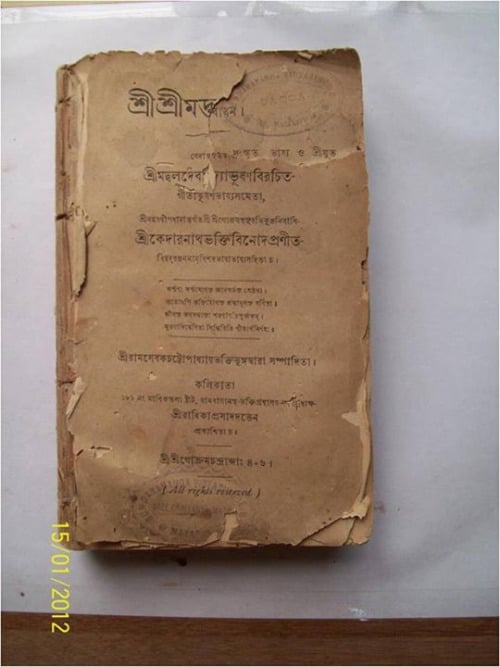
A substantial literary inheritance. Bhaktivinoda Thakura’s contribution cannot be measured only through institutions. Works such as Sri Krishna-samhita, Chaitanya-siksamrita, Jaiva-dharma, Harinama-cintamani, Navadvipa-dhama-mahatmya, Saranagati, and his numerous songs address philosophy, practice, sacred geography, spiritual psychology, prayer, and the stages of devotion. He moved between analytical prose, narrative, poetry, and congregational song because each form performs a different educational function. Argument clarifies doctrine, narrative places doctrine within lived choices, and song carries theology into memory and emotion.
The technical structure of devotion. His presentations repeatedly clarify the Gaudiya framework of sambandha, abhidheya, and prayojana: knowledge of the relationships among the individual self, the world, and the Supreme; the practices appropriate to those relationships; and the ultimate goal of pure love of God. This structure prevents spirituality from becoming a collection of disconnected sentiments. Practice follows from an account of reality, and the goal gives practice its direction. The individual self is understood as eternally related to Lord Krishna, devotional service is the means of awakening that relationship, and divine love is its mature fulfillment.
Unity and distinction. The philosophy of Sri Chaitanya Mahaprabhu is often expressed as acintya-bhedabheda, inconceivable simultaneous difference and non-difference. The individual self and the cosmos depend upon the Supreme and participate in divine energy, yet they do not lose all distinction. Bhaktivinoda Thakura used this framework to avoid both radical separation from God and an interpretation in which personal identity, relationship, and devotion become ultimately unreal. Love requires relationship, and relationship requires meaningful distinction; dependence upon the divine simultaneously grounds a deeper unity.
The science of the holy name. For Bhaktivinoda Thakura, chanting is not merely vocal repetition or a technique for temporary calm. Gaudiya Vaishnavism teaches that the holy name and Lord Krishna are non-different, although realization of that truth unfolds according to grace, attention, conduct, and freedom from offences. His analysis distinguishes inattentive or obscured chanting from increasingly clear and loving remembrance. This makes nama-sankirtana both universally accessible and spiritually exacting. No elaborate qualification is required to begin, yet the practice gradually asks for the transformation of speech, intention, relationships, and character.
Surrender as active moral formation. The devotional principle of saranagati includes accepting what supports bhakti, rejecting what obstructs it, trusting divine protection, depending upon the Lord as maintainer, offering the self, and cultivating humility. These are not passive attitudes. They shape decisions concerning work, community, consumption, speech, and responsibility. Bhaktivinoda Thakura’s own life as a householder and public official made this integration especially relevant. Spiritual surrender did not excuse neglect of ordinary duties; it redirected those duties toward service and ethical accountability.
The inward depth of his later writings. Alongside public scholarship and organization, Bhaktivinoda Thakura disclosed an intensely contemplative devotional identity. In some writings he describes meditation upon his original spiritual form as a maidservant unto Radharani, serving under the guidance of her associates and servants. Within Gaudiya theology, this belongs to the esoteric culture of loving service to Sri Radha Krishna and is approached through qualified guidance, purification, and fidelity to the established path. Its presence reveals that his institutional energy arose from inward devotion rather than administrative ambition alone.
Accessibility without simplification. A defining achievement of Bhaktivinoda Thakura was his ability to explain the science of devotion so that ordinary readers could understand it without stripping it of philosophical depth. He wrote for people living amid employment, family obligations, intellectual uncertainty, and social change. This remains one of the most relatable aspects of his legacy. Many people do not lack spiritual interest; they lack a coherent path that connects insight with daily practice. His work supplies concepts, songs, habits, communities, and goals capable of making that connection concrete.
Conviction without sectarian contempt. Bhaktivinoda Thakura’s firm commitment to Gaudiya Vaishnavism need not be interpreted as hostility toward other dharmic traditions. Hindu, Buddhist, Jain, and Sikh paths differ in metaphysics, authority, ritual, and accounts of liberation, and those differences deserve accurate representation. They can nevertheless meet through shared commitments to disciplined practice, compassion, truthfulness, self-restraint, service, and the rejection of coercion. Genuine unity does not erase theological distinctions. It establishes the respect required for serious dialogue while allowing each tradition to preserve its integrity.
The continuing relevance of his method. Several practical principles emerge from his life. Scholarship should serve realization rather than vanity. Institutions should distribute spiritual opportunity without commercializing it. Leaders should regard themselves as custodians and sweepers rather than owners of sacred inheritance. Innovation should improve communication without severing continuity with scripture and parampara. Sacred places should be protected through both research and lived practice. Global outreach should begin with sincerity, personal discipline, and respect for the people being addressed.
Remembrance as responsibility. A disappearance day can easily become ceremonial nostalgia, but Bhaktivinoda Thakura’s example resists that reduction. His legacy asks whether teachings are being studied carefully, whether chanting is transforming conduct, whether institutions remain accountable, and whether spiritual knowledge is reaching people in forms they can understand. The emotional power of the observance lies precisely in this movement from admiration to responsibility. Gratitude becomes credible when it produces service.
An enduring foundation for global Krishna consciousness. Tamal Krishna Goswami’s 1991 lecture concludes that the modern movement rests upon the teachings, processes, methods, and missionary outlook inaugurated by Srila Bhaktivinoda Thakura. That judgment is supported by the visible continuity linking his scholarship, Mayapur research, Sri Nama Hatta networks, international publication, prayer for assistance, and inner devotional life with the later work of Srila Bhaktisiddhanta Saraswati and Srila Prabhupada. The scale changed dramatically, but the underlying design remained recognizable.
A final devotional reflection. On the disappearance of Srila Bhaktivinoda Thakura, devotees remember more than a distinguished historical personality. They remember a servant whose scholarship protected faith, whose humility strengthened leadership, whose research restored sacred memory, and whose vision carried bhakti beyond the boundaries of his own place and time. The traditional prayer is that his blessings may enable successive generations to become servants of his servants and to advance responsibly on the path of spiritual life. The original lecture transcript was submitted by Sravaniya devi dasi.
Inspired by this post on Dandavats.





Leave a Reply
You must be logged in to post a comment.