
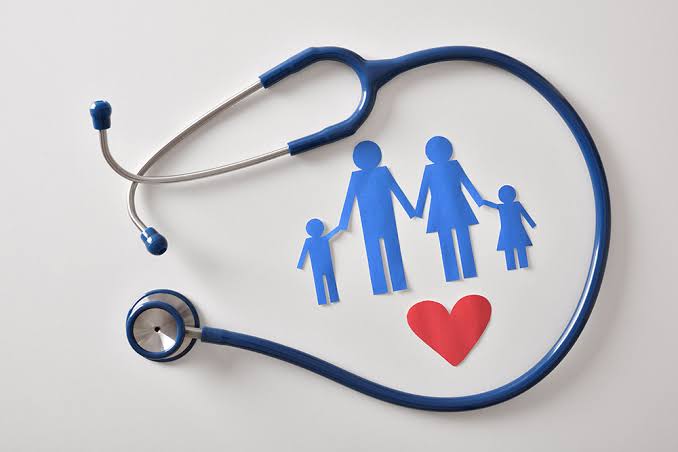
"The good physician treats the disease; the great physician treats the patient who has the disease." — William Osler
The Memory of Simpler Healthcare
There was a time when daily life appeared less complicated, and health itself seemed less burdened by suspicion. Food was simpler, water was trusted, air pollution was not a constant subject of conversation, and public life carried a degree of confidence that now feels almost historical. A traveller could step down at a railway station, fill a ‘surahi’ or bottle from a tap, and continue the journey without calculating the risk of illness. Platform food was often modest, fresh, and less oily; cases of ‘food poisoning’ were not part of routine travel anxiety.
The deeper memory is not merely about water, food, or railways. It is about trust. A co-passenger could be spoken to without immediate suspicion. Home-cooked food could be shared. Luggage still required care, but the ordinary person did not travel with the same psychological alarm that many carry today. Fraud, manipulation, and distrust have entered social life with such force that even innocent interactions are now filtered through caution.
Healthcare has not escaped this larger erosion of trust. Modern medicine has achieved extraordinary scientific progress, but the patient’s experience has also become more fragmented, expensive, and impersonal. The ordinary family often hears stories of unnecessary blood tests, repeated scans, expensive panels, and complex investigations that may be clinically justified in some cases but appear excessive in others. For many patients, the central problem is not only cost; it is the uncertainty of not knowing who is being prudent, who is being defensive, and who is being commercially driven.
This concern is not limited to minor ailments. Even in serious conditions such as heart disease, the debate over medical overuse has become significant. A 2023 analysis reported by Axios, based on work from the Lown Institute, found that more than one in five coronary stents placed in Medicare beneficiaries between 2019 and 2021 met criteria for overuse. Such findings do not mean that stents are unimportant; in the right clinical situation, they can be lifesaving. The point is narrower and more serious: when technology is used without sufficient clinical need, it can expose patients to risk, financial strain, and fear without proportionate benefit.
Open-heart surgery, advanced imaging, endoscopy, and high-end laboratory testing belong to the same ethical landscape. Each can be necessary, even urgent, when properly indicated. Each can also become part of a medical marketplace where patients feel processed rather than cared for. It would be unfair to place every doctor or hospital in one basket, just as it is unfair to assume that every politician is corrupt. Yet the trust quotient has fallen, and once trust declines, even good advice begins to sound suspicious.
The Family Doctor of Earlier Years
In that older world, the family doctor occupied a distinctive social and medical position. He was often a general practitioner without an impressive display of specialist degrees, but his authority came from continuity, familiarity, and practical judgment. He was not only a clinician; he was a friend, philosopher, and guide. He knew the family, its habits, its illnesses, its anxieties, its economic constraints, and often its unspoken stresses.
A visit from such a doctor had its own reassuring grammar. He might arrive at home with a large leather bag containing the usual medical paraphernalia. He would check the pulse, tongue, throat, eyes, and abdomen. With a stethoscope, he would examine the chest and back, tapping lightly and asking the patient to inhale and exhale. If fever was suspected, he would use a thermometer and glance at his wristwatch with the concentration of a person who trusted both science and observation.
The consultation was simple but not casual. After the examination, he would explain what appeared to be wrong, write a prescription on a piece of paper, pack his bag, and leave behind something that no machine can dispense: reassurance. The sentence ‘don’t worry you will be fine in a week. Eat normal food, no spices or cold drinks.’ was not merely a medical instruction. It was a stabilising social act. It helped the family move from panic to patience.
Respect surrounded the relationship. As he left, a family member might carry his bag to the scooter, settle his fees, and see him off. ‘Beta come and collect some medicine from the clinic later’ he might say, blending professional care with familiar affection. The clinic itself was often modest: a two-person arrangement of doctor and compounder, with the compounder sitting on a wooden stool in a small rear cabin, preparing mixtures and powders with painstaking attention, visible through a large hole in a wooden partition that served as a window.
The medicine bottle was also part of the memory. A flattish glass bottle held the mixture. The prescription label was often "Gummed" or "water-activated", with dried glue on the back. It would be licked or dampened with a wet sponge and fixed to the glass bottle. Each notch on the bottle indicated one ‘khuraak’ or dose. A cork served as the cap. The process was humble, physical, and local, yet it carried the warmth of human care.
In such a setting, a specialist was not the first point of contact. Unless heavens fall, one did not rush to a specialist. The general practitioner absorbed the first wave of worry, identified common illnesses, watched for danger signs, and referred only when the case demanded expertise beyond primary care. This was not anti-specialist sentiment. It was the recognition that a health system needs order, judgment, and proportion.
"Wherever the art of medicine is loved, there is also a love of humanity." — Hippocrates
Why the Family Doctor Still Matters
The family doctor remains vital precisely because modern healthcare has become more advanced. Specialists are indispensable for deep work in cardiology, neurology, dermatology, orthopaedics, oncology, endocrinology, and many other fields. Their expertise saves lives. Yet a society made only of specialists can become a maze for the patient. The family doctor provides the map.
In today’s medical chakravyu, the patient often moves from one consultation to another without a single professional holding the whole story. One doctor evaluates the heart, another the kidneys, another the skin, another the joints, and another the mind. Each sees a part of the patient. The family doctor is trained by experience and continuity to see the whole human being: medical history, family genetics, diet, sleep, occupation, finances, emotional stress, cultural habits, and the silent worries that patients may not mention in a rushed specialist visit.
Public health literature describes strong primary care as first-contact, continuous, comprehensive, coordinated, and person-focused care. The World Health Organization’s work on primary health care similarly emphasises care that reaches people close to where they live, includes prevention and treatment, and supports well-being across the life course. This is not nostalgic romanticism. It is a practical model for reducing confusion, improving prevention, and ensuring that patients do not become lost inside an expensive system.
A family doctor functions as the first line of defence. In technical terms, he is like a front-end processor of a main frame computer: he filters, organises, prioritises, and routes information. Not every headache requires an MRI. Not every cough requires a CT scan. Not every fever requires a battery of expensive tests on the first day. At the same time, a good family doctor must know when a simple-looking symptom is not simple and when delay can be dangerous.
This balancing role is difficult and valuable. Over-investigation can harm through cost, anxiety, incidental findings, radiation exposure, and unnecessary procedures. Under-investigation can harm through missed diagnosis. The family doctor’s craft lies in judging risk over time, using clinical examination, history, and follow-up to decide what must be acted on immediately and what can be watched safely.
Continuity Is a Clinical Instrument
Continuity of care is not merely sentimental. It is a clinical instrument. A specialist may meet a patient once, but a family doctor sees patterns over years. A small rise in blood pressure, a gradual change in weight, repeated acidity during periods of office stress, a persistent change in mood, declining sleep, or unusual fatigue may appear minor in isolation. In continuity, these details become diagnostic clues.
Research on continuity of care has associated sustained doctor-patient relationships with better outcomes, including improved patient satisfaction, more appropriate use of services, and in some studies lower mortality. The mechanism is understandable. When a doctor knows the patient, communication improves. When communication improves, adherence improves. When adherence improves, chronic diseases such as hypertension, diabetes, asthma, and thyroid disorders are less likely to drift into crisis.
The family doctor also understands what is normal for a particular person. A blood pressure reading, a pulse rate, a body weight, a sleep complaint, or a mood change is never only a number. It belongs to a life. The same symptom in two different people may require different reasoning because the context is different. A person with a demanding job, poor sleep, erratic food habits, and high stress may need lifestyle correction and monitoring; another with the same complaint may need urgent referral.
This is where the image of the family doctor as a mother knowing her child becomes meaningful. The point is not gendered sentiment. It is attentive familiarity. A mother notices when a child is "not right" even before a formal symptom appears. Similarly, a trusted primary doctor may notice subtle deviation before it becomes obvious to a fragmented system.
The Specialist Maze and the Need for Coordination
For many families, moving among specialists feels like going from one window to another in a government department: tareek pe tareek. The patient may go from Dr Sharma to Varma, from Kohli to Desai, and after several visits may no longer remember who said what. Reports accumulate, prescriptions multiply, and the household becomes a small archive of files, scans, and bills.
The public frustration behind the phrase ‘bhai inke chakkar main phass gaye to nikalna mushkil hai’ (once you get into their net it is difficult to get out) must be understood carefully. It is not a dismissal of specialist expertise. It is a description of how patients experience fragmentation when no one coordinates the whole journey. A good family doctor reduces this burden by interpreting reports, explaining risk, reviewing prescriptions, and helping the patient understand which consultation is urgent, which is optional, and which may be unnecessary.
This coordination is especially important for older patients and those with multiple chronic conditions. A patient with diabetes, hypertension, kidney disease, arthritis, and anxiety may receive medicines from several specialists. Without coordination, drug interactions, duplicate prescriptions, conflicting dietary advice, and avoidable investigations can occur. The family doctor, when competent and attentive, becomes the person who keeps the portfolio in order.
The analogy with a financial advisor is useful. A household does not usually buy every stock, every bond, every insurance product, and every gold instrument without some view of the total portfolio. The medical advisor performs a similar function for health. He does not replace the cardiologist, surgeon, endocrinologist, or neurologist; he helps the family know when those experts are needed, how their advice fits together, and what the patient must do after leaving the specialist’s chamber.
Prevention, Lifestyle, and Longevity
The family doctor’s most powerful work is often invisible because it prevents events that never happen. Vaccinations, blood pressure control, diabetes screening, tobacco cessation, weight management, sleep discipline, safe exercise, nutrition, mental health recognition, and timely cancer screening all belong to this preventive domain. Hospitals become necessary when prevention fails, disease advances, or emergencies strike. A strong primary-care relationship aims to keep the patient away from avoidable hospitalisation in the first place.
This approach also resonates with the broader Indian understanding of well-being, where health is not limited to the absence of disease. Dharmic traditions across Hinduism, Buddhism, Jainism, and Sikhism have long valued discipline, moderation, compassion, self-restraint, service, and respect for life. These are not substitutes for evidence-based medicine. Rather, they provide a cultural foundation for preventive health: mindful eating, reduced excess, emotional balance, community support, and responsibility toward the body as an instrument of duty and service.
In that sense, the family doctor’s role is not only biomedical but also social. He can speak to the patient in a language the family understands. He can translate scientific advice into daily practice: how much salt to reduce, how to walk after dinner, how to manage festivals without neglecting diabetes, how to care for elders without exhausting caregivers, and how to distinguish a passing discomfort from a warning sign.
Healthcare becomes humane when it respects both evidence and lived reality. A diet plan that ignores the kitchen will fail. A diabetes plan that ignores festivals will fail. A blood pressure plan that ignores job stress will fail. A family doctor, precisely because he knows the family’s rhythm, is often better placed to make medical advice realistic.
The Ethics of Listening
Listening is not a soft skill attached to medicine; it is one of medicine’s diagnostic tools. Many illnesses reveal themselves through a patient’s story before they appear in a report. Pain, fatigue, dizziness, appetite, bowel habits, sleep, fear, grief, work pressure, family conflict, and financial stress require attentive listening. A doctor who interrupts too quickly may miss the true complaint. A doctor who listens well often saves both time and testing.
The older family doctor had time, or at least created the impression of time. That impression mattered. Patients disclosed more when they felt seen. Families accepted advice more readily when they believed the doctor’s concern was genuine. Trust did not eliminate the need for scientific reasoning; it made scientific reasoning easier to follow.
Modern systems must recover this value without rejecting modern advances. Electronic records, telemedicine, diagnostic imaging, laboratory science, and specialist care have improved medicine greatly. The problem is not technology. The problem arises when technology replaces judgment, when reports replace conversation, and when commercial incentives quietly shape clinical decisions. The family doctor’s disciplined presence can restore proportion.
Trust as a Public Health Asset
Trust is priceless because it reduces fear. In today’s con world, the patient needs someone whose advice is not perceived as a sales pitch. Once a family knows it is in the right hands, there is ‘sukoon’ or comfort. This comfort is not blind faith. It is confidence built through competence, honesty, availability, and the willingness to refer when another pair of right hands is needed.
A trustworthy family doctor also protects the dignity of the patient. He explains without frightening. He refers without abandoning. He treats common ailments without arrogance and recognises serious disease without delay. He does not pretend to know everything. His value lies partly in knowing the limits of his own role and guiding the patient to the right specialist at the right time.
This model is especially relevant for Bharat, where families often make healthcare decisions collectively, elders may depend on adult children, and medical costs can alter household finances. A family doctor who knows the family’s circumstances can help them choose care that is clinically sound and economically sensible. This is not rationing by neglect; it is responsible navigation.
The challenge is to rebuild the institution of the family doctor for the present age. The old leather bag and corked mixture bottle may not return, nor should nostalgia become a substitute for modern standards. What must return is the principle: a physician who knows the patient over time, manages common disease competently, prevents avoidable illness, coordinates specialist care, and sustains trust through listening.
Such a doctor is not a relic of yester years. He is a necessary answer to the complexity of contemporary healthcare. In an age of advanced machines, expensive procedures, and crowded polyclinics, the most stabilising figure may still be the doctor who knows the family, remembers the history, listens before prescribing, and treats the patient who has the disease.
"A doctor’s greatest tool is not the stethoscope. It is the ability to listen when a patient speaks."
— Knya
Inspired by this post on Hindu Post.


Leave a Reply
You must be logged in to post a comment.