
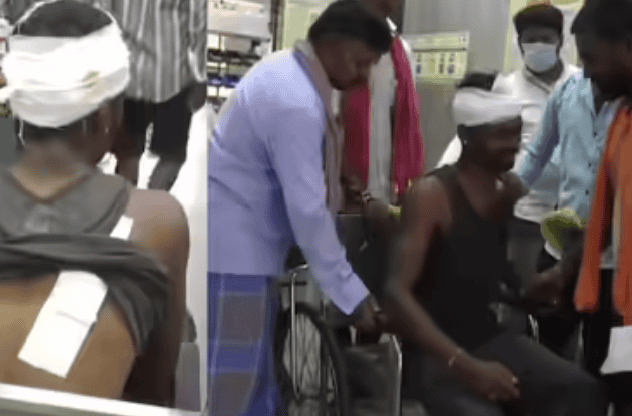
Kara Hunnime, a traditional agrarian festival closely associated with North Karnataka’s rural life, became the centre of public concern after a bull procession in Naregal village of Hangal taluk, Haveri district, turned violent on 29 June 2026. Reports from The Times of India and other media accounts stated that eight people were injured after an argument over bursting firecrackers near a mosque escalated into a clash. Police said the situation was brought under control after additional personnel were deployed in the village, and the injured were taken for medical treatment.
The incident requires careful and disciplined narration because it touches faith, rural custom, public order, and inter-community relations at the same time. Kara Hunnime is not merely a procession or a seasonal village gathering. It is part of an older agricultural worldview in which cattle, soil, rainfall, labour, and community cooperation are treated as sacred elements of rural survival. For farming families, the decoration of bulls and calves, the offering of prayers, the gathering of neighbours, and the public movement through village streets carry emotional significance that extends beyond ritual form.
According to available reports, the procession involved decorated bull calves being taken through the village as part of Kara Hunnime celebrations. When firecrackers were burst near a mosque, a verbal disagreement reportedly began between individuals and then widened into a violent confrontation. Police accounts cited in media reports described the clash as arising from a quarrel that escalated, while also stating that the exact sequence of events was being examined through CCTV footage, mobile phone videos, and eyewitness statements. This distinction matters: public anger may form quickly, but legal accountability must rest on verifiable evidence.
Several reports and political responses alleged that sharp weapons were used during the violence. The most serious public claims included severe injuries to festival participants, including farmers, and these allegations intensified concern among Hindu families in the region. At the same time, responsible public discussion must separate confirmed police findings from allegations made during political or social media reactions. The available public record confirms eight injuries, the registration of criminal cases, the deployment of additional police, and an ongoing investigation into those allegedly involved.
The broader concern is not limited to one village. Religious and cultural processions in India often move through dense shared spaces where temples, mosques, homes, shops, schools, and farms coexist within a short distance of one another. In such environments, crowd management, route planning, sound levels, firecracker use, and police preparedness become practical questions, not merely administrative formalities. When these details are ignored, a small spark can become a serious public-order crisis.
Kara Hunnime is traditionally observed around the full moon day, or Purnima, of the Hindu month of Jyeshtha. In many parts of North Karnataka, it is associated with gratitude toward cattle and agricultural prosperity. Bulls and calves are bathed, decorated with colours and ornaments, marked with turmeric and vermilion, and honoured through puja. The reverence shown toward Gau Mata, bulls, and working cattle reflects a civilisational memory in which animals are not treated merely as economic assets but as companions in cultivation and symbols of abundance.
For rural communities, such festivals also preserve social knowledge. They teach children that agriculture depends on interdependence: the farmer depends on cattle, the cattle depend on care, the village depends on seasonal rhythms, and the community depends on trust. The sight of decorated animals moving through village lanes is therefore not ornamental alone. It is a public expression of gratitude, duty, continuity, and belonging. When violence disrupts such a festival, it wounds not only individuals but also the confidence with which communities practice inherited traditions.
The Naregal violence also reveals the need for a measured vocabulary. It is legitimate to examine whether Hindu festivals are receiving adequate administrative protection, whether processions are being handled with fairness, and whether violent offenders are being prosecuted without delay. It is also necessary to avoid language that turns an investigation into a collective accusation against an entire community. Academic and civic responsibility require naming alleged offenders through evidence, not attributing guilt by identity. This approach protects both justice and social harmony.
Police reportedly registered cases and began collecting digital and eyewitness evidence after the clash. Media reports also stated that 26 individuals were booked in connection with the Naregal incident. These steps are important, but their credibility depends on transparent investigation, timely medical documentation, clear identification of accused persons, and prosecution based on admissible evidence. In cases involving religious processions, delay or selective action can deepen mistrust, while rushed claims can weaken legal outcomes. Both dangers must be avoided.
Political reactions followed quickly. Opposition leaders accused the Karnataka government of failing to maintain law and order and alleged that Hindu festivals were being targeted under a climate of appeasement politics. Such criticism reflects a wider anxiety among many Hindus who feel that traditional festivals, processions, and public religious observances are increasingly vulnerable to disruption. Whether one agrees with every political statement or not, the anxiety itself deserves institutional attention because public confidence is a core element of governance.
At the same time, the path forward cannot be built on anger alone. Dharma-based traditions, including Hinduism, Buddhism, Jainism, and Sikhism, place strong emphasis on restraint, justice, compassion, and social responsibility. A Dharmic response to violence must therefore be firm about accountability while remaining disciplined about truth. It should defend the right of Hindus to celebrate festivals such as Kara Hunnime peacefully, and it should also insist that every community’s place of worship and public dignity be protected under law.
The administrative lessons are concrete. Local authorities should map sensitive procession routes in advance, consult festival organisers and local representatives, regulate firecracker use through clear and uniformly applied rules, deploy trained personnel at vulnerable points, and maintain rapid-response teams during public religious events. Village-level peace committees can be useful only when they are not symbolic. They must meet before major festivals, record route agreements, clarify sound and firecracker protocols, and create channels for immediate intervention when disputes arise.
The social lesson is equally important. A village festival is sustained by trust accumulated over generations. When fear enters that space, families begin to ask whether their children can safely participate, whether elders can walk in processions without anxiety, and whether inherited customs will be treated as legitimate public culture. These questions are emotionally charged because they are rooted in memory. For many families, Kara Hunnime is connected to childhood scenes of cattle being decorated, elders offering blessings, farmers gathering after difficult months, and the village briefly becoming a shared sacred space.
The Haveri incident should therefore be understood as both a law-and-order matter and a cultural warning. If the investigation confirms organised or targeted violence, the law must respond firmly and without political hesitation. If the clash began as an individual quarrel that expanded through panic and provocation, that too must be studied seriously because it shows how fragile public peace can become during crowded religious events. In either case, the rights of festival participants, the safety of residents, and the dignity of all places of worship must be upheld together.
Kara Hunnime continues to represent the Hindu ethos of gratitude toward nature, livestock, labour, and community life. The violence in Naregal should not be allowed to define the festival, but it should compel stronger safeguards for future celebrations. A just response requires medical support for the injured, impartial prosecution of offenders, transparent police communication, and preventive planning for future processions. Public order is not achieved by suppressing tradition; it is achieved by protecting lawful tradition with fairness, foresight, and accountability.
Inspired by this post on Hindu Post.




Leave a Reply
You must be logged in to post a comment.