

This analysis begins with a necessary clarification: acknowledging the weakness of religious hate crime data in India is not the same as denying that religious minorities, Hindu communities, Sikhs, Buddhists, Jains, Christians, Muslims, and others can experience discrimination, intimidation, or violence. The point is narrower and more important. Public claims about genocide, systematic mass persecution, or state-backed religious targeting require a standard of evidence that is consistent, disaggregated, transparent, and comparable across time.
The concern is that rhetoric often moves faster than reality. In political debate, especially outside India, a phrase can harden into a moral verdict before the underlying evidence has been examined. Once that happens, the public conversation no longer asks what happened, where it happened, who was harmed, who was charged, what motive was proven, and whether the pattern is local, regional, national, episodic, or structural. It simply repeats a conclusion.
A revealing example emerged during the run-up to the 2025 Democratic primary in the New York City mayoral race. Candidates were asked a hypothetical question at a public forum: if Indian Prime Minister Narendra Modi held a rally at Madison Square Garden and invited the mayor of New York City to appear with him at a press conference celebrating ties between India and New York, would they accept? Two candidates reportedly answered, simply, “No……”
That moment mattered less because of the individual political answer and more because of what it exposed. India, one of the world’s largest democracies and a deeply plural religious civilization, had been reduced to a symbolic test. The question was not framed around trade, diaspora life, education, technology, counterterrorism, Hindu temples, Sikh gurdwaras, Buddhist centers, Jain communities, Indian Muslims, Indian Christians, or the everyday bonds between New York and India. It was framed around whether proximity to Narendra Modi itself carried a moral stain.
For many members of the Indian diaspora, such moments are not abstract. Families that have built lives in the United States, Canada, the United Kingdom, and elsewhere often find that India is discussed through inherited ideological templates. A country of more than a billion people becomes a handful of charged phrases: “majoritarianism,” “genocide,” “Hindutva,” “persecution,” “minority crisis.” Some of these terms point to real debates. None of them should be used as substitutes for evidence.
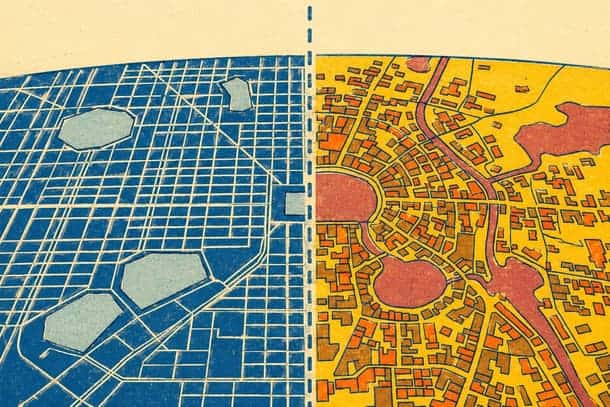
The central technical problem is data. India’s National Crime Records Bureau publishes large-scale crime statistics, including categories such as murder, rioting, offences promoting enmity, crimes against women, crimes against Scheduled Castes and Scheduled Tribes, and other IPC and special-law categories. However, India does not maintain a publicly standardized national hate crime dataset comparable to systems that classify offences by bias motivation, such as religion, race, ethnicity, or sexual orientation. The absence of that category does not prove the absence of hate crimes. It does mean that sweeping claims require caution.
In countries such as the United States, official hate crime reporting attempts to identify a traditional offence, such as assault, vandalism, intimidation, or murder, together with a bias motive. Even there, the data remain imperfect because underreporting, uneven police training, and inconsistent local participation affect the final numbers. The lesson is not that official data are flawless. The lesson is that even imperfect systems benefit from clear definitions, public methodology, and categories that allow citizens to distinguish a criminal incident from a bias-motivated criminal incident.
India’s challenge is more complicated because communal violence, local disputes, caste tensions, political rivalry, land conflict, conversion controversies, social media provocation, mob mobilization, terrorism, and ordinary criminality can overlap. A murder may involve a victim from one religious community and an accused from another, but that alone does not establish a religious hate crime. Conversely, a case may be filed under a general offence even when bias appears to have played a role. Without reliable disaggregation, both minimization and exaggeration become easy.
This is where public language becomes ethically important. Terms such as genocide and systematic persecution are not rhetorical decorations. Genocide, in international law and moral memory, refers to an intent to destroy a protected group in whole or in part. It is associated with the gravest crimes known to humanity. Using such terms without rigorous evidence does not merely criticize a government; it dilutes the precision needed to identify and prevent actual mass atrocity.
At the same time, statistical caution must never become moral indifference. If a Muslim family is attacked, if a Hindu temple is vandalized, if a Sikh student is harassed, if a Christian prayer gathering is unlawfully disrupted, if a Jain or Buddhist institution is threatened, the suffering is real. A Dharmic commitment to satya, ahimsa, karuna, and seva requires that each victim be seen clearly. The demand for better data should strengthen compassion, not weaken it.
The healthier position is therefore evidence-led and humane. It rejects two opposite errors. The first error is to deny that religious hostility exists. The second is to treat every allegation as proof of a national campaign. Both errors injure public understanding. Both make it harder for law enforcement, journalists, courts, scholars, and civil society to identify patterns that are real and to separate them from narratives that are politically convenient.
India’s religious diversity also resists simplistic framing. The 2011 Census recorded Hindus as the majority, alongside large Muslim, Christian, Sikh, Buddhist, Jain, tribal, and other religious communities. These communities are not evenly distributed, nor do they experience the state in identical ways. A Christian in Kerala, a Muslim in Uttar Pradesh, a Sikh in Punjab, a Buddhist in Ladakh, a Jain in Gujarat, a Hindu in parts of Kashmir, and a tribal practitioner in the Northeast may inhabit very different social realities. A national headline cannot responsibly flatten these differences.
Regional variation is crucial. Communal incidents in Haryana, Maharashtra, West Bengal, Manipur, Uttar Pradesh, Kerala, Karnataka, Delhi, Kashmir, or Assam cannot be interpreted through one uniform template. Some cases involve religious identity directly. Some involve local political mobilization. Some involve social media rumours. Some involve unlawful retaliation. Some involve long-standing land, migration, ethnic, or caste conflicts. Any serious study of religious hate crimes in India must ask: what is the unit of analysis, and what evidence establishes motive?
The media ecosystem complicates this further. A single viral video can travel globally before an FIR is filed, before police verify identity, before a court examines evidence, and before local context is known. Diaspora activists, political campaigns, advocacy groups, and international commentators may then interpret the incident through pre-existing narratives. By the time facts become available, the moral meaning of the event may already have been fixed in public imagination.
This does not mean civil society documentation should be dismissed. Independent trackers, human rights groups, local journalists, community organizations, and legal advocates often preserve evidence that official systems miss. Their work can be valuable, especially when victims fear reporting or police fail to act. But independent datasets must also be evaluated for definitions, source selection, verification standards, inclusion criteria, correction mechanisms, and ideological assumptions. A database is not neutral simply because it is called documentation.
The same standard should apply across communities. If anti-Muslim violence is documented, anti-Hindu violence must also be documented. If attacks on Christians are recorded, attacks on Sikhs, Jains, Buddhists, and tribal religious communities should not vanish from analysis. If temple desecration, cow-related violence, forced conversion allegations, hate speech, mosque attacks, church disruptions, or gurdwara vandalism are studied, the methodology should be clear enough to allow comparison rather than selective outrage.
For a blog committed to unity among Dharmic traditions, this point has particular significance. Hinduism, Buddhism, Jainism, and Sikhism have distinct histories, philosophies, institutions, and practices, yet each contains resources for ethical restraint, truth-seeking, self-discipline, and protection of the vulnerable. A Dharmic public culture should not imitate the worst habits of ideological warfare. It should insist that claims be precise, evidence be examined, and communities be treated with dignity.
The phrase “minority rights” must also be handled carefully. India’s minorities are not a single political class. Muslims, Christians, Sikhs, Buddhists, Jains, Parsis, Jews, and tribal traditions differ in population size, regional concentration, legal status, social influence, economic position, and historical experience. A claim that “minorities are persecuted” may capture one kind of anxiety, but it rarely explains who is affected, where, by whom, under what law, and with what state response.
Similarly, the phrase “majoritarianism” can describe real anxieties in a democracy, but it can also become a way to pathologize Hindu public presence itself. In a society where Hindu traditions have shaped civilizational memory for millennia, public Hindu identity cannot automatically be equated with hatred. The test should be conduct, law, and evidence: whether rights are violated, whether violence is encouraged, whether institutions discriminate, and whether courts and police respond fairly.
The question of Narendra Modi often intensifies these debates. Supporters view him as a leader who represents national confidence, infrastructure development, global diplomacy, and civilizational self-respect. Critics associate him with Hindu nationalism, minority fear, and polarizing politics. Both views exist in public life. But serious analysis should not allow one political figure to become a shortcut for judging the lived realities of every religious community in India.
The New York City forum example illustrates how diaspora politics can convert Indian complexity into a loyalty test. A mayor’s relationship with India affects immigrants, students, workers, entrepreneurs, temple communities, interfaith institutions, and transnational families. Reducing that relationship to a single yes-or-no posture toward Narendra Modi risks treating Indian-origin citizens as extensions of a foreign controversy rather than as participants in local civic life.
A more responsible public conversation would begin with better questions. What categories does India currently use to record crimes with communal or religious dimensions? How often are bias motives identified in police records? Are victims’ religious identities recorded consistently and ethically? Are accused persons’ identities relevant to the charge or merely to media framing? What proportion of alleged hate incidents result in FIRs, charge sheets, convictions, acquittals, or closures?
It would also ask whether India needs a clearer national framework for hate crime reporting. Such a framework would not require importing another country’s legal model wholesale. It could be rooted in Indian constitutional protections, criminal law, and local administrative realities. The essential requirement would be methodological clarity: define bias motivation, distinguish hate speech from hate crime, distinguish communal riot from individual offence, and make data available without endangering victims.
Better data would protect minorities. It would also protect the majority from collective accusation. When incidents are documented carefully, genuine victims become harder to ignore and false generalizations become harder to sustain. That is why evidence is not a cold bureaucratic demand. It is a civic safeguard.
There is an emotional dimension here that statistics alone cannot capture. Communities remember humiliation, fear, and selective sympathy. Hindus remember temple desecration, historical violence, and contemporary Hinduphobia in diaspora spaces. Muslims remember riot trauma and suspicion. Sikhs remember targeted violence and identity-based harassment. Christians remember anxieties around prayer gatherings and conversion accusations. Jains and Buddhists remember being overlooked in narratives that reduce India to a Hindu-Muslim binary. A just public discourse must make room for all these memories without turning memory into accusation against entire communities.
Academic seriousness requires humility. No single article, database, speech, or political forum can settle the truth about religious hate crimes in India. What can be said with confidence is that the current public debate often exceeds the available evidence. It relies heavily on assertion, anecdote, selective amplification, and ideological interpretation. That is not enough for claims as grave as genocide or systematic mass persecution.
The responsible conclusion is neither denial nor alarmism. Religious discrimination and violence must be investigated wherever they occur. Victims must receive justice regardless of faith. Political leaders should avoid inflammatory language. Media institutions should correct errors promptly. Civil society should document carefully. Scholars should define terms rigorously. Diaspora politicians should resist turning India into a symbolic battlefield for local campaigns.
The larger civilizational task is to restore proportion. India’s pluralism has always been noisy, imperfect, layered, and contested. Its future will not be secured by pretending that tensions do not exist. Nor will it be secured by allowing rhetoric to write over reality. It will be strengthened when evidence leads, when compassion remains universal, and when the dignity of every religious community is protected without erasing the truth of any other.
Read in this light, the debate over religious hate crime data is not merely a technical dispute. It is a test of intellectual honesty. If public discourse is to serve justice, it must be disciplined enough to distinguish pain from proof, allegation from pattern, and political narrative from verified reality. Only then can India, the diaspora, and all Dharmic and non-Dharmic communities move toward a more truthful and less polarized conversation.
Inspired by this post on Hindu Post.






Leave a Reply
You must be logged in to post a comment.