
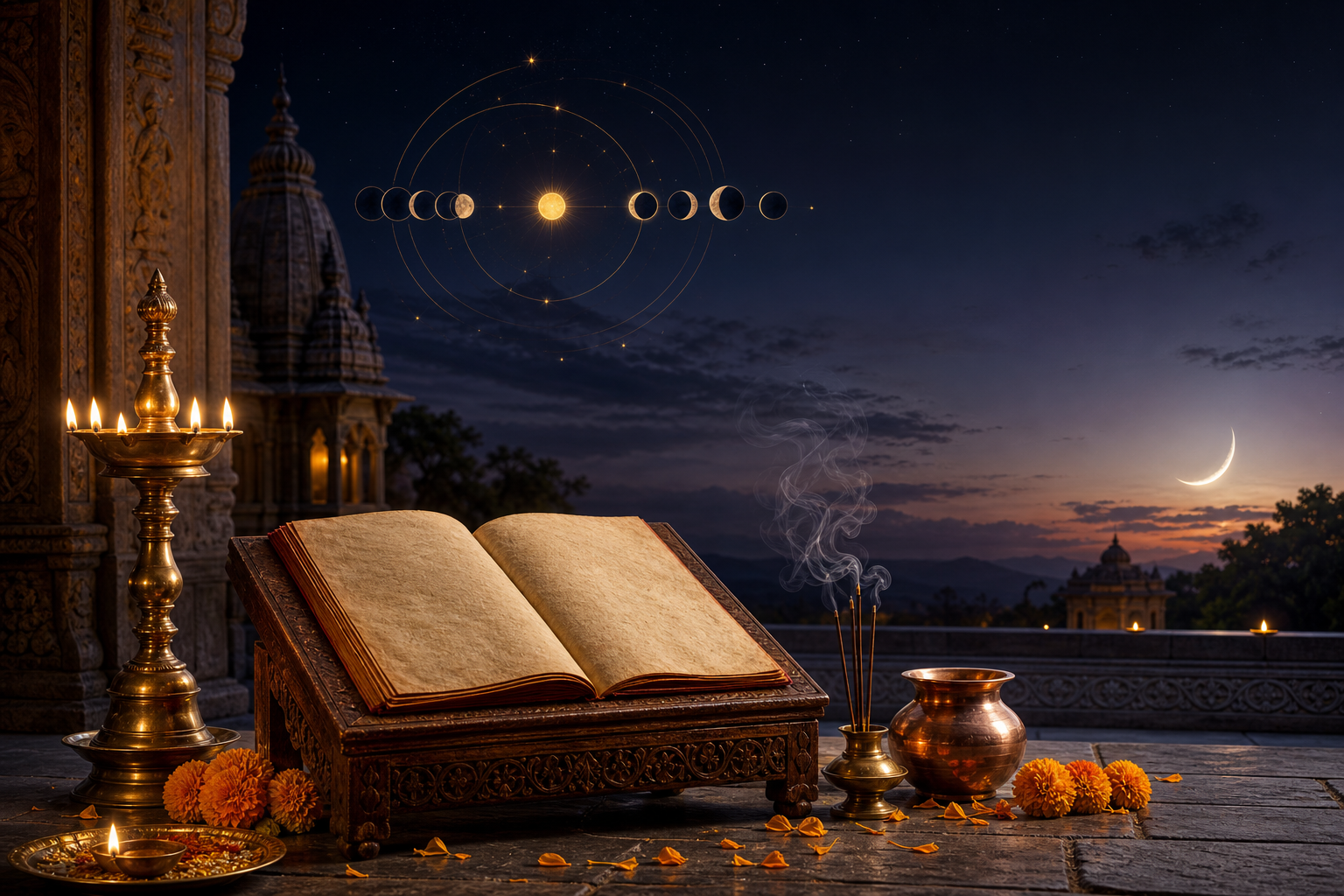
Tuesday, July 14, 2026, holds particular importance in the Hindu calendar because the day is marked by Amavasya tithi, the no moon lunar day, in most regional Panchang traditions. According to the given Panchang details, Amavasya continues until 3:37 PM on July 14. After this point, Shukla Paksha Pratipada begins, marking the first tithi of the waxing or bright phase of the lunar month, and it continues until 1:22 PM on July 15, 2026.
In the Hindu Panchang system, a tithi is not simply a date on a calendar. It is a lunar measure based on the angular distance between the Sun and the Moon. Each tithi reflects a subtle phase in the relationship between solar and lunar movement, which is why traditional Hindu timekeeping treats it as spiritually and ritually meaningful. July 14, 2026, therefore, is best understood not only as a civil date but as a day shaped by the transition from the dark lunar fortnight, Krishna Paksha, into the bright fortnight, Shukla Paksha.
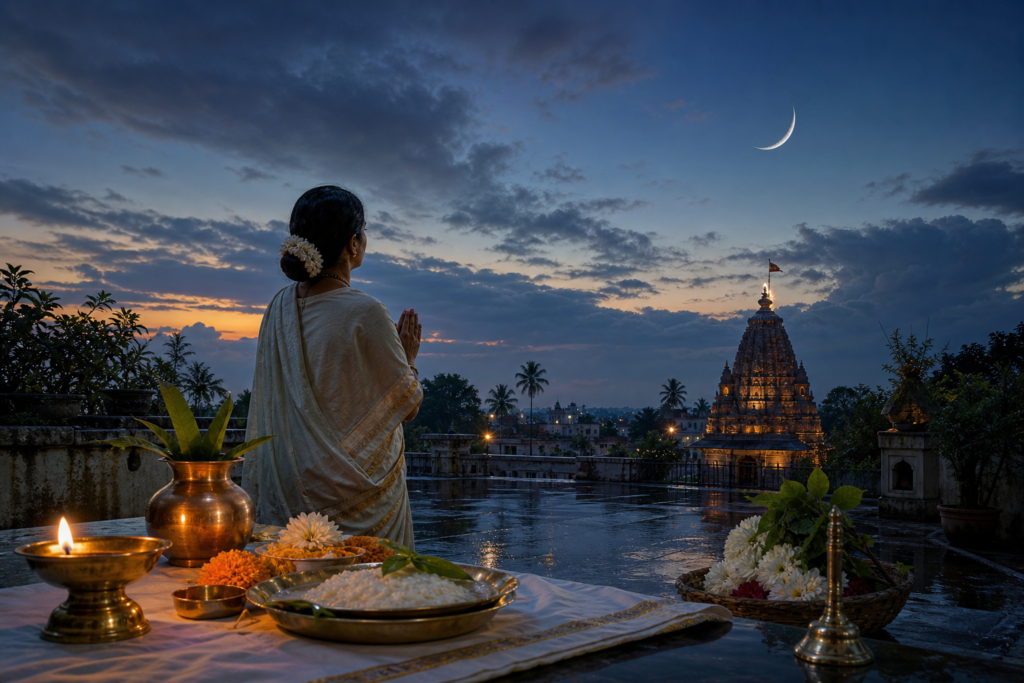
Amavasya, commonly called the no moon day, is the final tithi of Krishna Paksha. It is a point of lunar stillness, when the visible Moon disappears from the night sky and the next cycle is about to begin. In many Hindu households, this day is associated with introspection, remembrance, restraint, prayer, ancestral duties, and quiet spiritual discipline. The emotional force of Amavasya often comes from its simplicity: the absence of moonlight becomes a reminder to turn inward, examine conduct, and reconnect with dharma through humility.
The given Panchang timing is especially useful for those observing Amavasya-related practices. Since Amavasya tithi remains until 3:37 PM on July 14, traditional observances connected with the no moon day are generally aligned with this period, subject to local sunrise rules, regional tradition, and family practice. Panchang calculations can vary by location because they depend on astronomical positions and local time, so serious ritual observance is usually confirmed with a regional Panchang or a qualified priest.
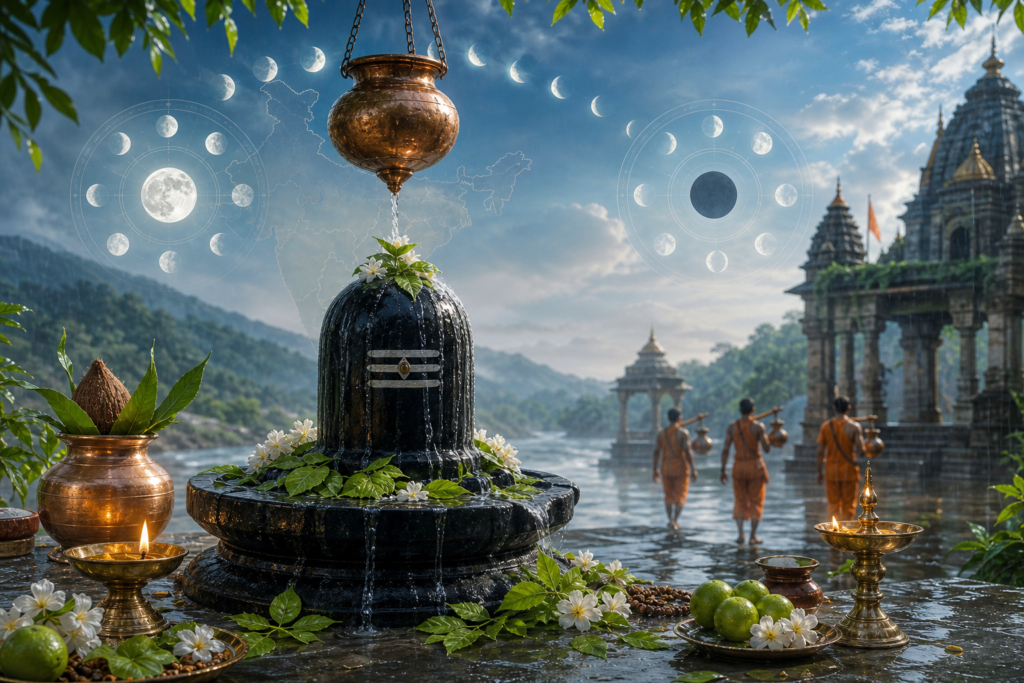
After 3:37 PM on July 14, the lunar day changes to Shukla Paksha Pratipada. This shift is symbolically significant because Pratipada is the first step of renewal after the inward-facing energy of Amavasya. The movement from Amavasya to Pratipada expresses a rhythm that is central to Hindu time: withdrawal, stillness, emergence, and growth. For many devotees, this transition is a quiet but powerful reminder that renewal is not separate from reflection; it arises from it.
Shukla Paksha Pratipada, continuing until 1:22 PM on July 15, 2026, begins the waxing phase of the Moon. The bright fortnight is often associated with expansion, auspicious beginnings, worship, study, and constructive action. While the exact suitability of a task depends on the full Panchang, including nakshatra, yoga, karana, weekday, lagna, and local sunrise, the arrival of Shukla Paksha carries a general cultural association with growth and forward movement.
The phrase “good time” in a Panchang context should be read carefully. A tithi alone does not determine the complete auspiciousness of a day. Hindu calendrical assessment is traditionally multi-layered. Tithi gives one part of the picture, while nakshatra indicates the lunar mansion occupied by the Moon, rashi indicates the zodiac sign, karana divides the tithi into halves, yoga reflects another Sun-Moon relationship, and weekday adds its own planetary association. Muhurat selection normally studies these factors together.
For July 14, 2026, the central confirmed detail from the given Panchang is the tithi sequence: Amavasya until 3:37 PM, followed by Shukla Paksha Pratipada. The source title also refers to nakshatra and rashi, but the supplied text does not provide their specific names. Therefore, it is more accurate to avoid inventing those details and instead emphasize that nakshatra and rashi should be checked in a location-specific Panchang before fixing rituals, vratas, travel, ceremonies, or major undertakings.
Amavasya is traditionally linked with pitru-related remembrance, including prayers for ancestors and acts of charity performed with sincerity. Across Hindu communities, people may observe simple food discipline, offer water, perform tarpan according to family tradition, visit temples, recite mantras, or engage in quiet meditation. The outer forms differ by sampradaya, region, and lineage, but the underlying dharmic principle remains consistent: gratitude toward those who came before and responsibility toward those who come after.
This wider dharmic meaning makes the day relevant beyond a narrow ritual reading. Hinduism, Buddhism, Jainism, and Sikhism each preserve distinctive disciplines of remembrance, ethical conduct, self-examination, compassion, and inner refinement. A Panchang entry such as this can therefore be read as part of a broader Indic culture of time, where calendar observance is not merely mechanical but tied to moral awareness, community rhythm, and spiritual continuity.
From a practical standpoint, those following the Hindu calendar on July 14, 2026, should note the tithi boundary carefully. Activities specifically connected with Amavasya are best considered before 3:37 PM, while observances connected with the new bright fortnight may be considered after Pratipada begins. However, because traditional rules often depend on whether a tithi prevails at sunrise, local practice should guide final decisions.
The academic value of Panchang study lies in its combination of astronomy, ritual culture, and lived tradition. The lunar month is not treated as an abstract measurement but as a framework through which households organize fasting, worship, festivals, remembrance, and community life. A date such as July 14, 2026, shows how Hindu calendar time works through transitions rather than isolated points: the day begins under the depth of Amavasya and moves into the first stirrings of Shukla Paksha.
For readers who use Panchang details in daily life, the most important takeaway is clarity. July 14, 2026, is Amavasya tithi until 3:37 PM. After that, Shukla Paksha Pratipada begins and continues until 1:22 PM on July 15. This makes the day a meaningful bridge between completion and renewal, between the inward discipline of the no moon day and the gradual expansion of the waxing lunar cycle.
Inspired by this post on Hindu Blog.



Leave a Reply
You must be logged in to post a comment.