
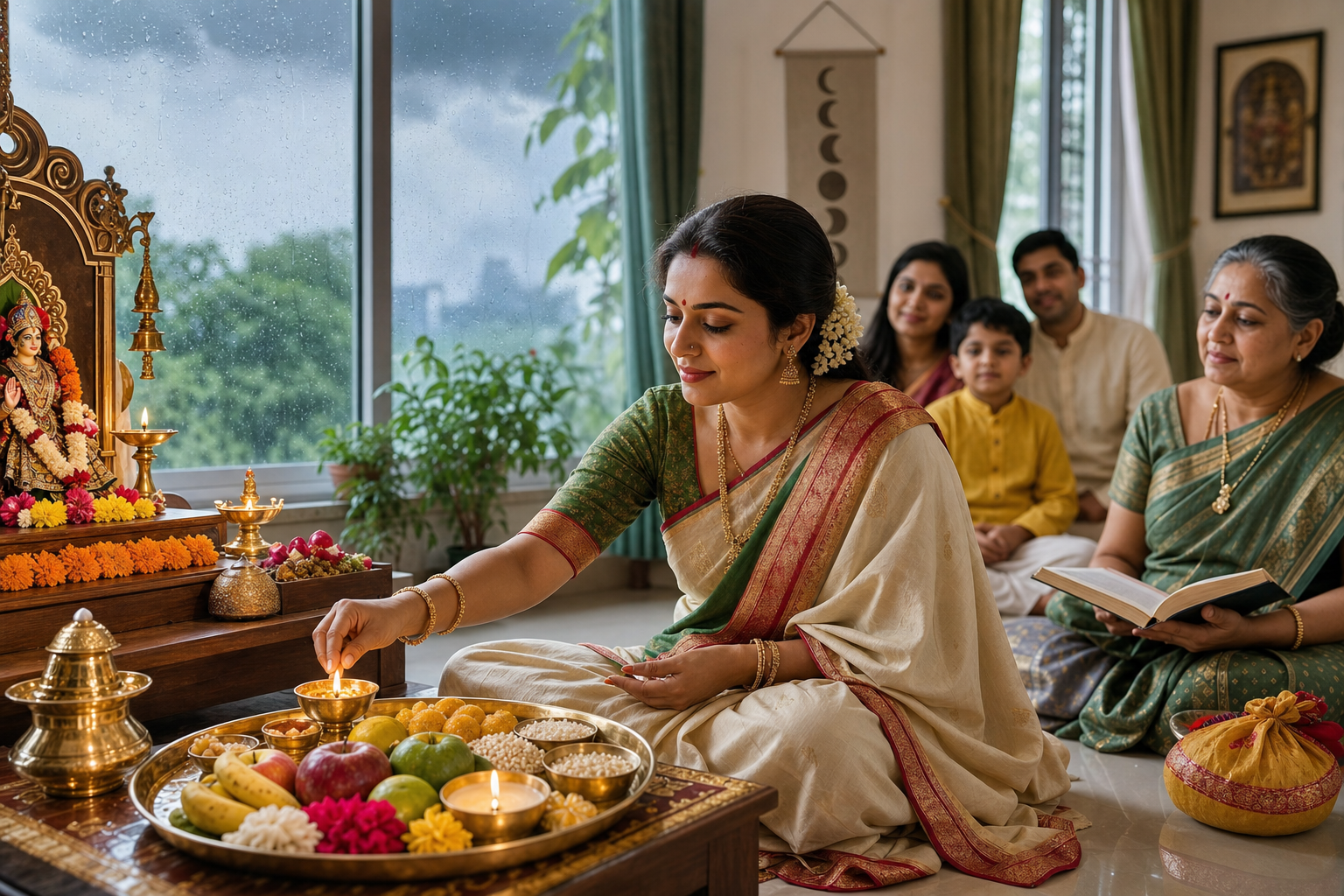
Evrat Jivrat Vrat 2026 will be observed on Wednesday, August 12, 2026, according to the traditional Gujarati calendar reckoning associated with Ashad Maas. This vrat is especially known in Gujarat, where it is followed as a disciplined devotional observance connected with family wellbeing, marital commitment, prayer, fasting, and the blessings of Maa. In many households, the vrat is remembered not simply as a ritual date on the calendar, but as a lived expression of care, resilience, and sacred responsibility within the family.
The observance is traditionally performed by married women who pray for the better health and longevity of their husbands. In its deeper cultural meaning, however, Evrat Jivrat Vrat also reflects a wider Hindu understanding of vrata: a sacred vow that joins personal discipline with devotion, household harmony, charity, and remembrance of dharma. The external form may involve fasting, puja, naivedya, and jagran, but the inner structure is built on steadiness, sincerity, and the willingness to place family welfare within a sacred framework.
In Gujarat, Ashad Maas carries a distinctive devotional atmosphere. It arrives during the monsoon period, when the land itself appears to move from heat and exhaustion toward renewal. Within such a seasonal setting, vows such as Evrat Jivrat Vrat become emotionally meaningful. The rains, the dark fortnight, the approach of Amavasya, and the quiet rhythm of household worship all create a setting in which families experience faith not as an abstract concept, but as a daily practice woven into food, prayer, lamps, stories, and shared memory.
Evrat Jivrat Vrat is observed for three days, beginning from Ashad Vad Trayodashi and continuing until Ashad Amavasya. The term “Vad” refers to the Krishna Paksha, or waning phase of the lunar month, in the Gujarati calendar. This placement is important because the waning fortnight often carries themes of inwardness, restraint, reflection, and purification. By the time the observance reaches Amavasya, the devotee has moved through a short but intense cycle of discipline, worship, and emotional focus.
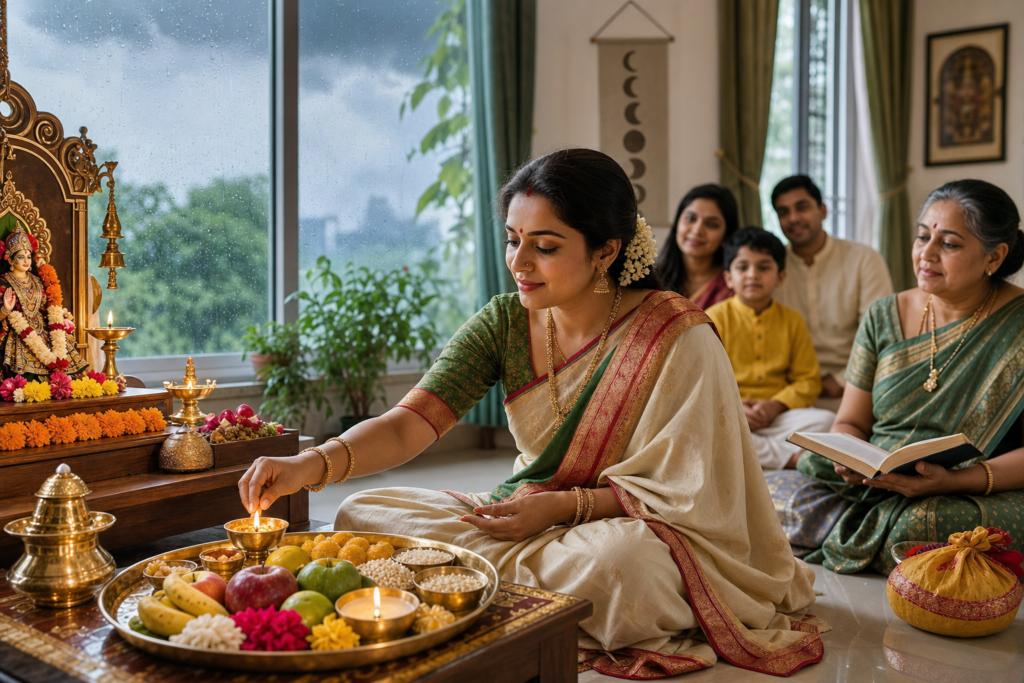
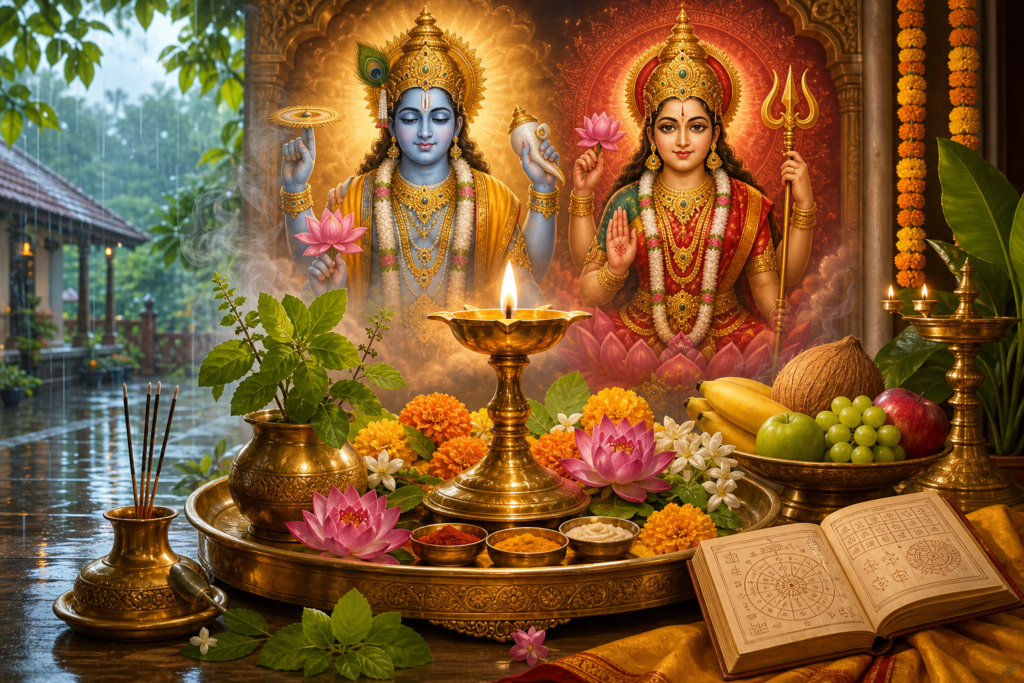
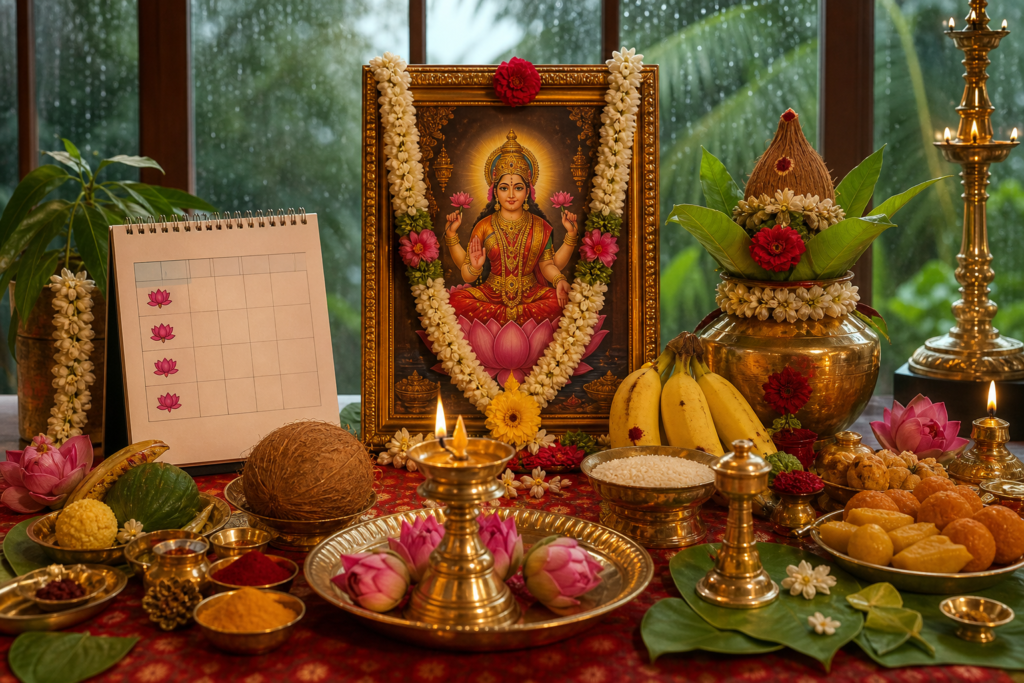
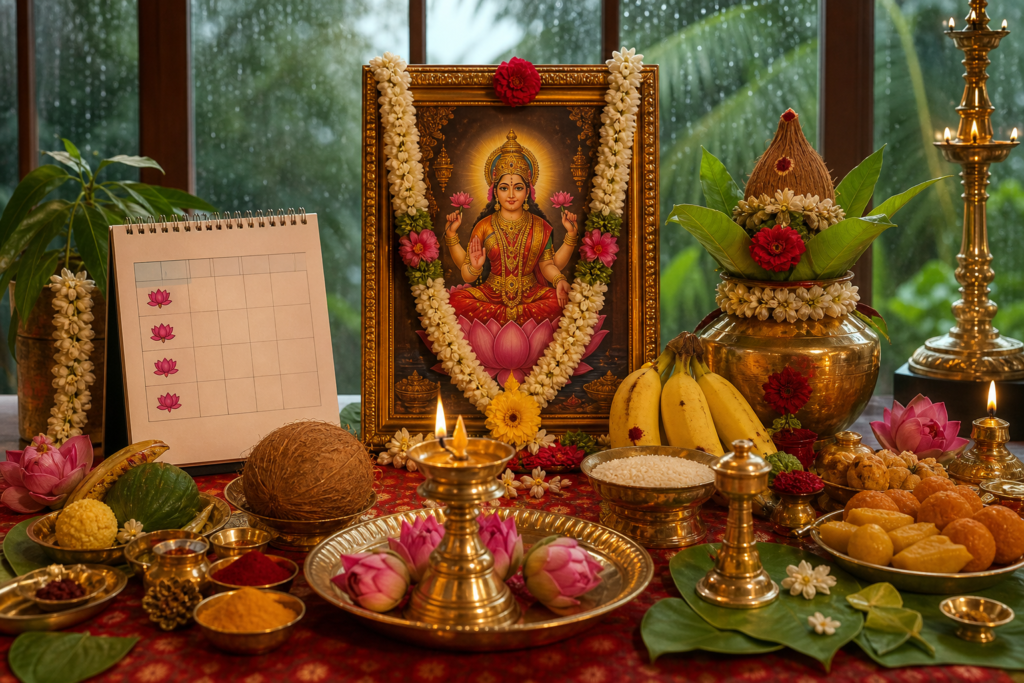
The core practices include special pujas and the offering of special naivedyas to the Goddess, addressed with reverence as Maa. These offerings vary by household and local custom, but their purpose remains consistent: to express gratitude, seek protection, and establish a devotional relationship with the divine feminine. In Hindu traditions, naivedya is not merely food placed before a deity. It represents the transformation of ordinary nourishment into prasada, a reminder that domestic life itself can be sanctified when approached with humility and devotion.
Fasting is described as one of the key aspects of Evrat Jivrat Vrat. In the Hindu understanding of fasting, the point is not punishment of the body, but discipline of desire and refinement of attention. A vrat asks the devotee to pause ordinary habits and redirect energy toward a chosen spiritual intention. For married women observing Evrat Jivrat Vrat, that intention is traditionally connected with the wellbeing and longevity of the husband, but it also becomes a practice of inner strength, emotional steadiness, and devotional concentration.
Jagran, or night vigil, is another important part of the observance. Staying awake in a sacred context has a symbolic meaning across many Hindu rituals. It represents alertness, remembrance, and the refusal to let the mind sink into forgetfulness. During jagran, families may sing, listen to vrat katha, chant, perform simple worship, or remain in devotional awareness. The practice can be physically demanding, yet its value lies in the way it turns time itself into an offering.
The vrat is traditionally observed for five years. This multi-year structure gives Evrat Jivrat Vrat a disciplined continuity that distinguishes it from a one-day ritual. A five-year vow teaches patience and commitment. It also allows the observance to become part of family memory, especially when elders guide younger women through the procedures, stories, food customs, and devotional meaning. In this sense, the vrat functions as both religious practice and cultural transmission.
One of the notable features of the observance is the act of giving alms to poor Brahmins or to needy people. This charitable element is significant because it prevents the vrat from becoming a purely private act of personal blessing. Hindu ritual life frequently links devotion with dana, or giving, so that spiritual merit is connected with social responsibility. When the needy are included in the observance, the household vow expands into an ethical gesture of compassion and community care.
The Evrat Jivrat Vrat Katha is traditionally associated with a Brahmin couple named Dharmadas and Shraddha of Kanakpur town. As with many vrat kathas, the story is not only a narrative but a teaching device. It preserves moral themes through characters, hardship, devotion, and divine grace. The names themselves are meaningful: Dharmadas suggests one devoted to dharma, while Shraddha signifies faith, reverence, and sincere trust. Together, they represent the union of righteous conduct and devotional confidence.
Vrat kathas play an important role in Hindu household religion because they make philosophy accessible through memory and emotion. A story heard beside a lamp, in the presence of elders, during a fast, often has greater formative power than a formal explanation. It teaches that devotion is tested through difficulty, that vows require steadiness, and that divine grace responds to sincerity rather than display. Evrat Jivrat Vrat belongs to this broader narrative world in which stories help preserve sacred conduct across generations.
Some traditions also refer to Evrat Jivrat as Divaso or Jaya Vijaya Vrat in certain places. This variation in naming reflects the diversity of Hindu practice, especially in regional traditions. A vrat may be known by one name in one locality and another name elsewhere, while retaining a similar devotional purpose. Such variation should not be treated as contradiction. It is part of the living texture of Hindu culture, where local memory, language, family practice, and temple traditions often preserve multiple forms of the same sacred impulse.
The association with Gujarat is particularly important. Gujarati Hindu observances often combine household worship, fasting, storytelling, song, seasonal awareness, and community participation. Evrat Jivrat Vrat fits naturally into this pattern. It is intimate enough to be performed within the home, yet culturally broad enough to connect families with a shared regional calendar. Such practices help maintain continuity in an age when many families live away from ancestral towns, speak multiple languages, and negotiate modern schedules.
From a religious studies perspective, Evrat Jivrat Vrat illustrates the centrality of women in sustaining Hindu ritual culture. Many household vrats survive because mothers, grandmothers, daughters-in-law, sisters, and community elders remember the procedures and preserve the meaning. Their role is not secondary. It is foundational. Through fasting, preparation of offerings, recitation of stories, and acts of charity, women uphold a form of dharma that is practical, embodied, and deeply relational.
At the same time, the vrat should be understood with sensitivity in contemporary life. Its traditional intention is framed around the health and longevity of the husband, but its broader values can be appreciated as mutual care, family responsibility, and spiritual solidarity. In many modern households, such observances inspire reflection on how spouses support one another, how families care for the vulnerable, and how sacred routines can create emotional stability amid uncertainty.
The academic value of studying such a vrat lies in recognizing that Hindu traditions are not sustained only through large temples, formal scriptures, or public festivals. They are also sustained through small domestic acts repeated with faith. A prepared plate of naivedya, a fast kept quietly, a story recited at night, a donation offered to someone in need, and a lamp lit during the monsoon all become part of a larger civilizational grammar of devotion.
Evrat Jivrat Vrat also highlights the Hindu principle that spiritual practice is not uniform for everyone. Different regions, families, sampradayas, and communities maintain different vrats according to inherited tradition. This diversity is not a weakness but a strength. It allows Sanatana Dharma to remain rooted and adaptive, preserving local forms while holding shared values such as shraddha, dana, tapas, puja, and reverence for the divine feminine.
For the wider dharmic family, including Hinduism, Buddhism, Jainism, and Sikhism, vows and disciplined practices hold a recognizable ethical value. The forms differ, but the themes of restraint, compassion, self-purification, remembrance, and service appear across dharmic traditions. Evrat Jivrat Vrat can therefore be appreciated not only as a Gujarati Hindu observance, but also as part of the broader dharmic appreciation for disciplined living and sacred intention.
The 2026 date, August 12, is especially useful for families planning the observance in advance. Since vrats depend on the lunar calendar, regional panchang differences may sometimes affect local practice. Devotees generally follow the guidance of their family tradition, local temple, or trusted Gujarati panchang. This is particularly important for households outside India, where time zones may shift tithi observance. The essential principle is to combine calendar accuracy with sincerity of practice.
A careful observance of Evrat Jivrat Vrat usually includes preparation before the first day. Families may clean the puja space, gather offerings, arrange ingredients for naivedya, identify the vrat katha to be recited, and plan the act of charity. Such preparation is itself part of the discipline. It gives the mind time to settle into the purpose of the vrat and prevents the ritual from becoming rushed or mechanical.
The emotional power of this vrat lies in its quietness. It does not require spectacle to be meaningful. Its strength is found in repeated devotion, in the dignity of domestic worship, and in the belief that family life can be protected through prayer, discipline, and ethical action. For many devotees, the vrat becomes a moment to remember elders who observed it before them, to feel connected with Gujarat’s sacred calendar, and to renew trust in Maa’s blessings.
Evrat Jivrat Vrat 2026 therefore deserves attention as more than a date announcement. It is a compact but rich observance that brings together Ashad Maas, Amavasya, fasting, jagran, naivedya, Goddess worship, charity, and family devotion. Its continuing relevance lies in the way it teaches that love within the household can be disciplined, prayerful, and socially responsible. In that sense, the vrat remains a meaningful expression of Hindu cultural heritage and dharmic living.
Inspired by this post on Hindu Pad.




Leave a Reply
You must be logged in to post a comment.