
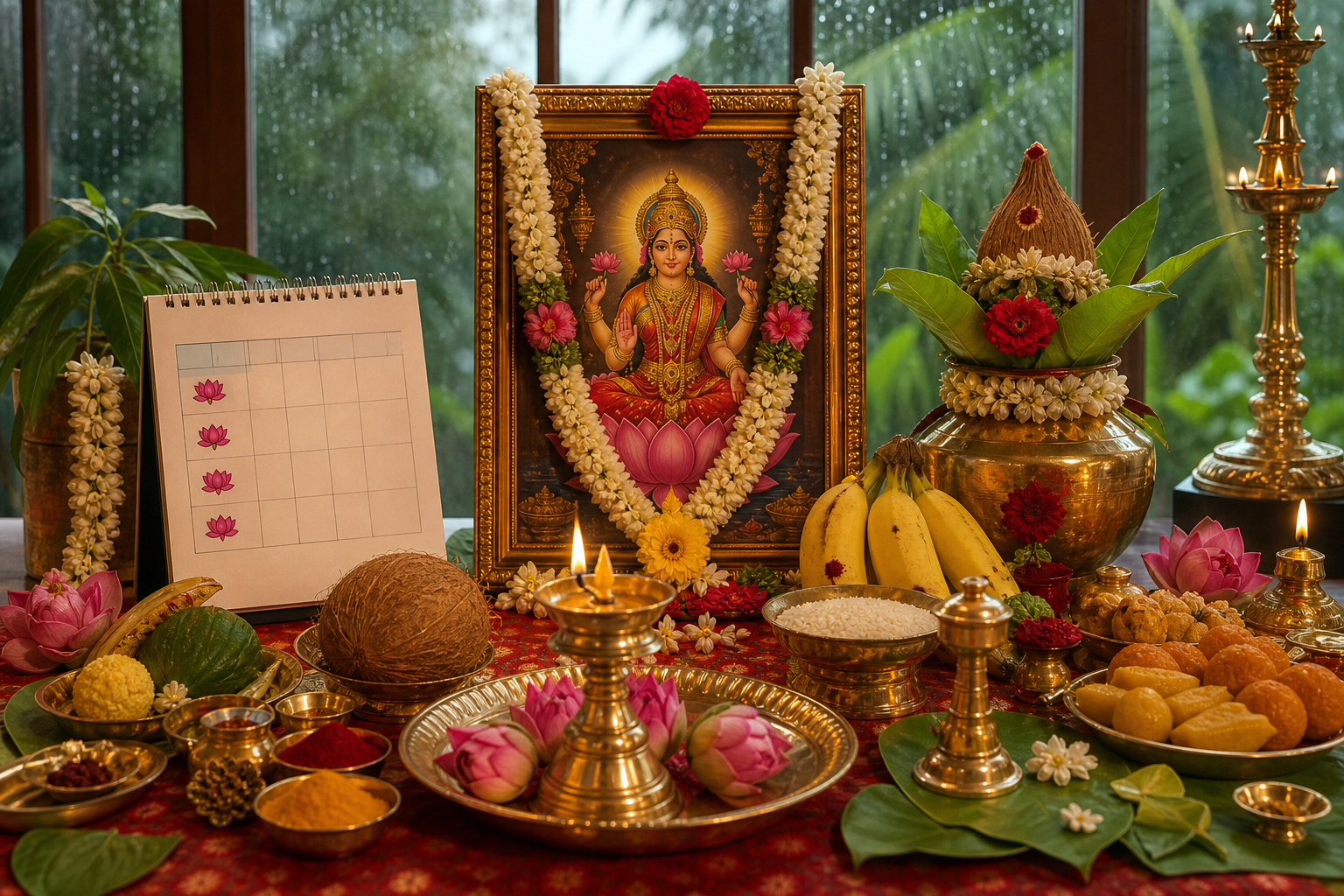
Lakshmi Vratam 2026, also known in many South Indian traditions as Shaka vratham or Ashada shukravara lakshmi vrata, is a Friday-centered observance dedicated to Goddess Lakshmi during Ashada masam. In 2026, the commonly listed Ashada Shukravar dates are July 17, July 24, July 31, and August 7. The formal Lakshmi Vrata Arambham is associated with July 24, 2026, identified in the source tradition as Ashada Shudda Dashami.
The observance belongs to the broader Hindu practice of vrata, a disciplined vow that brings together fasting, worship, household purity, ethical restraint, and devotional remembrance. A vrata is not merely a ritual appointment on the calendar. It is a structured period in which the devotee aligns conduct, food, speech, thought, and intention with a sacred purpose. In the case of Lakshmi Vratam, that purpose is the cultivation of auspiciousness, prosperity, steadiness, gratitude, and dharmic well-being.
The word Lakshmi refers to the Goddess of prosperity, radiance, fertility, grace, beauty, and auspicious order. In the Hindu imagination, prosperity is not limited to money or material success. It includes food security, harmony in the family, good health, generosity, dignified livelihood, moral clarity, and the ability to share abundance. This wider understanding makes Lakshmi Vratam especially meaningful in family and community life, where wealth is expected to support dharma rather than encourage restlessness or ego.
Ashada masam usually falls around June-July or July-August depending on the regional calendar system being followed. In South Indian amanta lunar reckoning, the month begins after Amavasya and proceeds through Shukla Paksha and Krishna Paksha. The term Ashada Shudda Dashami refers to the tenth tithi of the bright fortnight of Ashada. Because tithi is calculated by the angular relationship between the Sun and Moon, dates can vary slightly by location, sunrise rule, and panchangam tradition. Devotees therefore often confirm the final observance time with a trusted local panchangam, family priest, temple calendar, or community tradition.
The Friday emphasis is central to this vrata. Friday, or Shukravar, has long been associated with Goddess Lakshmi in many Hindu households. The day is traditionally linked with beauty, refinement, affection, domestic order, and auspicious prosperity. When Shukravar falls within Ashada masam, devotees treat it as an opportunity to worship Lakshmi with special attention. This is why the observance is commonly called Ashada Shukravara Lakshmi Vrata.
For 2026, the sequence of Ashada Fridays gives the observance a clear devotional rhythm. July 17 functions as an early Ashada Friday for worship and preparation. July 24 is especially significant because it is identified with Lakshmi Vrata Arambham and Ashada Shudda Dashami. July 31 and August 7 continue the Friday worship cycle within Ashada masam. The vrata is traditionally understood to continue until Shravana Shudda Dashami, which falls in the following lunar month according to the South Indian sequence.
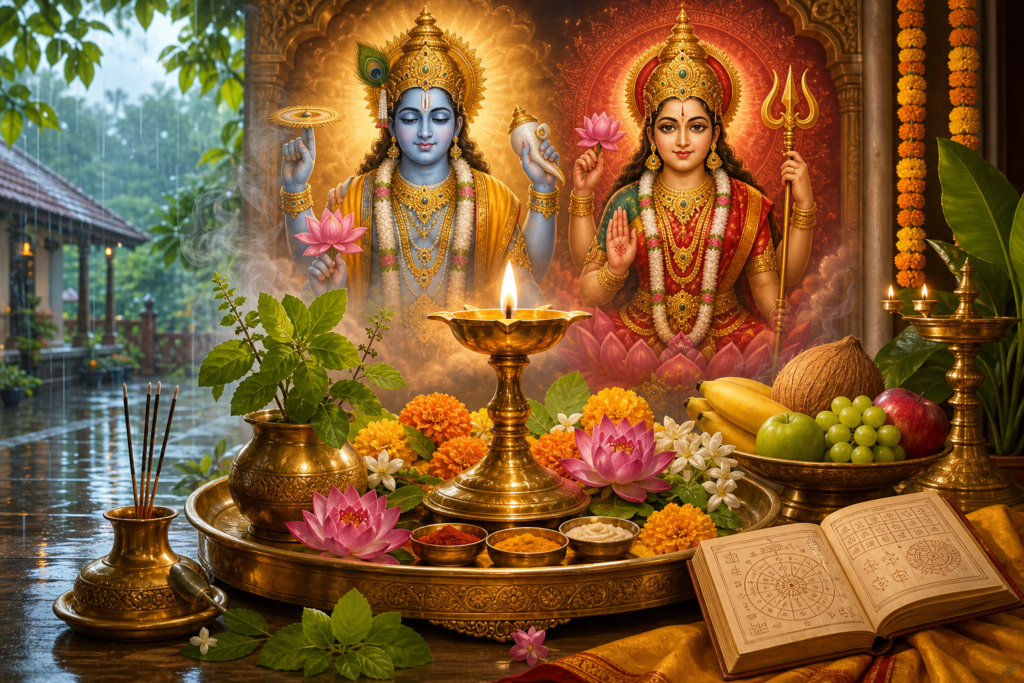
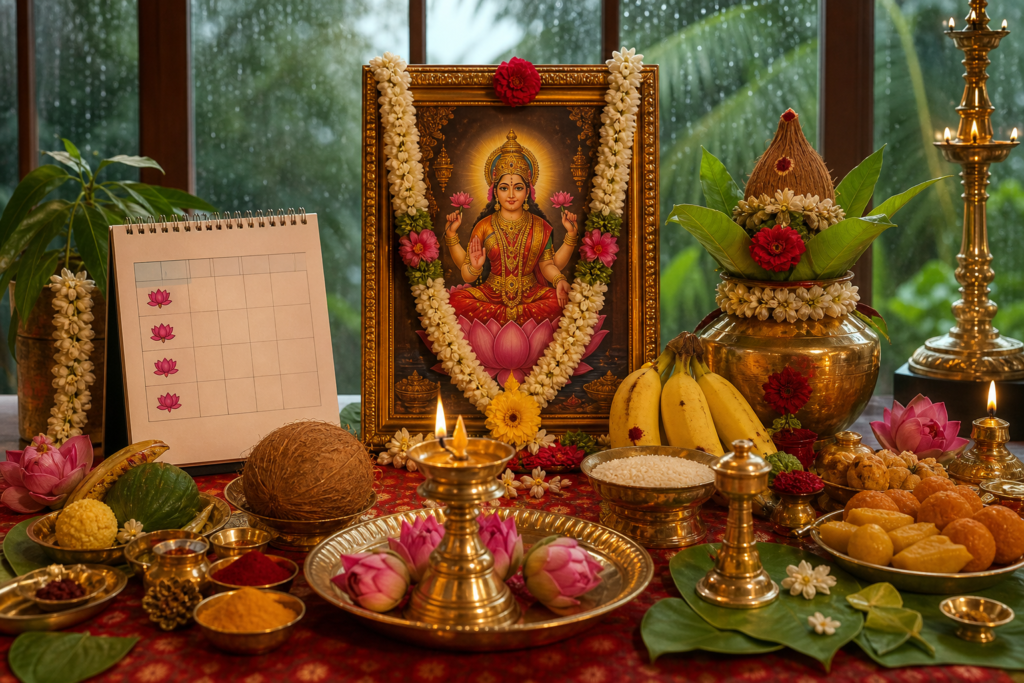
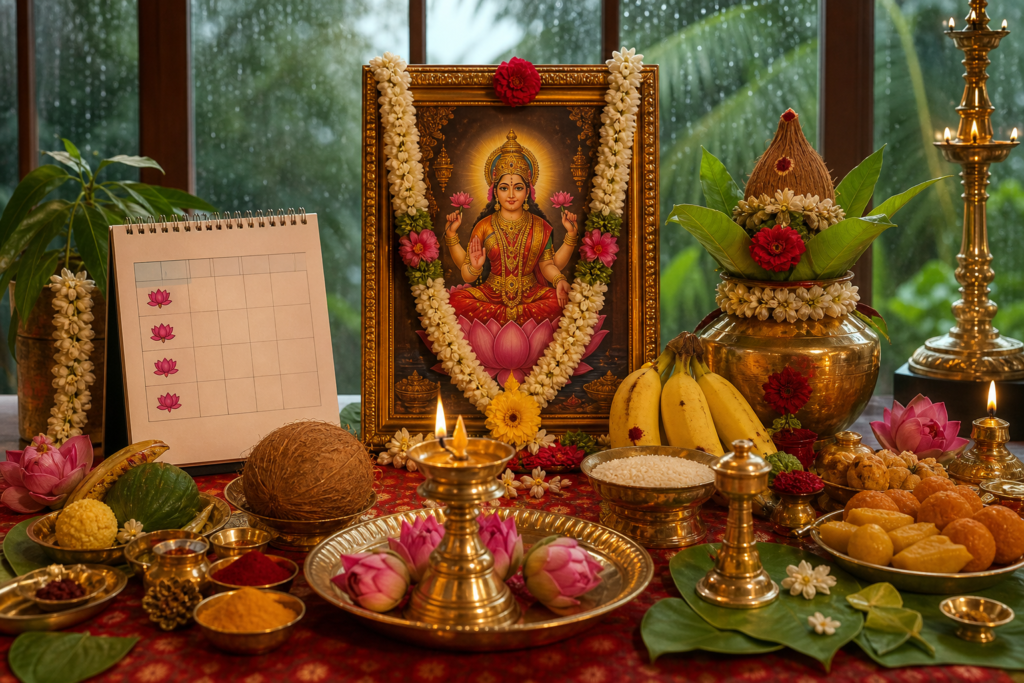
In practice, Lakshmi Vratam is usually observed with a clean household altar, a lamp, flowers, turmeric, kumkum, fruits, naivedyam, and recitation of Lakshmi-related names, stotras, or vrata katha according to family custom. Some households keep a kalasham as a sacred symbol of abundance and divine presence, while others perform a simpler puja before an image or murti of Goddess Lakshmi. The range of practice is wide, but the inner grammar is consistent: cleanliness, reverence, restraint, offering, gratitude, and prayer for welfare.
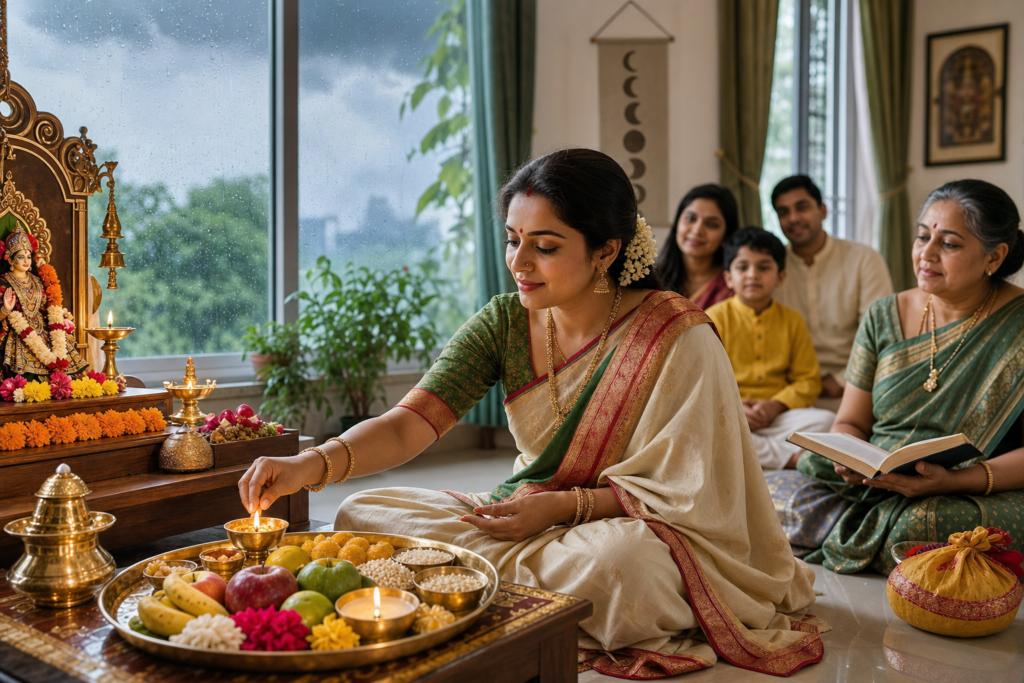
A typical observance begins with physical and mental preparation. The prayer space is cleaned, lamps are lit, and the deity is invoked with humility. Offerings may include flowers, rice, betel leaves, fruits, sweets, coconut, turmeric, kumkum, and water. Many devotees chant Lakshmi Ashtottara Sata Namavali, Sri Suktam, Kanakadhara Stotram, or simple names of the Goddess. The exact selection depends on lineage, language, comfort, and local custom. The discipline is not measured by theatrical complexity but by sincerity and steadiness.
The fasting dimension also varies. Some devotees observe a full fast until puja is completed. Others take fruits, milk, or a simple sattvic meal. In many homes, the vrata is adapted to health, age, pregnancy, medical requirements, work duties, or family responsibilities. A dharmic approach does not reduce devotion to physical strain. It recognizes that vrata is a vow of alignment, not a contest of hardship. The most meaningful fast is one that supports clarity, compassion, and disciplined remembrance.
The name Shaka vratham is sometimes understood in connection with dietary discipline during the vrata period, especially the preference for simple, plant-based, sattvic food. In many regional households, Ashada and Shravana are treated as months for restraint, seasonal adjustment, and religious focus. The monsoon context is important: food habits, agricultural cycles, temple festivals, and domestic rituals all carry a seasonal intelligence. The vrata becomes a way to live with the rhythms of time rather than apart from them.
Lakshmi Vratam should also be distinguished from Varalakshmi Vratham, though both are devoted to Goddess Lakshmi and are widely observed in South India. Lakshmi Vratam in this context is connected with Ashada Fridays and the Ashada-Shukravara cycle. Varalakshmi Vratham is generally observed in Shravana masam, commonly on the Friday before Purnima or according to regional rules. In 2026, many Telugu calendar references identify Varalakshmi Vratham with August 21, 2026. The two observances are related in devotional spirit but distinct in calendrical placement.
The geographical spread of Lakshmi worship is one reason the tradition remains so culturally rich. In Andhra Pradesh and Telangana, Friday Lakshmi puja is deeply embedded in household worship. In Karnataka, Mahalakshmi Habba and related Friday observances carry strong domestic and temple associations. In Tamil Nadu, Lakshmi worship intersects with Aadi and Shravana customs. In Kerala, the devotional calendar has its own regional texture. Across these regions, the same Goddess is approached through different languages, foods, songs, and ritual details, reflecting unity without uniformity.
This diversity is central to the strength of dharmic traditions. Hinduism, Buddhism, Jainism, and Sikhism all preserve, in different ways, the importance of disciplined conduct, reverence, self-restraint, generosity, remembrance, and community welfare. Lakshmi Vratam is specifically a Hindu vrata, yet its ethical message resonates widely: prosperity is meaningful only when it is joined with responsibility, humility, and service. Such an interpretation supports harmony among dharmic paths while preserving the distinctiveness of the ritual tradition.
From a theological perspective, Lakshmi is not merely a giver of wealth. She is the principle of auspicious flourishing. Where there is cleanliness, truthfulness, generosity, respect for elders, care for guests, reverence for food, and protection of family harmony, Lakshmi is said to dwell. Where there is arrogance, waste, cruelty, disorder, or exploitation, prosperity becomes unstable. This moral reading gives Lakshmi Vratam practical relevance even in modern life, where financial ambition often needs ethical discipline.
The vrata also has a strong domestic dimension. It honors the household as a sacred space rather than a merely private residence. The lamp, the threshold, the altar, the kitchen, and the act of offering food all become part of a larger spiritual ecology. For many families, the memory of Lakshmi Vratam is inseparable from the fragrance of flowers, the sound of bells, the sight of turmeric and kumkum, and the quiet seriousness with which elders prepare the puja. These details create continuity across generations.
In a contemporary setting, this continuity matters. Many families now live across cities, countries, and time zones. Some cannot perform elaborate puja. Some live in apartments with limited space. Some are learning the tradition without elders physically present. Lakshmi Vratam can still be observed meaningfully through a clean altar, a lamp, a simple prayer, mindful food, charity, and disciplined speech. The essence of the vrata is not lost when the form is simplified with respect.
The technical calendar details should be handled carefully. Hindu festivals are not fixed only by the Gregorian date. They depend on tithi, lunar month, paksha, weekday, regional rules, and sunrise-based observance. This is why a date such as July 24, 2026, matters not simply as a Friday but as a Friday identified with Ashada Shudda Dashami in the relevant tradition. The same Gregorian day may be interpreted differently in another region if a different lunar month system or local panchangam rule is used.
For devotees observing Lakshmi Vratam 2026, a practical structure can be followed. The altar may be prepared in the morning or before the chosen puja time. A lamp may be lit with a prayer for purity of mind. Goddess Lakshmi may be invoked with flowers, water, turmeric, kumkum, and naivedyam. A stotra, namavali, or simple mantra may be recited. The vrata may conclude with arati, prostration, distribution of prasadam, and an act of charity or food sharing. Such a sequence preserves both ritual order and devotional accessibility.
Charity is especially appropriate in Lakshmi worship. The Goddess of abundance is honored most fully when prosperity circulates with compassion. Feeding someone, supporting a student, helping a family in need, donating food grains, respecting domestic workers, reducing waste, or sharing prasadam are all ways in which the vrata moves beyond the altar. This social dimension prevents Lakshmi worship from becoming narrow materialism. It restores the connection between wealth and welfare.
The emotional appeal of Lakshmi Vratam lies in its balance of intimacy and cosmic order. A devotee may pray for family welfare, financial stability, marriage harmony, children, health, or peace of mind. At the same time, the vrata quietly teaches that prosperity must be earned, maintained, and shared through dharma. The prayer is personal, but the discipline is universal: clean the space, steady the mind, honor the divine, control excess, and use abundance responsibly.
For students of Hindu ritual studies, Lakshmi Vratam also demonstrates how domestic religion preserves sophisticated calendar knowledge. Terms such as masam, Shukravar, Dashami, Shudda, vrata, arambham, and naivedyam encode a complete system of time, vow, offering, and sacred intention. What may appear externally as a simple Friday puja is actually a layered practice joining astronomy, language, theology, ethics, food culture, gendered household memory, and regional devotional identity.
The observance should therefore be approached with both devotion and precision. The 2026 dates most commonly highlighted for Ashada Shukravara Lakshmi Vrata are July 17, July 24, July 31, and August 7, with July 24 carrying the special status of Lakshmi Vrata Arambham. Since panchangam rules vary by region, the final muhurta and tithi confirmation should be made locally. This preserves accuracy while respecting the living diversity of Hindu practice.
Ultimately, Lakshmi Vratam 2026 is more than a date list. It is an invitation to reconsider the meaning of prosperity. In the dharmic view, wealth is blessed when it supports gratitude, self-control, family harmony, learning, hospitality, and generosity. When the Friday lamp is lit for Goddess Lakshmi in Ashada masam, the prayer is not only for receiving more. It is also for becoming worthy custodians of what has already been received.
Inspired by this post on Hindu Pad.





Leave a Reply
You must be logged in to post a comment.