
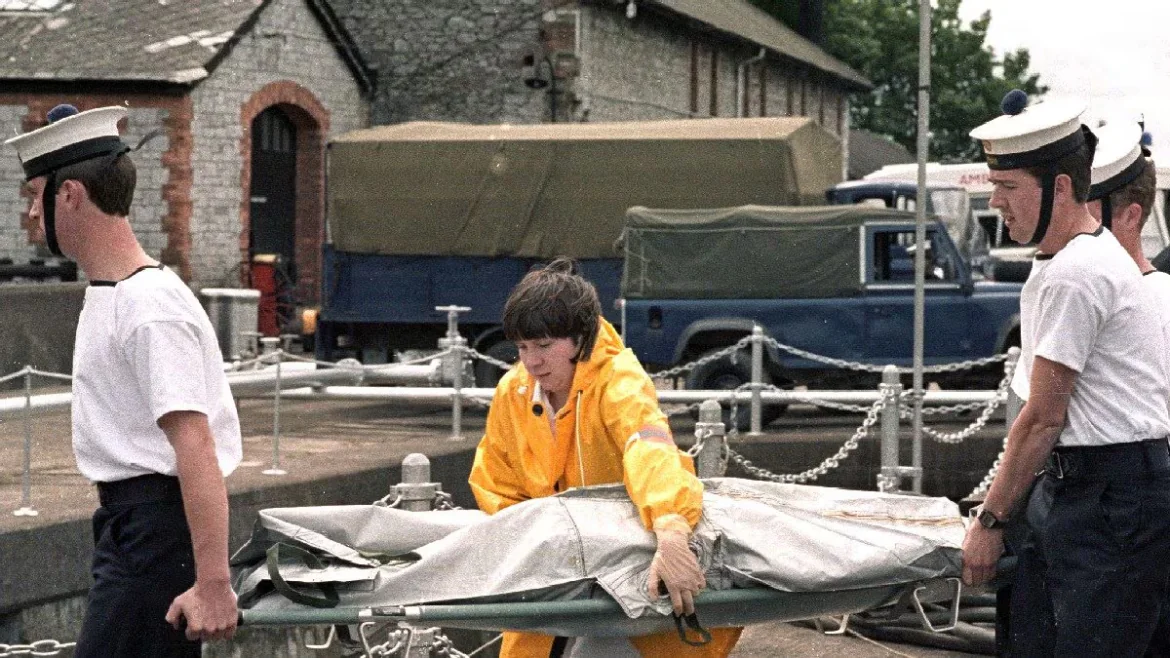
On June 23, 1985, Air India Flight 182, the Boeing 747 named Kanishka, was destroyed by a bomb off the coast of Ireland. All 329 people on board were killed, including 268 Canadian citizens, many of Indian origin, along with passengers and crew whose lives connected Canada, India, the United Kingdom, the United States, and Ireland. Forty-one years later, the continuing public reckoning over that crime remains a test of Canada’s counterterrorism memory, India-Canada relations, and the moral duty owed to families who were left to carry grief across generations.
The recent acknowledgment attributed to the Canadian Security Intelligence Service, naming Canada-based Khalistani extremists as responsible for planting the bomb, matters because it places the attack where the evidence has long pointed: not in the category of an impersonal aviation disaster, but in the category of planned political violence emerging from an extremist separatist network. That distinction is essential. A crash produces mourning; terrorism demands mourning, investigation, institutional accountability, and prevention.
The historical facts are stark. The bomb that destroyed Flight 182 originated in Canada and was connected to a wider plot involving another suitcase bomb that exploded at Narita Airport in Japan, killing two baggage handlers. The technical pattern was familiar to aviation security specialists: checked baggage moved through an interline system, the passenger-baggage link was inadequately controlled, and the intelligence warning environment was not translated into decisive operational disruption. The failure was therefore not only one of ideology or policing. It was also a failure of threat assessment, aviation screening, evidence preservation, and inter-agency coordination.
The Major Commission inquiry, released in 2010 as Air India Flight 182: A Canadian Tragedy, examined those institutional failures in painful detail. It described a chain of errors involving Canadian security, intelligence, policing, and aviation authorities. The central lesson was technical and political at the same time: intelligence is not valuable merely because it is collected; it becomes valuable only when it is assessed, shared, preserved, and converted into lawful preventive action.
CSIS and the Royal Canadian Mounted Police had knowledge of extremist activity before the bombing, including surveillance connected to Talwinder Singh Parmar and Inderjit Singh Reyat. Reyat later became the only person convicted in connection with the bombings, while the broader prosecution history ended without murder convictions against the principal accused. For the families of the victims, that gap between what was known, what was suspected, what could be proved, and what was punished became one of the most painful features of the case.
The tragedy also exposed a recurring weakness in democratic states: the tendency to confuse noisy political mobilization with harmless expression even when extremist factions are raising funds, glorifying violence, intimidating moderates, or using diaspora institutions as protective cover. Free speech is a foundational democratic principle, but it does not require public indifference toward incitement, terrorist celebration, targeted threats, or the laundering of violent separatism through cultural language.
A careful analysis must also avoid a second error: equating Khalistani extremism with Sikh identity. Sikh tradition has deep roots in courage, seva, dignity, and resistance to injustice. The violence associated with extremist separatist networks represents a political distortion, not the whole of Sikh civilizational life. Many Sikhs in Canada, India, and elsewhere have opposed extremism, and some have paid a heavy personal price for doing so. A serious counterterrorism framework must protect Sikh communities from both extremist capture and unfair collective suspicion.
This distinction is especially important for a society committed to harmony among dharmic traditions. Hindu, Sikh, Buddhist, and Jain communities have centuries of shared cultural space, ethical vocabulary, pilgrimage memory, and family-level interaction. Extremist politics often survives by narrowing identity until neighborliness becomes betrayal and disagreement becomes treason. The answer is not to erase differences, but to defend civilizational pluralism from movements that convert religious memory into a mandate for violence.
The Air India bombing was not only an attack on India or on people of Indian origin. It was the deadliest terrorist attack in Canadian history and one of the most consequential aviation terror cases of the twentieth century. Its victims included children, parents, grandparents, students, professionals, and entire families. For many South Asian households in Canada, the route itself was familiar: a flight connecting immigrant labor, family duty, summer visits, weddings, ancestral homes, and the emotional geography between two countries. That ordinary human context makes the crime even more devastating.
When terrorism targets a passenger aircraft, it attacks more than a state. It attacks the trust that makes civilian life possible. Air travel depends on invisible systems: baggage handling, passenger screening, airport policing, intelligence alerts, airline procedures, and international cooperation. Flight 182 showed how a single operational breach, when combined with ideological radicalization and institutional hesitation, can turn civilian infrastructure into a mass casualty site.
The political context of Canada’s delayed reckoning is equally significant. For decades, Indian officials argued that Khalistani extremist activity in Canada was not a symbolic diaspora issue but a security problem with transnational consequences. Canadian politics, shaped by multicultural sensitivity and electoral calculations in diaspora-heavy constituencies, often responded cautiously. That caution sometimes became paralysis. The result was a perception in India that Canada could see extremism clearly only after it became impossible to deny.
Recent Canadian intelligence reporting has increased attention on Canada-based Khalistani extremist networks, including concerns about promotion of violence, fundraising, and the use of community structures for extremist objectives. The central policy challenge is not the existence of political opinion about Punjab, which can be debated peacefully, but the movement from opinion into threat, intimidation, glorification of assassins, foreign-directed violence, or material support for terrorism.
In technical counterterrorism terms, this requires a sharper distinction between protected advocacy and security-relevant conduct. Protected advocacy includes peaceful speech, lawful protest, historical debate, criticism of governments, and community organizing. Security-relevant conduct includes credible threats, recruitment into violent activity, fundraising for banned organizations, operational planning, intimidation of dissenting community members, and celebration of past terrorist attacks in a manner that normalizes future violence.
The Flight 182 case also demonstrates why evidence management is not an administrative detail. Destroyed or mishandled records can decide whether a prosecution succeeds, whether a conspiracy is fully mapped, and whether families ever receive legal closure. Intelligence agencies often operate under secrecy, source protection, and national security constraints, but those constraints must be balanced against prosecutorial needs. A democracy cannot treat intelligence and justice as separate worlds when terrorism links them so directly.
For India-Canada relations, the lesson is direct. Counterterrorism cooperation cannot depend on diplomatic mood or partisan convenience. It requires structured intelligence sharing, transparent extradition processes, financial monitoring, protection for threatened community voices, and a consistent refusal to normalize political violence. India’s concerns about Khalistani extremism should be assessed on evidence, not dismissed as diplomatic messaging. Canada’s legal standards should be respected, but those standards should not become a shield for avoidable inaction.
There is also a social responsibility within diaspora communities. Gurdwaras, temples, cultural associations, student groups, and civic bodies are often places of belonging for immigrants who have built new lives while preserving ancestral memory. When extremist factions attempt to capture such institutions, the damage is not only geopolitical. It fractures families, silences moderates, creates fear among journalists and community leaders, and makes younger generations inherit conflicts they did not create.
The memory of Air India Flight 182 should therefore be taught as Canadian history, Indian diaspora history, aviation security history, and counterterrorism history. It should not remain confined to anniversary statements. Public memory has preventive value. When citizens understand how radicalization, institutional complacency, and technical security gaps converged in 1985, they are better able to recognize the early signs of similar failures in the present.
Justice in such cases has more than one layer. Criminal justice seeks conviction where evidence proves guilt beyond reasonable doubt. Institutional justice requires acknowledging failures and reforming systems. Historical justice requires naming the crime accurately. Moral justice requires treating the victims as central, not peripheral, to national memory. Canada’s acknowledgment is meaningful because it strengthens the third and fourth layers, even if the first layer remains painfully incomplete.
The most responsible path forward is neither denial nor collective blame. It is a disciplined approach that confronts Khalistani extremism as a security threat while affirming respect for Sikh communities and for dharmic unity. Violent separatism must be challenged without turning identity into suspicion. Democratic pluralism must be defended without allowing extremists to exploit democratic freedoms against civilians.
Forty-one years after Kanishka, the unresolved wound is not only that 329 lives were taken. It is that the warning signs were present, the institutions faltered, and the families were forced to wait decades for public clarity that should have come earlier. The lesson is severe but necessary: remembrance without accountability becomes ritual, and accountability without prevention remains incomplete. Canada’s hard truth must now become sustained policy, stronger India-Canada cooperation, and an unambiguous defense of peace against every ideology that sanctifies murder.
Inspired by this post on Hindu Post.





Leave a Reply
You must be logged in to post a comment.